
A dependable hunting knife helps you field dress a deer, handle camp tasks, and prepare meat with more control. A pocketknife or kitchen knife may cut, but it often lacks the blade shape, grip, or outdoor-ready build that makes hunting work practical.
For those tasks, a hunting knife gives you a purpose-made cutting tool. Its sharp blade helps with skinning and processing, while a secure handle supports a steady grip; fixed-blade designs also avoid folding parts that can collect debris.
Many models offer a curved skinning blade for separating hide, a drop point for versatile cuts, and a textured handle that stays easier to hold with gloves. A sheath protects the edge during transport and keeps the knife close at camp.
Blade length, steel, handle style, and fixed or folding construction vary, so consider your usual hunting needs and care preferences. Explore the best hunting knives for deer below to find a practical choice for your next outing.
7 Best Hunting Knives for Deer Reviews

1.Mossy Oak MO16002A Fixed Blade Knife Set
Full-tang camo handles offer a comfortable, non-slip grip outdoors
2.Mossy Oak 8-Piece Field Dressing Kit
Eight tools, including a bone saw and gut hook skinner, help dress
3.KNINE OUTDOORS 12-Piece Hunting Knife Set
7Cr17MoV steel blades get seven heat treatments for lasting hardness

4.Mossy Oak 4-Piece Hunting Knife Set
Gut hook skinner opens game without piercing internal organs

5.Jellas HKS15 15-Piece Hunting Knife Set
5Cr steel blades help deliver sharp, precise cuts for processing game
6.OUTDOOR EDGE WL-6 Hunting Knives Set
Blaze-orange TPR handles provide a secure grip and reduce hand fatigue
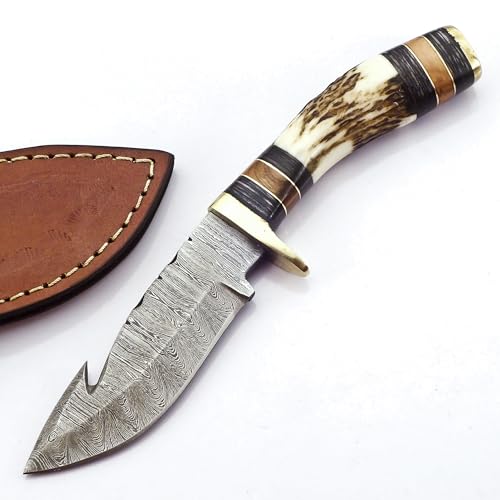
7.BLAYDZ Damascus Steel Gut Hook Hunting Knife
Gut hook blade enables clean, efficient skinning without damaging meat
1. Mossy Oak MO16002A Fixed Blade Knife Set
Mossy Oak makes this two-knife set for processing game, with a straight-edge blade for skinning and a gut hook knife for field work. Both have fixed blades made from stainless steel, which the maker says offers hardness, edge retention, toughness and corrosion resistance.
The straight-edge knife measures about 10.4 inches overall, with a blade about 5.1 inches long. The gut hook knife measures about 9.4 inches overall, with a blade about 4.3 inches long, giving you two blade styles for different tasks.
Both knives use full-tang construction, with the blade extending through the handle. Their green camouflage handles have ergonomic grooves intended to improve grip, plus a lanyard hole for carrying or securing each knife.
A black nylon sheath holds both knives and supports two carry positions, keeping the set together when you head outdoors. The knives and sheath weigh about 1.1 pounds combined, so the set adds some weight to your hunting gear.
The listing describes the set for hunting and other outdoor uses, including survival and tactical situations. It suits deer hunters who want both a straight edge and a gut hook in one carry set, along with a sheath for transport.
- Two blade styles cover different game tasks
- Full-tang knives offer a secure handle build
- Stainless steel resists corrosion and holds an edge
- Dual-carry sheath keeps both knives together
- About 1.1 pounds adds weight to your kit
2. Mossy Oak 8-Piece Field Dressing Kit
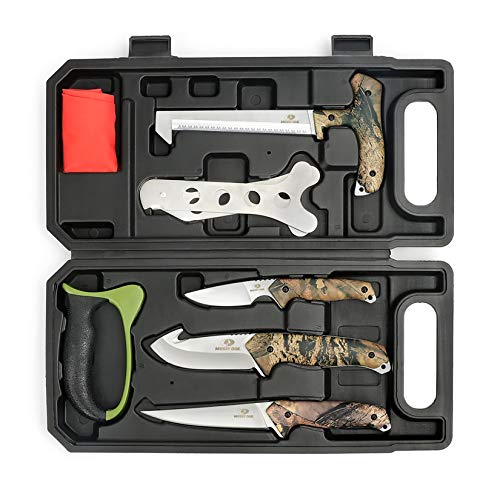
For dressing deer in the field, this eight-piece Mossy Oak kit brings several processing tools together in a carry case. It includes a 9.5-inch gut hook skinner, a 10-inch boning knife and a 7.5-inch caping knife for detailed work.
The set also includes an 8.7-inch wood and bone saw with five-inch serrations. Its hooked, blunt tip is designed to help avoid puncturing the bladder or intestines while dressing game. A T-handle gives you a grip for sawing.
A steel stick and brisket spreader, tungsten carbide V-sharpener and red game-cleaning gloves round out the tools. The pieces have stainless-steel construction, camouflage handles and full-tang builds, with the case keeping the set together for hunting trips.
The caping knife has a 3.4-inch blade and weighs about 2.8 ounces, giving it a smaller profile for fine cuts and smaller game. The complete kit weighs about 3.3 pounds, so it carries more than a single knife but puts several field-processing tools in one case.
This set suits deer hunters who want dedicated tools for skinning, boning and sawing, along with sharpening and cleaning gear. Its included saw and caping knife also make it useful for hunters who process smaller game.
- Eight tools cover several field-dressing tasks
- Hooked saw tip helps protect internal organs
- Full-tang stainless-steel tools with camo handles
- Includes a tungsten carbide V-sharpener
- The 3.3-pound kit adds weight to carry
3. KNINE OUTDOORS 12-Piece Hunting Knife Set
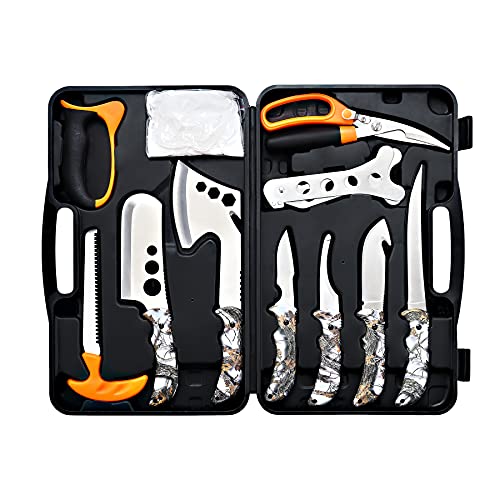
Twelve pieces give this KNINE OUTDOORS field dressing set a tool for several parts of processing a deer. It includes a 12-inch boning knife, a gut-hook skinner, a hawkbill blade knife and a caping knife for different cutting tasks.
The kit also packs a gut-hook butcher axe, a skinning cleaver, a bone saw and a ribcage spreader. Game shears, a portable cutting board, a knife and shear sharpener, and cleaning gloves round out the set, so the buyer gets more than knives alone.
Each blade uses 7Cr17MoV steel and goes through seven heat-treatment tests, according to the product details. That gives buyers a specific steel type and treatment process to consider when comparing deer-processing kits, though the listing does not provide blade hardness figures.
The handles use black-and-blue camouflage colors and ergonomic materials intended to help with grip and concealment. The listing also describes a balanced feel across the handles and blades, but does not give separate handle or blade measurements.
At about 5.9 pounds, the set is portable enough to carry with its tools kept together in the case. Its black finish and roughly 10.8-inch listed size are additional details; the product dimensions appear unusually small for the full 12-piece kit.
The maker advises storing tools in place and cleaning the knives after use. This set suits deer hunters who want a broad selection of processing tools in one organized kit, rather than a single-purpose knife.
- Twelve tools cover several deer-processing tasks
- 7Cr17MoV steel blades get seven heat treatments
- Includes a sharpener, board and cleaning gloves
- Camouflage ergonomic handles support grip and concealment
- About 5.9 pounds adds weight to a field kit
4. Mossy Oak 4-Piece Hunting Knife Set
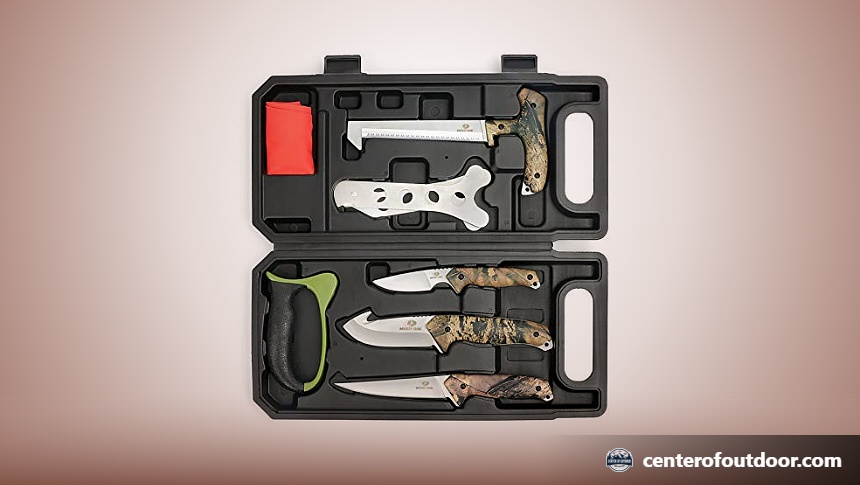
Deer hunters who want a compact field dressing set get a gut-hook skinner, caping knife, wood and bone saw, and sharpener in this Mossy Oak kit. The four tools cover several stages of processing game, from opening and trimming to sharpening.
The fixed-blade gut-hook skinner has a 3.9-inch fine-edge blade. Its hook is intended to open game while helping avoid puncturing internal organs, and the blade measures 2.35 millimeters thick.
For detail work, the caping knife has a 3.4-inch blade with a finer point. It can handle skinning, trimming, filleting and butterflying meat, and weighs about 2.8 ounces.
The wood and bone saw has 4.4 inches of serrations, a T-handle and a hooked tip. Its shape is designed to help avoid damaging the bladder or intestines during field dressing.
A sharpener with a large handle, thumb groove and full-length finger guard rounds out the tools. The camouflage set comes with a portable carry bag that can attach to a belt, so hunters can keep the kit close while working outdoors.
Beyond deer processing, the tools are listed for fishing, camping and hiking. This set suits hunters who want several field dressing tools together, though buyers seeking a single-purpose knife may not need all four pieces.
- Four tools cover dressing, sawing, and sharpening
- Gut hook helps open game while dressing
- Belt-carry bag keeps tools close at hand
- Caping knife supports trimming and filleting
- Individual blades are relatively short for larger cuts
5. Jellas HKS15 15-Piece Hunting Knife Set
In a hunting camp or processing area, this Jellas set brings 15 pieces together for dressing deer and preparing game. The tools include a butcher knife, fillet knife, axe, gut hook knife, skinning knife, bone saw and shears.
Its blades use 5Cr steel, which the listing says supports sharpness and durability in demanding conditions. The different blade types handle tasks such as skinning, boning and filleting, while the bone saw and axe cover other parts of game processing.
The handles have an ergonomic shape intended to make longer periods of field use more comfortable. A camouflage pattern gives them a consistent look, and the set also includes a fish hook and sharpening rod.
A portable case stores the tools together and makes the 5.39-pound kit easier to carry between a vehicle, camp and processing spot. The title describes it as a heavy-duty case, but the data does not specify its material or construction.
With a broad selection of cutting tools and accessories, this set suits deer hunters who want several processing tools in one package. Buyers who need only a single knife may prefer a smaller, more focused kit.
- 15 pieces cover several game-processing tasks
- 5Cr steel blades support sharpness and durability
- Portable case keeps the tools together
- The 5.39-pound set may feel heavy to carry
6. OUTDOOR EDGE WL-6 Hunting Knives Set
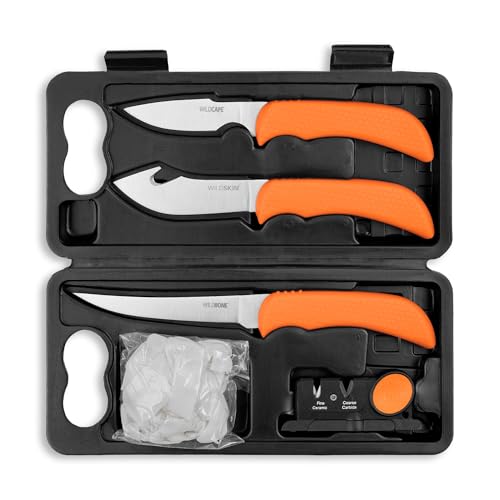
Taper-ground full-tang 420J2 stainless steel blades give the OUTDOOR EDGE WildLite set its cutting tools for deer processing. The six-piece kit also suits elk, caribou, poultry and other game.
Its knives include a gutting and skinning knife, a caping knife and a boning knife. Game cleaning gloves and a two-stage carbide-and-ceramic sharpener round out the set, so you can handle several processing tasks with one kit.
The blades receive heat treatment and hand finishing, and their balanced design supports controlled cutting. The sharpener helps maintain their edges during use.
High-visibility blaze-orange TPR handles have an ergonomic shape and a nonslip surface. They’re designed to provide a secure grip in slick conditions and reduce hand fatigue during longer sessions.
All six pieces fit into a compact, lightweight hard-side case with a spot for each tool. The case helps keep the kit organized and makes it easier to carry in field gear.
At about 1.2 pounds, the set stays relatively light to transport. It suits deer hunters who want several processing tools together, along with gloves, a sharpener and a fitted carry case.
- Six pieces cover key game-processing tasks
- Full-tang steel blades support controlled cutting
- Orange nonslip handles aid grip in slick conditions
- Fitted hard case keeps tools organized
- Includes gloves and a two-stage sharpener
- No major cons
7. BLAYDZ Damascus Steel Gut Hook Hunting Knife
BLAYDZ makes this deer hunting knife for field dressing and skinning, with a gut hook and an 8-inch overall length. Its Damascus steel blade has a distinctive wavy pattern, and the fixed-blade design suits hunters who want a dedicated cutting tool.
The 4-inch blade uses Damascus steel, which the listing describes as sharp and strong. Its gut hook helps open the hide during dressing, and the maker says the shape supports clean slicing while reducing the chance of cutting into the meat.
A genuine deer antler handle gives the knife a natural grip surface. The listing says its texture helps you hold the knife securely, while each handle’s appearance can vary with the natural material.
The 4-inch handle balances the blade in an 8-inch package. At about 0.4 pounds, the knife is light to carry with outdoor gear, and its compact size makes it easier to handle during field work.
A leather sheath comes with the knife to cover the blade during storage and transport. It also keeps the knife available alongside hunting equipment, though the listing does not give details about a belt attachment or retention system.
This final pick suits deer hunters who want a compact fixed blade with a gut hook for dressing and skinning. Its antler handle and patterned Damascus steel add distinctive materials, while the included sheath supports carrying and storage.
- Gut hook helps dress deer with controlled cuts
- Damascus steel blade has a distinctive pattern
- Genuine antler handle offers a textured grip
- Leather sheath covers the blade for carrying
- Listing gives no details on sheath attachment
How to Choose the Best Hunting Knives for Deer
Choosing a deer knife is about matching blade shape, length, grip, and carry to the work you expect to do. Your choices also depend on how much processing you handle, how often you sharpen, and how many tools you want to carry.
| If You Need | Look For | Expect |
|---|---|---|
| One knife for basic field work | 4–5-inch fixed blade | Less tool variety |
| Controlled detail cuts | Short, narrow caping blade | Slower broad cuts |
| Opening the body cavity | Gut-hook blade | Less flexible general cutting |
| Hide, joints, and bones | Separate saw and knife | More weight and setup |
| A ready-to-carry kit | Case with organized tools | Bulkier storage |
| Easy visibility outdoors | Bright, textured handle | More conspicuous appearance |
Blade Shape and Purpose
A straight edge handles many jobs, from trimming tissue to cutting meat, while a curved skinning blade follows the hide with less effort. Choose a shape around your most common task, because one blade rarely suits every stage equally well.
A gut hook is a small sharpened hook along the blade’s spine, made to open hide without pointing the main edge inward. It helps with controlled opening cuts, but it adds a feature that needs careful cleaning.
A caping knife has a short, pointed blade for detailed work around the head and small areas. It gives you better control than a long blade, but takes longer when you need to make broad cuts.
For deer processing, a separate bone saw helps with ribs or joints that a knife should not force through. If you only field dress and skin, a saw adds weight without much daily benefit.
Blade Length and Control
A blade around 3 to 4 inches gives close control for caping and careful cuts, while a 4 to 5-inch blade covers more general field work. Longer blades reach across larger cuts, but feel less precise in tight areas.
Shorter blades are easier to guide around hide, joints, and tissue, which helps when accuracy matters more than speed. If you process larger game or prefer longer strokes, a longer blade may feel more natural.
Look at blade length separately from overall knife length, because the handle and guard add to the total. A compact knife is easier to pack, but a small handle can feel cramped in gloved hands.
Steel and Edge Care
Stainless steel resists rust better than many high-carbon steels, which helps when blood, moisture, and field conditions make immediate cleaning difficult. Still, stainless blades need drying and care, especially after use around acidic tissue.
Steel type alone does not tell you how well a blade will hold an edge, because heat treatment and blade geometry also affect cutting. Look for clear material information and an edge that you can sharpen with your available tools.
A harder blade often holds its edge longer, but sharpening it in the field may take more effort. A softer steel sharpens more easily, though you may need to touch up the edge more often during a long processing session.
A compact carbide-and-ceramic sharpener gives quick edge maintenance, while a rod suits longer strokes and broader blade shapes. Match the sharpener to your knife and learn its use beforehand, because poor sharpening can remove too much steel.
Handle Grip and Fit
A secure grip helps you control the blade when hands are wet, cold, or covered by gloves. Textured rubber or molded handles offer traction, while smooth wood or antler may feel comfortable but need a firmer hold.
Handle shape matters as much as material, because sharp corners or a narrow grip can cause pressure during repeated cuts. If possible, hold a similarly sized knife and check that your fingers stay clear of the blade.
Bright handle colors are easier to spot in leaves or low light, which reduces the chance of leaving a knife behind. Dark or natural finishes look less conspicuous, but take more attention to locate outdoors.
Construction and Balance
Full-tang construction means the steel extends through the handle, which helps support strength during firm cutting. It usually adds some weight, so consider whether you need a rugged fixed blade or a lighter tool for short trips.
A fixed blade is generally easier to clean than a folding knife because it has fewer joints that collect blood and debris. It takes more room to carry, so choose a sheath that keeps the edge covered and secure.
Balance affects how the knife feels during repeated work, even when two knives have similar dimensions. A handle-heavy knife may feel steady in detail cuts, while a blade-heavy one can help with longer strokes but tire your hand sooner.
Kit Size and Tool Selection
A small set with a skinning knife, caping knife, saw, and sharpener covers several common deer-processing tasks without adding many extras. It suits hunters who want dedicated tools but still need a manageable load.
Larger kits may add shears, a cleaver, gloves, or a cutting board, which can help when processing at a camp or home station. Count useful tools rather than pieces, because extra items add weight and may stay unused.
For a backcountry hunt, a compact knife and one dependable backup tool are often easier to carry than a full processing kit. If you process deer with help at a fixed location, extra tools can save time and reduce sharing.
Weight and Portability
A light knife is easier to carry on a long hike, while a heavier set may feel more stable and provide several tools in one package. Compare the total packed weight, not only the weight of the main knife.
A belt sheath keeps a knife accessible during field work, but it should hold the blade firmly and stay comfortable as you move. A case protects several tools in a pack, though opening and repacking it takes extra time.
Check how the sheath or case closes and whether the edge stays covered during transport. A loose fit risks losing a tool or exposing the blade, while a bulky case takes space from other gear.
Cleaning and Safety
Blood and tissue can collect around guards, handle seams, and saw teeth, so simpler construction is easier to clean in the field. Choose tools with surfaces you can reach and dry before storing them.
A blade guard or secure sheath protects you and other gear when the knife is packed. Keep the knife covered between cuts, and avoid carrying it loose in a pocket or pack.
Cut-resistant gloves offer extra protection, but they do not replace careful cutting direction or a steady grip. If a kit includes cleaning gloves, confirm they fit well and are suitable for handling the tasks you plan.
Price and Value
Lower-priced knives usually provide basic steel, a simple handle, and fewer accessories, which may suit occasional use. They can be a sensible choice when you already own a saw, sharpener, and storage case.
Higher-priced options may include better-finished handles, more specialized blades, or a fuller set of tools. Paying more makes sense when those features match your regular work, but extra pieces alone do not guarantee better value.
Compare the cost with the tools you will actually use and the care they need. A modest knife that is easy to sharpen may serve an occasional hunter better than a large set with unused accessories.
Warranty and Support
Warranty terms vary, so read what is covered and whether damage from sharpening, misuse, or normal wear is excluded. A clear repair or replacement process gives you more confidence if a defect appears.
Keep the purchase details and follow care instructions, because corrosion or damage from neglect may not qualify for coverage. For a frequently used knife, accessible support can be worth more than a longer warranty with narrow terms.
Frequently Asked Questions
Do any of these hunting knives need batteries or another power source?
No. These are manually operated knives and field-dressing tools, so they do not require batteries or a power source.
What blade and handle materials do these sets use?
The KNINE OUTDOORS 12-Piece set has 7Cr17MoV steel blades, and the Jellas HKS15 has 5Cr steel blades. Handle details include full-tang camo grips on the Mossy Oak MO16002A and blaze-orange TPR handles on the OUTDOOR EDGE WL-6.
What comes in the Mossy Oak 8-Piece Field Dressing Kit?
It includes eight tools, among them a bone saw and a gut hook skinner. Check the product listing for the complete item-by-item contents.
Should I choose the Mossy Oak MO16002A or the Mossy Oak 4-Piece Hunting Knife Set?
Choose the MO16002A if you value its full-tang camo handles and non-slip grip. The 4-Piece set is a good option if you want a gut hook skinner designed to open game without piercing internal organs.
Which knife is suited to skinning deer while helping protect the meat?
The BLAYDZ Damascus Steel Gut Hook Hunting Knife is designed for clean skinning without damaging meat. The Mossy Oak 4-Piece set also includes a gut hook skinner intended to avoid piercing internal organs.
Which set offers a range of tools for field dressing and processing game?
The Mossy Oak 8-Piece Field Dressing Kit includes tools such as a bone saw and gut hook skinner, while the Jellas HKS15 has 15 pieces for game processing. Check each product listing to confirm the specific tools included.
What should I look for when choosing a knife for common deer-processing jobs?
Match the knife to the job: a gut hook can help with opening or skinning, while a bone saw is useful for tasks involving bone. Handle grip also matters; the Mossy Oak MO16002A has non-slip camo handles, and the OUTDOOR EDGE WL-6 has blaze-orange TPR handles.
So, What Should You Buy?
For most deer hunters, the Mossy Oak MO16002A Fixed Blade Knife Set is a practical pick, with full-tang camo handles designed for a comfortable, non-slip outdoor grip. On a budget, consider the Mossy Oak 4-Piece Hunting Knife Set for its gut hook skinner; for a broader dressing kit, choose the eight-tool Mossy Oak Field Dressing Kit.
For multiple tools, the KNINE OUTDOORS 12-Piece Set offers 7Cr17MoV blades with seven heat treatments, while the Jellas 15-Piece Set suits precise processing. Prefer blaze-orange handles? Pick OUTDOOR EDGE. For a dedicated gut hook, choose BLAYDZ. Match your needs, then choose with confidence.