

Clear shooting lanes and trimmed branches make time outdoors more comfortable and help you reach useful limbs without hauling a ladder. A hand saw takes steady effort, while a regular chainsaw lacks the long reach that overhead trimming often needs.
For higher branches, a hunting pole saw offers a practical way to cut from the ground. Its saw blade or powered cutting head sits on an extendable pole, helping you clear limbs, open sightlines, and avoid stretching with a short tool.
Many models adjust to different heights, while lightweight poles make longer trimming sessions easier to manage. A rotating head can help you line up cuts, and powered versions reduce the effort needed for thicker branches; manual designs stay simple and quiet.
Pole saws vary in reach, weight, power source, and cutting capacity, so consider the trees and limbs you handle most. Explore the best hunting pole saws below to find a tool that suits your outdoor work.
7 Best Hunting Pole Saws Reviews
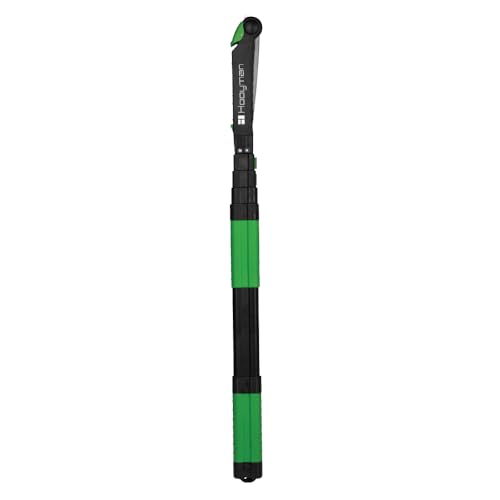
1.Hooyman 655227 10-Foot Extendable Pole Saw
Extends to 10 feet and collapses to 28 inches for easy carrying

2.HME EPS-1 12-Inch Carbon Steel Pole Saw
Extends from 2.5 to 6 feet to reach branches without needing a ladder

3.Fiskars 394620-1001 Extendable Pole Saw
Triple-ground teeth help cut tough branches quickly and with precision

4.Hawk Helium 10-Foot Aluminum Pole Saw
Weighs 2.5 lbs and folds to 41 inches for compact, easy transport

5.Walensee PS-003 14-Foot 2-in-1 Pole Saw
Triple-ground teeth and dual hooks help cut branches fast and clean

6.BlumeTrec POS-001-11 14.5-Foot Pole Saw
Extends to 14.5 feet to trim tall branches safely from the ground

7.Cprnru B1004 13.7-Foot 2-in-1 Pole Saw
Rope-pulley scissor head snips thin growth while the saw cuts limbs
1. Hooyman 655227 10-Foot Extendable Pole Saw
Hooyman extends to 10 feet for trimming branches above reach, making it useful for hunting areas where a compact hand saw may not be enough. Its high-carbon SK5 steel blade has impulse-hardened, four-edge teeth for cutting by hand.
The locking extension system secures the pole as you lengthen it, then lets it collapse for carrying or storage. The pole uses I-beam aluminum, and the product title highlights a lock-back blade for working with the saw.
Its in-line design lets the folding saw head slide into the extension arm and lock in place for pole use. You can also detach the head and use it as a handsaw for closer cuts.
The saw extends to 10 feet and folds down to 28 inches, so it can fit in a bag or pack more easily than a full-length pole. Its black finish keeps the look simple, and the hand-powered design needs no battery.
The listed weight differs between sources: the product details say 4 pounds, while the specifications list about 2.2 pounds. This hunting pole saw suits buyers who want reach in the field and a detachable handsaw for nearby trimming.
- Extends to 10 feet for overhead trimming
- Impulse-hardened teeth improve cutting efficiency
- Detachable head doubles as a handsaw
- Collapses to 28 inches for easier carrying
- Locking extension system secures the pole in use
- No major cons
2. HME EPS-1 12-Inch Carbon Steel Pole Saw
For trimming branches around a hunting spot or reaching limbs while setting a tree stand, the HME pole saw extends from about 2½ feet to 6 feet. That reach lets you work on branches without using a ladder.
Its 12-inch carbon steel blade has sharp teeth for cutting branches by hand. The blade length gives you reach along the pole while keeping the tool compact enough to carry to a hunting site.
Two foam handles give you places to grip the pole as you cut. Their coating helps keep your hands from slipping, while the orange finish makes the saw easier to spot among your gear.
At about 5 pounds, it is portable enough to take into the woods for tree-stand placement or use around the yard. The adjustable handle also lets you choose a shorter length when branches sit closer.
This saw focuses on manual branch cutting rather than powered operation, so it suits buyers who want a simple tool for landscaping and hunting tasks. It is a practical fit for hunters who need to reach limbs when preparing a tree stand.
- Extends to 6 feet to reach branches
- 12-inch carbon steel blade cuts by hand
- Foam grips help keep hands from slipping
- Weighs about 5 pounds for carrying
- No major cons
3. Fiskars 394620-1001 Extendable Pole Saw
Three to eight feet of reach lets this Fiskars pole saw trim high branches from the ground, helping you clear limbs around a hunting spot without a ladder. Its manual design suits jobs where you want to cut without using a powered tool.
The 12-inch blade has triple-ground teeth for cutting branches, and its double-grind description also appears in the included saw details. This tooth design supports fast, forceful cuts, while the extendable pole helps you reach branches above shoulder height.
A steel pole provides strength for pruning work, and the steel blade is designed to stay sharp through heavy use. That combination makes it useful for maintaining trees and clearing growth around a yard or hunting area.
The pole adjusts from about three to eight feet, giving you a shorter setup for nearby branches and added reach for higher ones. At about 3.7 pounds, it is manageable to carry between trimming spots, though its manual operation requires you to saw by hand.
The orange-red saw comes with an eight-foot extension and a 12-inch hand saw blade. It suits hunters who need a compact manual tool for trimming branches around a stand or clearing a shooting lane, as well as general yard pruning.
- Extends to 8 feet for high branches
- Triple-ground 12-inch blade cuts branches
- Steel pole and blade for repeated pruning
- Weighs about 3.7 pounds for carrying
- Manual sawing takes effort on thick limbs
4. Hawk Helium 10-Foot Aluminum Pole Saw
Hunters who need to clear a sightline or trim branches around a stand get a 10-foot reach with the Hawk pole saw. Its 11-inch SK5 high-carbon steel blade uses a toothed design that Hawk says supports precise cutting.
The aluminum pole extends to 10 feet and folds down for transport. At 41 inches when closed, it fits more easily into storage or a vehicle than a full-length pole.
A cushioned soft-sleeve grip gives you a padded place to hold while working overhead. The product information lists its weight as 2.5 pounds in the description and 1 pound in the specifications, so buyers may want to confirm the actual weight before purchasing.
The steel saw head has a black powder-coated finish, and the blade has a corrosion-resistant titanium nitride finish. Those finishes suit outdoor pruning, while the included plastic protector covers the blade during storage or transport.
This saw suits hunters who want an extendable hand tool for trimming branches and opening lanes near a hunting spot. Its long reach and folding pole are useful for field work, though the listed weight is inconsistent.
- Extends to 10 feet for elevated branches
- 11-inch SK5 steel blade has a durable finish
- Lightweight aluminum pole weighs 2.5 pounds
- Folds down to 41 inches for easier transport
- Patented teeth support precise cutting
- No major cons
5. Walensee PS-003 14-Foot 2-in-1 Pole Saw
In a yard, orchard or other outdoor space, the Walensee pole saw gives you up to 14 feet of reach for trimming high branches. Its manganese steel blade has triple-ground teeth for cutting, while the front and rear hooks help pull branches and guide the saw.
The saw switches between a pole tool for higher limbs and a hand saw for lower pruning. Its extension poles are about 1.3 feet each, and the length options use five, seven or ten poles to reach up to 14 feet.
Stainless steel poles have a powder-coated finish to resist rust and corrosion outdoors. A reinforced locking screw holds the saw head to the pole, and the non-slip handle gives you a steady grip as you work.
At about 4.6 pounds, it weighs less than five pounds, though extended reach can still take control when cutting overhead. The poles detach for storage, and you can use the saw on trees such as oak, pine, fir and palm.
The product is listed in orange and comes in 7.7-foot, 10-foot and 14-foot lengths. This pole saw suits gardeners and homeowners who want a hand saw for lower branches and extra reach for routine tree trimming.
- Reaches branches up to 14 feet high
- Triple-ground teeth help make clean cuts
- Converts from pole saw to hand saw
- Rust-resistant steel poles suit outdoor use
- Reach options depend on the pole set
6. BlumeTrec POS-001-11 14.5-Foot Pole Saw
Three-sided Mn steel teeth give the BlumeTrec pole saw a cutting edge that grips branches from multiple angles. Its manual design suits hunters who want to trim limbs around a stand or hunting area without using a powered saw.
The pole adjusts to 8.5, 11 or 14.5 feet by connecting or removing sections. That range covers close pruning as well as higher branches, and the longest setting lets you work from the ground instead of climbing a ladder.
Stainless steel poles have a powder-coated, matte finish to resist rust, while the Mn steel blade is also described as rust-resistant. An extra screw secures the saw head, and an anti-slip grip helps you keep control during cuts.
The detachable sections make the pole easy to shorten for handheld work on shrubs or lower branches. At about 5.2 pounds, it remains portable for yard tasks, though the weight may matter during longer sessions with the pole fully extended.
This is a manual saw, not an electric or battery-powered tool, so cutting depends on your effort. It suits hunters who need adjustable reach for trimming branches around a hunting spot, along with gardeners handling both low and high growth.
- Reaches up to 14.5 feet from the ground
- Three length settings suit high and low cuts
- Three-sided blade grips branches from several angles
- Rust-resistant steel parts suit outdoor storage
- Manual cutting takes sustained physical effort
- About 5.2 pounds may tire arms when extended
7. Cprnru B1004 13.7-Foot 2-in-1 Pole Saw
Cprnru makes this manual pole saw for trimming high branches and smaller growth without a powered tool. Its two cutting options—a rope-pulley scissor head and a steel pruning saw blade—let you snip thin twigs or saw through thicker limbs.
Connect up to 10 pole sections to reach as high as 13.7 feet. You can also use fewer sections for closer shrubs, so the working length can suit different parts of the yard.
The pulley redirects force during overhead cuts, which can make pulling the rope feel smoother and reduce arm strain. That can help during longer trimming sessions, especially when you need to reach above shoulder height.
Its stainless-steel saw blade has precision-ground teeth for cutting green or dry wood. The tool comes apart into shorter sections after use, making it easier to store on a garage shelf or in a shed.
This manual design suits yard work where you want to trim branches without using a ladder. It is aimed at tree and shrub maintenance rather than hunting, so buyers looking specifically for a hunting pole saw should consider that distinction before choosing it.
- Reaches branches up to 13.7 feet high
- Two cutting heads handle twigs and limbs
- Pulley helps reduce effort on overhead cuts
- Stainless-steel blade cuts green or dry wood
- Manual cutting takes repeated pulling or sawing
How to Choose the Best Hunting Pole Saws
The right hunting pole saw helps you clear shooting lanes, trim access routes, and prepare a stand without carrying more tool than the job needs. Reach, cutting style, packed size, weight, and price all shape the choice.
| If You Need | Look For | Expect |
|---|---|---|
| High branches | 10–14-foot reach | More sections and flex |
| Compact transport | Short collapsed length | Less maximum reach |
| Frequent walking | Light pole and blade | Less rigid construction |
| Thick branches | Long blade and sharp teeth | More effort overhead |
| Stand access | Short adjustable lengths | Fewer tall-cut options |
| Pruning varied growth | Saw and scissor head | More parts and setup |
| Simple field use | Manual cutting action | Slower work than powered tools |
Reach and Working Height
Maximum reach sets which branches you can cut while standing on the ground, but the listed pole length is not the same as comfortable cutting height. Your arms, stance, and blade angle affect how high you can work.
A pole near 8 to 10 feet suits many low branches around access trails and stands, while 13 to 14.5 feet reaches higher limbs. Longer poles require more overhead control, so extra reach is useful only when the target needs it.
For hunting, clear branches that block a safe shooting lane or approach, rather than cutting more than necessary. Longer reach keeps you farther from the trunk, but it also makes the blade harder to place precisely.
Pole Stability and Sections
A long pole bends and wobbles more than a short one, especially when the blade catches in a branch. Aluminum, steel, or stainless steel construction affects weight and stiffness, but section joints also shape control.
Look for positive locks or secure connectors that resist sliding and twisting during a pull stroke. More joints allow more length settings or compact storage, yet every joint adds a point that needs checking before overhead work.
A pole with fewer sections is simpler to assemble and often feels steadier at full extension, while multiple short sections pack into smaller spaces. Choose based on whether field transport or firm control matters more for your routes.
Blade and Tooth Design
Blade length affects how much wood each stroke can engage, while tooth shape influences cutting and how easily the blade clears debris. Blades around 11 or 12 inches suit many pruning jobs, though larger limbs still take effort.
Triple-ground or four-edge teeth are shaped to cut on more than one part of the stroke, which can reduce the work of repeated sawing. Tooth designs differ, so look for a clear description and a blade suited to your wood.
High-carbon, manganese, and stainless steels each have different care needs, and a protective finish can help resist rust. Wipe the blade dry after damp field use and keep it sharp, since a dull edge takes longer and encourages forceful strokes.
Cutting Head Options
A manual saw blade is the simplest setup, with fewer mechanisms to assemble or maintain. A separate scissor head uses a rope and pulley to cut smaller limbs, which adds another cutting method but also more parts to manage.
A combined saw and pruner suits users who encounter both thin growth and thicker branches around a stand. The rope can snag on nearby twigs, however, and the added head can make aiming and storage less straightforward.
For thick or dry branches, a saw blade is generally the more practical choice than a scissor mechanism. Match the cutting mode to the branch sizes you actually expect, rather than carrying extra parts that rarely help.
Weight and Balance
Total weight becomes more noticeable when you hold a saw overhead, walk between locations, or make many cuts. A tool around 3.7 pounds is easier to carry than one over five pounds, but material and length also affect balance.
Long poles place more leverage at your hands, so a light model can still feel unwieldy when fully extended. If possible, judge weight at the intended working length, not only from the listed bare-tool figure.
Foam or cushioned grips reduce pressure on your hands, while two grip positions can help steady the pole during cutting. Gloves and wet weather change grip feel, so choose a handle shape you can hold securely.
Packed Length and Transport
Collapsed length determines whether the saw fits inside a vehicle, hunting pack arrangement, or storage space. A pole that folds to around 28 inches travels more easily than one that remains over three feet long.
Detachable sections pack into a shorter bundle, but they take time to connect and keep track of in the field. A folding or detachable blade also helps protect the edge, though it adds a hinge or fitting to inspect.
Measure your storage space and consider how the saw will ride while you walk. A long piece can snag brush or interfere with other gear, while a shorter packed tool may require more assembly at the site.
Locking and Safe Handling
A pole saw works above shoulder height, so secure joints and a protected blade are basic safety needs. Make sure sections lock firmly and the blade stays covered during transport, rather than relying on a loose fit.
Keep your body out of the branch’s fall path and avoid cutting limbs under tension, which can shift suddenly. Use deliberate strokes and stable footing, because pulling hard on a long pole can move the blade or your stance.
Manual tools do not need fuel or a battery, but they still need careful handling and maintenance. Before each outing, confirm that the blade attachment is tight, the teeth are clear, and every extension connection is seated.
Branch Size and Cutting Effort
A pole saw is best for branches within the blade’s practical cutting capacity, not heavy limbs that need a ground saw or professional equipment. Branch thickness, wood condition, and blade sharpness all affect effort and control.
Green wood may cut differently from dry, hard wood, and a hooked blade can help engage a branch during strokes. For larger limbs, make smaller controlled cuts and avoid forcing the pole when the blade binds.
If most of your work involves thin growth, a lighter blade and shorter pole may be easier to aim. For occasional thicker branches, prioritize a suitable blade and stable extension over maximum reach alone.
Price and Included Features
Lower-priced manual saws usually provide a basic blade and pole, making sense for occasional trimming near a stand. At higher prices, buyers may find longer reach, multiple length settings, specialized cutting heads, or more convenient storage features.
Paying more is worthwhile when a specific feature solves a repeated problem, such as reaching a high lane or switching between pruning and sawing. It is less useful when extra sections add bulk but your cuts stay low.
Compare what is included, including blade covers, detachable heads, and extension parts, rather than judging price by reach alone. Also allow for replacement blades or sharpening supplies if regular field use will wear the edge.
Care and Durability
Steel blades need cleaning and drying after wet or muddy work, because moisture and sap encourage corrosion. A rust-resistant finish helps, but it does not remove the need to wipe the blade before storage.
Aluminum poles tend to reduce carry weight, while steel constructions may feel heavier in hand. Whichever material you choose, inspect joints, locks, and the blade mount for bends, looseness, or damage after transport.
A protective cover reduces accidental contact with teeth and helps prevent damage in a packed vehicle. Store the saw dry with its blade secured, so it is ready for the next trip.
Warranty and Replacement Parts
Warranty terms vary, so read what the maker covers and how long coverage lasts before buying. A warranty does not replace safe use or routine care, but it can help with defects in materials or construction.
For frequent use, look for a way to obtain a replacement blade or repair key pole fittings. A tool that cannot be serviced may cost less at first, yet become harder to keep usable after wear or damage.
Frequently Asked Questions
Are these hunting pole saws powered by batteries or gas?
The listed models are manual pole saws, so they use hand power rather than batteries or gas.
Which pole saw is easiest to carry?
The Hooyman 655227 collapses to 28 inches, while the Hawk Helium folds to 41 inches and weighs 2.5 pounds.
Which saw reaches the highest branches?
The BlumeTrec POS-001-11 extends to 14.5 feet, the longest stated reach among these models.
Should I choose the Walensee PS-003 or the Cprnru B1004?
Choose the Walensee PS-003 for its triple-ground teeth and dual hooks; the Cprnru B1004 adds a rope-pulley scissor head for snipping thin growth as well as a saw for limbs.
What comes in the box with each pole saw?
The listed product details don’t specify included accessories or other box contents, so check the seller’s listing before buying.
Which saw is suited to cutting tough branches?
The Fiskars 394620-1001 has triple-ground teeth designed to cut tough branches quickly and precisely.
Can I trim branches without using a ladder?
The HME EPS-1 extends from 2.5 to 6 feet to reach branches without a ladder, and the longer-reach BlumeTrec extends to 14.5 feet for trimming tall branches from the ground.
So, What Should You Buy?
For most hunters, the Hooyman 655227 is the best pick: it reaches 10 feet yet collapses to 28 inches for easy carrying. On a budget, consider the HME EPS-1, which extends to 6 feet; for tough branches, the Fiskars’ triple-ground teeth offer fast, precise cutting.
Choose the lightweight Hawk Helium for easy transport, or the BlumeTrec for extra reach. The Walensee suits buyers who want hooks and triple-ground teeth, while the Cprnru’s scissor head handles thin growth. Pick the model that fits your reach, load, and cutting needs.