

Dry feet and steady footing make long days in the field more comfortable, whether you’re crossing wet grass, muddy trails, or shallow streams. Regular shoes often soak through and offer less coverage, leaving you with damp socks and less confidence on slick ground.
Tall hunting rubber boots help keep water, mud, and debris away from your feet and lower legs. Their waterproof rubber construction suits wet terrain, while lugged soles grip uneven ground better than everyday shoes, so you can focus on the hunt instead of soggy footwear.
Many pairs add insulation to hold warmth in cold weather, adjustable gussets for a closer fit, and cushioned footbeds that ease long walks. Some also include scent-control materials, which can help limit odors during a hunt.
Boots differ in height, warmth, fit, and tread, so consider your climate and terrain before choosing. Explore the best hunting rubber boots for men below to find a pair suited to your next outing.
7 Best Hunting Rubber Boots for Men Reviews

1.MUCK Arctic Pro Hunting Boots, 17-Inch Tall
8 mm neoprene and fleece lining retain warmth in extreme cold weather
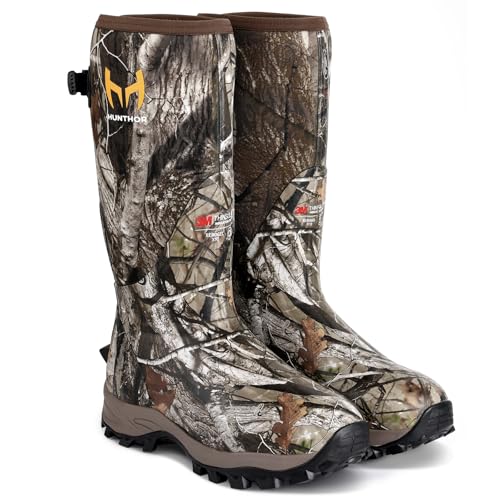
2.Hunthor Xerogel Insulated Hunting Boots
Xerogel insulation keeps feet warm from 0°F to 20°F in cold hunts

3.Hunthor 800g Insulated Hunting Boots
800g Thinsulate and 6mm neoprene help retain warmth on cold hunts

4.TIDEWE 800g Insulated Rubber Hunting Boots
800g insulation and 7mm neoprene help retain warmth on cold hunts

5.MUCK Woody Max Hunting Boots, 5mm Neoprene
5 mm neoprene and fleece lining retain warmth in frigid conditions
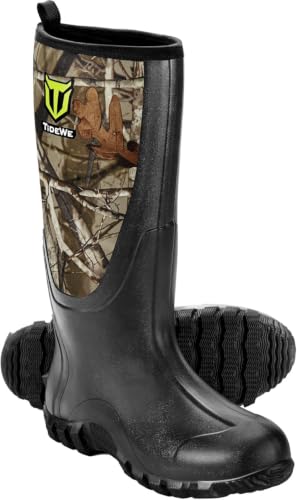
6.TIDEWE BT010-NG-11 Rubber Boots, 6mm Neoprene
6mm neoprene and natural rubber keep feet dry through mud and snow

7.Hunthor 1600g Insulated Hunting Boots
1600g insulation with 4mm neoprene and 2mm fleece locks in warmth
1. MUCK Arctic Pro Hunting Boots, 17-Inch Tall
MUCK Arctic Pro boots keep hunters’ feet warm and protected in extreme cold. Their 8 mm neoprene flexes around the foot and helps with waterproofing, shock absorption and heat retention, while its shape can help limit rubbing.
MUCK rates them for comfort from minus 60 to 30 degrees Fahrenheit. Fleece lining adds warmth, and 2 mm of thermal foam sits beneath the footbed for another layer of insulation during cold-weather outings.
The 17-inch height gives these boots coverage up the lower leg. High-grade rubber makes them 100% waterproof, while the stretch-fit topline hugs the calf to help keep warmth in and cold and debris out.
Reinforcement at the instep, heel and Achilles adds support in key areas. A lightweight EVA midsole cushions each step, and the rugged Bob-Tracker outsole is designed for demanding ground.
At about 2.3 pounds per boot, they offer substantial cold-weather coverage without a heavy listed weight. Rear pull loops help with taking them on and off, and the tan and bark color suits hunting use.
These boots suit hunters who need waterproof protection and insulation for very cold conditions, especially those who value tall coverage and a warm fleece lining.
- Rated for comfort down to minus 60°F
- 100% waterproof rubber protects in wet ground
- 17-inch height covers more of the lower leg
- Fleece and thermal foam add underfoot warmth
- No major cons
2. Hunthor Xerogel Insulated Hunting Boots
For cold-weather hunting, the Hunthor boots combine waterproof rubber construction with Xerogel insulation rated for temperatures from 0°F to 20°F. That range makes them suited to wet, freezing conditions during hunts, farm work and fishing.
The rubber exterior helps keep rain, snow, mud and wet ground away from your feet. Xerogel insulation is designed to retain warmth while staying breathable, so the boots address both cold and moisture in marshes, woods and other outdoor terrain.
Their insulated lining is 50% lighter than standard insulated rubber boots, according to Hunthor. That lighter build can reduce leg fatigue and help you move around during long outings without giving up the stated warmth.
Underfoot, an EVA-cushioned midsole adds support for extended wear, while flexible rubber allows the boots to move with your feet. The rubber outsole grips slippery mud, snow and uneven ground, and it supports quieter steps for tracking game.
The Next Camo G2 boots come in size 11 in the listed specifications. They suit hunters and outdoor workers who need insulated, waterproof rubber boots for cold, wet terrain, as well as people fishing or working on a farm.
- Rated for warmth from 0°F to 20°F
- Waterproof rubber shields feet from wet ground
- Lighter insulation helps reduce leg fatigue
- Grippy outsole supports movement on slippery ground
- Temperature rating stops at 0°F for colder outings
3. Hunthor 800g Insulated Hunting Boots
800g of Thinsulate insulation teams with 6mm neoprene to help keep these Hunthor hunting boots warm during cold-weather outings. That insulation creates a snugger fit, so hunters with wide feet or who want more room may need to size up.
A full rubber shell and sealed construction help keep water out while crossing wet grass, mud, marshes and shallow water. The flexible neoprene upper adds comfort for long days outdoors.
Underfoot, the lightweight EVA midsole cushions each step, while a steel shank supports the foot on uneven ground. The high-traction rubber outsole grips mud and wet terrain, helping hunters move over varied ground.
Reinforced rubber at the toe, heel and Achilles area covers spots that see more wear. An adjustable back gusset accommodates different calf sizes, and a kick tab makes the boots easier to pull off after a hunt.
The Next Camo G2 finish suits hunting use, and this pair comes in size 9. Check the size chart and fit guide before ordering, especially if you have wide feet or prefer a looser fit. These boots suit hunters who need insulated, waterproof footwear for cold and wet conditions.
- 800g Thinsulate and 6mm neoprene add warmth
- Sealed rubber shell helps keep water out
- EVA cushioning and steel shank support steps
- High-traction outsole grips wet, uneven ground
- Reinforced high-wear areas help protect the boots
- Insulation creates a snugger fit for some
4. TIDEWE 800g Insulated Rubber Hunting Boots
Hunters who spend long hours outdoors get 800 grams of insulation and 7mm neoprene in these TIDEWE rubber boots. Those layers help retain body heat during cold-weather hunts, whether you walk, sit or wait in a blind.
The waterproof rubber-and-neoprene construction helps keep feet dry in wet grass, mud, snow and shallow water. Its reinforced rubber shell reaches high on the boot, with extra protection at the toe and heel against moisture, brush and rough ground.
A rugged outsole provides traction on muddy, uneven and slippery terrain. That grip can help as you move between hunting spots or handle other cold, wet outdoor work, including ice fishing and farm tasks.
Inside, a contoured EVA midsole cushions each step and absorbs shock. The adjustable back gusset and cinch buckle help you set a secure fit, and they make the boots easier to put on and remove.
This size 11 pair weighs about 7 pounds, so it may feel substantial for hunters covering long distances on foot. Wide-footed buyers should order one size up; the maker also notes that camo patterns can vary slightly between pairs.
The 800g Next Camo G2 version suits men who need insulated, waterproof boots for cold and wet conditions. Its combination of warmth, water protection and outsole grip also fits ice fishing, farm work and other outdoor tasks.
- 800g insulation and 7mm neoprene retain warmth
- Waterproof rubber and neoprene help keep feet dry
- Rugged outsole grips muddy, uneven ground
- EVA midsole cushions steps and absorbs shock
- Adjustable gusset and buckle help secure the fit
- About 7 pounds may feel heavy on long walks
5. MUCK Woody Max Hunting Boots, 5mm Neoprene
For hunting grounds where warmth and waterproofing matter, the MUCK Woody Max pairs a rubber exterior with 5 mm neoprene. The neoprene flexes to fit your feet, helps absorb shocks, and retains heat while keeping water out.
A fleece lining adds warmth for cold outings, while 2 mm of thermal foam sits beneath the footbed. The boots have a comfort rating from minus 40 to 40 degrees Fahrenheit, suiting a wide range of winter and milder conditions.
The high-grade rubber exterior makes these boots fully waterproof and adds toughness for outdoor use. Inside, an EVA contoured, molded midsole provides cushioning without adding unnecessary weight.
Underfoot, the MS-1 molded outsole has a rugged tread designed for stability and protection on hunting terrain. A rear pull loop gives you a hand when pulling the boots on or taking them off.
At about 2.3 pounds, each listed pair offers insulated, waterproof coverage for hunting trips. The Mossy Oak color suits hunters looking for a patterned boot, and the size shown in the specifications is 10.
These boots suit men who want warm, waterproof rubber footwear with a cushioned midsole and grippy outsole for hunting in cold or changing conditions.
- 5 mm neoprene adds warmth and flexibility
- Fleece lining and thermal foam insulate feet
- Fully waterproof rubber exterior for hunting
- Molded outsole supports stability on rough ground
- Comfort range ends at 40°F in warmer weather
6. TIDEWE BT010-NG-11 Rubber Boots, 6mm Neoprene
The 6mm neoprene upper and natural rubber shell give these TIDEWE hunting boots waterproof coverage for wet ground. Their tall shafts help shield your lower legs from mud, rain, wet grass and snow.
Deep tread on the rubber outsoles grips mud, wet grass, snow and uneven terrain. A steel shank supports the foot from below, while reinforced rubber at the toe and heel adds protection during outdoor work.
Soft neoprene flexes as you walk, and a cushioned footbed supports long periods of standing. The breathable mesh lining helps circulate air, and the boots are comfort rated from -4°F to 68°F.
The pull-on construction and rear kick tab make the boots easier to put on and take off after hunting, fishing, gardening or farm work. They also suit camping, snow removal and other muddy tasks.
For sizing, check the chart and measure your feet before ordering. The guidance recommends going up one size for wide feet, high insteps, larger calves, thick socks or extra room; this size 11 pair comes in Next Camo G2.
These boots suit hunters and outdoor workers who need waterproof coverage, traction and underfoot support across changing conditions. Their flexible fit and broad comfort range also make them a practical choice for long days outside.
- Waterproof 6mm neoprene and rubber shell
- Deep tread grips mud, snow and uneven ground
- Steel shank supports feet underfoot
- Comfort rated from -4°F to 68°F
- Sizing may need adjustment for a roomy fit
7. Hunthor 1600g Insulated Hunting Boots
Hunthor makes these hunting boots for men who need warmth, waterproof coverage and grip in cold outdoor conditions. Their 1600g insulation pairs 4mm neoprene with 2mm fleece, and the title gives them a -20°F rating for winter hunts and outdoor work.
A fully waterproof upper helps keep feet dry in wetlands, rain and snow. That protection also suits fishing and farm chores, where wet ground can be part of the day.
For traction and support, the boots combine a rugged rubber outsole with a steel shank and a lightweight EVA midsole. The outsole grips slippery or uneven ground, while the midsole absorbs shock as you walk over rough terrain.
Reinforced rubber at the toe and heel adds protection in demanding conditions. An adjustable back gusset lets you secure the fit, and a kick-off heel plate helps you remove the boots without pulling at the upper.
The Next Camo pattern suits forest, brush and field settings where hunters want to blend into their surroundings. It also keeps these boots useful for outdoor tasks beyond hunting, including fishing and farm work.
At about 5.5 pounds, they are a substantial pair to carry or wear over a long outing. The size 10 boots suit men seeking insulated, waterproof coverage and firm footing for cold-weather hunting and other outdoor work.
- 1600g insulation helps retain warmth in cold
- Waterproof upper keeps feet dry in wet ground
- Steel shank and rubber outsole aid footing
- Kick-off heel plate makes removal easier
- About 5.5 pounds may feel heavy on hikes
How to Choose the Best Hunting Rubber Boots for Men
The right hunting rubber boots keep water out, support your feet, and suit the temperatures and ground you face. Your choice depends on insulation, fit, traction, weight, and how often you’ll wear them.
| If You Need | Look For | Expect |
|---|---|---|
| Very cold-weather hunts | Heavy insulation, warm lining | More weight and bulk |
| Mild weather and active walks | Breathable lining, lighter build | Less warmth in freezing weather |
| Wet marshes or streams | Tall waterproof rubber construction | Less airflow around feet |
| Uneven, rocky ground | Deep tread, supportive shank | A stiffer feel underfoot |
| Easy on-and-off access | Adjustable gusset, pull tab | More hardware to adjust |
| One pair for varied seasons | Moderate insulation, mesh lining | Less specialized cold protection |
Temperature and Insulation
Start with the coldest conditions you expect, because insulation affects comfort more than a boot’s advertised style or color. Ratings are guides, not guarantees; activity level, socks, fit, wind, and time spent standing all change how warm your feet feel.
Insulation figures such as 800g or 1600g describe the amount of insulating material, not a direct temperature promise. Higher numbers generally suit cold, low-activity hunts, while lighter insulation better suits walking or milder days.
Some boots list a comfort-temperature range, but treat it as a starting point rather than a precise boundary. If you sit for long periods in freezing weather, choose more warmth than an active hunter who keeps moving.
Neoprene thickness also affects warmth and flexibility. A 7–8 mm layer generally favors colder conditions, while 4–6 mm options feel less bulky for mixed-season use; pair insulation with socks that leave room for circulation.
Fit and Sizing
A correct fit leaves space for warm socks without letting your heel lift excessively. Tight boots compress socks and reduce warmth, while loose boots encourage rubbing and make uneven ground less secure.
Try boots with the socks you plan to hunt in, ideally later in the day when feet are slightly larger. Your toes should not press against the front on downhill steps, and the heel should stay reasonably planted.
Boot sizing varies, so use the maker’s size chart and look for user guidance about width or half sizes. If you wear thick winter socks, allow extra room, but avoid sizing up so far that your foot slides.
An adjustable rear gusset helps fit different calves and makes entry easier, especially over pants. It also adds a closure to set correctly; a fixed shaft offers fewer adjustments but may feel simpler and more secure.
Waterproofing and Height
Rubber shells and sealed seams help keep water out, but the boot’s height determines how deep you can wade before water reaches the opening. Tall shafts suit marshes and wet brush, while shorter designs feel less cumbersome.
Measure likely water depth against the shaft height, leaving room for splashes and movement. Water can still enter over the top, so consider gaiters or a secure pant arrangement when crossing deeper water or working in heavy rain.
A fully waterproof boot may also trap sweat because rubber does not breathe like fabric. For long walks, look for a breathable inner lining and dry the boots between outings to limit dampness and odor.
Traction and Underfoot Support
Deep rubber tread helps you grip slick mud, wet grass, and loose ground, but tread shape matters as much as depth. Look for spaced lugs that can shed mud rather than a smooth pattern that clogs.
A steel shank is a firm support piece beneath the arch, useful on rocky ground or when carrying a heavy pack. It adds stiffness and weight, so hunters walking mostly on soft ground may prefer a more flexible sole.
EVA midsoles cushion steps and reduce harsh impact, especially over long distances. Contoured cushioning may help support the foot, but it cannot correct a poor fit; consider your arch comfort and any need for custom insoles.
Weight and Walking Comfort
Boot weight adds up over a full day, particularly when you walk miles or climb slopes. Lighter materials and midsoles reduce fatigue, while thick insulation, reinforcement, and steel support tend to make boots heavier.
Compare the listed weight and confirm whether it refers to one boot or a pair. If you cover long distances in mild weather, prioritize lower weight; for stationary cold hunts, added insulation may be worth carrying.
Flexibility also affects how natural each step feels. A softer boot is easier to walk in, while a stiffer sole offers more support on rough terrain; match the balance to your usual routes.
Durability and Reinforcement
Repeated contact with rocks, branches, and equipment can wear high-stress areas first. Reinforced toes, heels, and Achilles zones help protect common impact points, especially if you work in the boots as well as hunt.
Inspect construction details around seams, the sole, and the point where rubber meets other materials. A sturdy shell and robust tread matter for frequent use, while occasional wet-weather wear may not justify extra weight or cost.
Lining and Seasonal Use
Fleece and thick thermal linings add warmth, while breathable mesh can feel more comfortable during active use in milder weather. Choose based on the conditions you actually face rather than treating one boot as suitable for every season.
For spring, early fall, or warm workdays, heavy insulation can leave feet sweaty. A moderate or lighter lining is usually easier to manage, while cold, still hunts call for more insulation and warmer socks.
Price and Value
Lower-priced boots may cover basic waterproofing and traction for occasional use, while higher prices often reflect added insulation, reinforcement, support, or specialized construction. Compare those features with your weather and mileage rather than assuming cost alone means better performance.
Paying more makes sense when you hunt frequently, face severe cold, or need stronger underfoot support. For brief trips in mild conditions, a simpler boot may meet your needs; set a budget after choosing the essential features.
Care and Storage
Rubber boots last longer when mud and grit are rinsed away after use, because debris can wear the surface and hold moisture. Dry them at room temperature, away from direct heaters that can damage rubber or adhesives.
Store boots upright in a cool, shaded place, and remove damp liners or insoles when possible. Before buying, review care guidance and warranty terms, since coverage and exclusions vary between makers.
Frequently Asked Questions
How do I choose between the different insulation levels?
For the coldest conditions, consider the Hunthor 1600g Insulated Hunting Boots or MUCK Arctic Pro Hunting Boots. The Hunthor Xerogel is specified for hunts from 0°F to 20°F, while the other models list their insulation materials without a temperature range.
What are these hunting boots made of?
The reviewed boots use neoprene insulation, and the TIDEWE BT010-NG-11 also lists natural rubber. Lining and insulation vary: for example, the MUCK Arctic Pro and Woody Max have fleece linings.
What comes in the box with each pair?
The product details provided do not specify included accessories or packaging contents. Check the individual listing for what comes with the boots.
Should I choose the Hunthor 800g or TIDEWE 800g boots?
Both list 800g insulation for cold hunts, but the Hunthor also has 6mm neoprene and the TIDEWE has 7mm neoprene. Compare their fit and other listing details to decide which better suits your needs.
Which boots are suited to mud and snow?
The TIDEWE BT010-NG-11 is specifically described as keeping feet dry through mud and snow, thanks to 6mm neoprene and natural rubber.
How can I keep my feet warm on a cold hunt?
Choose insulation suited to the conditions: the Hunthor Xerogel is specified for 0°F to 20°F, while the Hunthor 1600g and MUCK Arctic Pro emphasize warmth for cold conditions. Check each product’s details when matching boots to your expected weather.
So, What Should You Buy?
For most hunters, the Hunthor 800g Insulated Hunting Boots offer a practical balance, combining 800g Thinsulate with 6mm neoprene for cold hunts. Choose the TIDEWE BT010-NG-11 for muddy or snowy conditions, or the MUCK Arctic Pro when extreme cold calls for 8mm neoprene and fleece lining.
For colder hunts, the Hunthor 1600g delivers more insulation; the Hunthor Xerogel suits temperatures from 0°F to 20°F. Prefer fleece-lined frigid-weather warmth? Consider the MUCK Woody Max, while the TIDEWE 800g is another insulated option. Pick the boot that matches your conditions and head out with confidence.