

A steady shooting position helps you keep your aim on target during a hunt, especially when you need to hold your rifle for more than a few seconds. A tree or fence post can offer support, but you may not find one at the right height or within easy reach.
Hunting shooting sticks give you portable support wherever you set up. Their legs rest on the ground and cradle your rifle, helping reduce arm strain and limiting the wobble you may get when shooting unsupported.
Many models adjust to different heights, fold for easier carrying, and use rubber feet to grip varied ground. Some also pivot to help you follow movement, so you can stay comfortable while keeping your aim steady.
Sticks differ in weight, height range, and leg design, so consider your terrain and how you carry gear. Explore the best hunting shooting sticks below to find support that suits your next hunt.
7 Best Hunting Shooting Sticks Reviews

1.PRIMOS 65815 Trigger Stick Gen3 Tripod
One-hand trigger adjusts height from 24 to 62 inches for fast setup

2.Lusweimi 74-Inch Hunting Rifle Tripod
Six ground spikes grip uneven soil, while two camo straps add utility

3.SWAGGER Shooting Stick Adjustable Monopod
Adjusts from 24" to 61" for steady support while sitting or kneeling
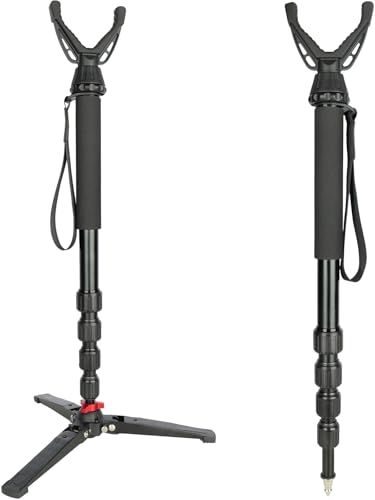
4.Jalarox Adjustable Stick 360° Shooting Stick
360° rotating padded V-yoke offers flexible aim and helps shield

5.JINSE Adjustable Aluminum Shooting Stick
Adjusts from 22 to 62 inches for sitting, kneeling, or standing
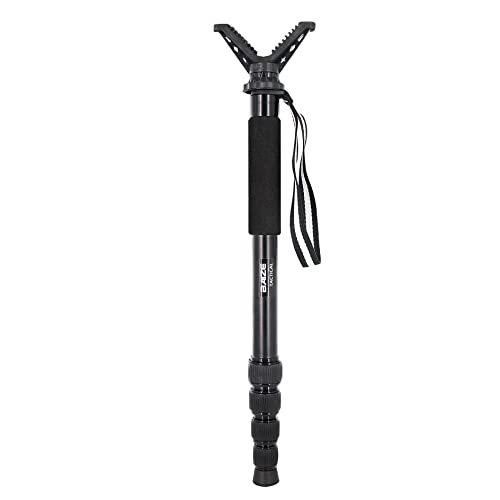
6.BZTAC SM007-1 Hunting Shooting Sticks
360° swiveling V-yoke tracks moving targets and steadies your rifle

7.AUSCAMOTEK Aluminum Monopod Shooting Stick
Weighs 0.55 pounds and extends to 40 inches for portable field support
1. PRIMOS 65815 Trigger Stick Gen3 Tripod
The Primos Trigger Stick Gen3 gives hunters a height-adjustable support for shooting from sitting, kneeling or standing positions. Its trigger adjusts the tripod from 24 to 62 inches, so you can set the support to suit your stance without twisting the legs.
The quick-detach yoke switches between a shooting rest and a panning support for optics or cameras. That flexibility makes it useful beyond taking shots, including scanning the area or framing a photo.
Legs that spread to extreme angles help the tripod stand on uneven ground, in brush or in open fields. You can also use it in monopod, bipod or tripod form, adapting the setup to your position.
The contoured, no-slip grip gives your hand a secure place to hold, while the strengthened rotating joint supports quiet tracking of moving targets. One-handed adjustments let you change the setup while keeping your other hand free.
At about one pound, this black stick is light to carry between locations. It suits hunters who want adjustable support for varied terrain, as well as people who need a panning rest for optics or cameras.
- Adjusts from 24 to 62 inches for varied stances
- Quick-detach yoke pans optics or supports cameras
- Angled legs adapt to uneven hunting terrain
- About one pound makes it light to carry
- No major cons
2. Lusweimi 74-Inch Hunting Rifle Tripod
For hunting and field shooting across uneven terrain, the Lusweimi tripod offers adjustable-height support for a rifle or crossbow. Its V yoke gives the setup a place to rest, while its height range suits standing observation and lower shooting positions.
The tripod reaches 74 inches at its tallest, so you can set it for a standing position or lower it to match the ground and your stance. Adjusting the height also helps you position the rest as terrain changes.
Six ground spikes grip soil, dirt and uneven ground to help hold the legs in place. Two camo straps add setup options for outdoor use, and the green finish suits field surroundings.
Its aluminum frame keeps the support portable for hunters moving between locations. The V yoke works with both rifles and crossbows, making it useful for different field setups without changing the basic rest.
This shooting stick suits hunters who want a height-adjustable rest for outdoor use and need support for either a rifle or crossbow. Its tall reach, ground spikes and portable frame make it a practical choice for varied terrain.
- Adjusts up to 74 inches for varied positions
- Six spikes grip soil and uneven ground
- Supports both rifles and crossbows in the field
- Aluminum frame helps keep it portable
- No major cons
3. SWAGGER Shooting Stick Adjustable Monopod
24 to 61 inches of height adjustment lets the SWAGGER Shooting Stick support a rifle from sitting, kneeling or standing positions. This monopod gives hunters a rest they can adjust to suit their stance in ground blinds and other shooting locations.
The height range also makes it useful across different hunting setups. You can set it low while sitting or kneeling, then extend it for a standing position without changing to a different rest.
Its compact design helps with carrying it between locations. The stick collapses to fit inside a backpack or strap onto the outside, so it can stay within reach on the way to a ground blind or open terrain.
Quick setup and adjustment help hunters get the monopod ready with little preparation. Once positioned, the rest supports a steadier aim and lets you make adjustments to your shooting position.
The black shooting stick is intended for hunting rifles and offers a portable support option for different field positions. Its one-leg design keeps the setup compact, though the provided specifications do not state its weight or collapsed length.
Hunters who want adjustable rifle support for sitting, kneeling and standing can consider this stick. It suits people who need a compact monopod for ground blinds or open terrain and want to carry it in a backpack or strap it outside.
- Adjusts from 24 to 61 inches for varied stances
- Collapses for backpack or outside carry
- Supports sitting, kneeling and standing shots
- Quick setup helps prepare the rest in the field
- Monopod design offers support from one point
4. Jalarox Adjustable Stick 360° Shooting Stick
Hunters who need support in different shooting positions get a flexible option in the Jalarox shooting sticks. Its 360-degree rotating V-yoke lets you adjust the rifle’s angle, while thick rubber padding helps protect the stock and hold it in place.
The setup converts between a tripod, a monopod and traditional shooting sticks. Its head also turns 360 degrees to help you adjust the support as the terrain or your position changes.
Four-section aluminum legs extend from about 21 inches to about 67 inches. That range accommodates prone, kneeling and standing positions, and non-slip feet help the sticks stay planted on rugged ground.
The removable V-yoke comes off when you want to use the universal quarter-inch or three-eighths-inch screw mount. Those fittings support binoculars, spotting scopes, cameras and other compatible gear, giving the sticks uses beyond rifle support.
Screw-lock clamps secure the adjustable legs, and the whole setup folds down to about 16.5 inches for storage or transport. At about 1.9 pounds, the aluminum alloy frame is light enough to carry on hunting trips, hikes or birdwatching outings.
This black support suits hunters who want one lightweight setup for several shooting positions, along with a mount for optics or a camera. Buyers who need a stable base across uneven ground may value the tripod option, while those prioritizing compact carry can fold it down for travel.
- Converts between tripod, monopod and shooting sticks
- 360-degree V-yoke adjusts rifle aiming angles
- Adjusts from about 21 to 67 inches
- Weighs about 1.9 pounds for carrying
- No major cons
5. JINSE Adjustable Aluminum Shooting Stick
In a field, blind or target-practice spot, the JINSE shooting stick gives a rifle a place to rest while you aim. Its height adjusts from 22 to 62 inches, so you can set it for sitting, kneeling or standing positions.
The fixed V-shaped yoke supports the rifle at its contact point. It also protects that area, giving you a steady rest for outdoor shooting without needing to hold the rifle unsupported.
Four flip locks divide the five-section shaft into adjustable lengths. You can release the locks, change the height and secure the sections again when your position or shooting setup changes.
Aluminum alloy construction keeps the monopod light enough to carry during time outdoors. Its portable, straightforward design suits hunting from a blind or in a field, as well as target practice and other outdoor shooting.
The black finish gives it a simple look, while the single-leg form makes it a compact alternative to a wider rest. The data does not list a weight, so buyers who need an exact carry weight may want to check before choosing it.
This shooting stick suits hunters who want adjustable rifle support for several shooting positions, plus shooters who need a portable rest for outdoor target practice.
- Adjusts from 22 to 62 inches for varied positions
- V-yoke supports the rifle and protects its contact area
- Four flip locks speed up height changes in the field
- Aluminum alloy keeps the monopod light to carry
- Single-leg support offers less stability than a wider rest
6. BZTAC SM007-1 Hunting Shooting Sticks
The removable 360-degree V-shaped yoke is the BZTAC shooting stick’s main feature, letting you turn the supported rifle or shotgun to follow moving targets. Its rubber contact points help protect the barrel, and the yoke fits rifles and shotguns.
Five aluminum sections adjust from about 19 to 62 inches, so you can set the height for crouching, sitting or standing positions. Four rubber twist locks secure the sections, and the adjustment also lets the stick serve as a walking aid.
The aluminum tubes range from 16 to 28 millimeters in diameter, with a black anodized finish that resists abrasion. At about 0.9 pounds, it is light to carry between positions or on a walk.
A foam grip adds friction when you hold the stick, including during longer walks. Beyond firearms, it can support cameras and sporting scopes, giving it uses for other outdoor viewing and photography.
A carrying bag holds the parts and can attach to a belt or rucksack. This stick suits hunters who want adjustable support for varied shooting positions, plus a lightweight walking stick and a stand for optics or cameras.
- Height adjusts from about 19 to 62 inches
- 360-degree yoke tracks moving targets
- About 0.9 pounds for easy carrying
- Supports rifles, shotguns, cameras and scopes
- Five sections need adjustment between positions
7. AUSCAMOTEK Aluminum Monopod Shooting Stick
AUSCAMOTEK gives hunters a lightweight shooting stick that adjusts to different positions in the field. Its four-section telescoping design extends from 16 inches folded to 40 inches, so you can set the support height for ground-level, seated or standing use.
The 360-degree swivel U-yoke cradles a rifle or crossbow with soft rubber grips, which help protect the stock while you aim in different directions. It supports up to 12 pounds, giving hunting gear a stable resting point.
At about 0.75 pounds, this black aluminum monopod is easy to carry between locations. A sharp spike anchors it in soft ground, while a non-slip cap helps it stand on hard surfaces.
The U-yoke detaches, and its standard 1/4-inch screw accepts a camera, spotting scope or other compatible accessory. That lets the stick support wildlife photography or viewing as well as hunting.
It can also serve as a walking stick on uneven ground. The 40-inch maximum height may not suit every standing user, but this compact option fits hunters who want adjustable support for rifles or crossbows and occasional use with cameras or scopes.
- Adjusts from 16 to 40 inches for varied positions
- 360° yoke supports aiming in different directions
- Holds up to 12 pounds of hunting gear
- Weighs about 0.75 pounds for easier carrying
- Spike and non-slip cap suit different terrain
- 40-inch maximum height may limit tall users
How to Choose the Best Hunting Shooting Sticks
Choosing a hunting shooting stick means balancing steady aim with quick movement in the field. Your shooting position, terrain, rifle setup, carry distance and budget all shape which height range, support style and adjustments will suit you best.
| If You Need | Look For | Expect |
|---|---|---|
| A steady rest on uneven ground | Adjustable tripod legs and feet | Wider setup takes longer |
| Quick support while moving | Lightweight, compact monopod | Less stability than a tripod |
| Support for varied shooting positions | Broad height range and fast locks | More sections need adjustment |
| A moving target in open terrain | Rotating or panning yoke | Moving support takes practice |
| Rifle and crossbow support | V-yoke sized for both | Fit varies by stock width |
| A stick for backpack travel | Short folded length and low weight | Smaller setups may feel less rigid |
Stability and Support Style
The support layout is the first choice because it sets how steady the rifle feels and how quickly you can change position. A monopod is simple to carry and place, while a bipod or tripod spreads contact across more ground.
For a quick rest while walking or hunting from a blind, a monopod often suits the job. It needs your body or another support to steady the rifle, so it is less forgiving when you shoot unsupported.
A tripod provides a broader base, which helps on uneven ground or during longer waits. Its legs take more room and setup time, so consider whether added steadiness is worth carrying and placing extra supports.
Convertible supports offer more ways to set up, but extra joints and modes need attention. Look for leg positions that lock firmly, and favor a simple layout if you need to raise the stick quickly.
Height Range and Shooting Positions
The useful height range should match the way you actually shoot, not just a large maximum number. Sitting, kneeling and standing positions need different support heights, and a stick that does not reach your position leaves you hunched or unsupported.
Measure from the ground to the rifle’s fore-end while you are in your usual shooting stance. Compare that height with the support’s adjustment range, allowing room to set the rifle comfortably rather than extending every section fully.
A broad range, roughly 20 to 70 inches, covers many seated and standing setups. Shorter sticks suit seated use and compact carry, while taller hunters or those shooting while standing need more extension.
Minimum height also matters in blinds, where a high rest may not fit between the seat and window. If you switch positions often, choose controls that let you adjust the height without taking the rifle off the support.
Ground Contact and Terrain
Feet and leg placement decide how well a stick holds on soft soil, rocks, snow or hard ground. Spikes can bite into loose earth, while rubber caps are more suitable for firm surfaces or floors inside a blind.
For varied terrain, look for feet that stay secure without slipping and legs that can spread or adjust independently. Uneven-leg adjustment helps level the rest, although more setup points need more time to position.
Wide leg placement adds stability on slopes, but the spread can be awkward in brush or confined cover. A compact footprint suits tight spaces; a broader stance is more helpful for open ground and longer shots.
Yoke Fit and Rifle Contact
The yoke is the cradle that supports the rifle’s fore-end, so its shape should match your stock and intended equipment. A V-shaped rest keeps many rifle stocks centered, while a padded surface helps protect finishes and reduces slipping.
Check the yoke width and whether its contact points leave room for your stock, sling studs or accessories. A narrow cradle may suit a slim fore-end, but a wider stock needs enough space to sit without rocking.
If you use a crossbow as well as a rifle, confirm that the cradle supports its shape and balance. A stick’s general compatibility claim does not guarantee a secure fit for every model or stock profile.
Adjustments and Locking
Height controls affect how quickly you can get a rest in place. Trigger adjustments support fast changes with one hand, while flip or twist locks usually require you to operate each section directly.
Telescoping sections make the stick compact, but every section adds a potential adjustment point. Fewer sections tend to be simpler to set; more sections can offer a shorter folded length and finer height choices.
Look for locks that close firmly and are easy to operate with gloves. A loose lock can let a section slip under pressure, while a tight or awkward control slows setup when you need to reposition.
Yoke Movement and Other Mounts
A fixed yoke keeps the rifle in a predictable position and suits straightforward aiming. A rotating or panning yoke follows movement across a wider area, which helps when tracking, but it requires a controlled touch to avoid unwanted motion.
Confirm whether the yoke detaches and how it attaches before buying. A removable cradle offers flexibility, but a loose connection or a mount that does not match your equipment can create extra steps or prevent use.
Some sticks include threaded mounts for cameras or optics, but thread size must match your accessory. Treat extra mounting options as useful only if you plan to use them; each attachment adds setup and compatibility questions.
Weight and Packed Length
Carry weight shapes how willing you will be to bring the stick on a long walk. A sub-one-pound model eases backpack carry, while a heavier frame may feel less flexible but adds weight to every mile.
Folded length matters in a pack, vehicle or crowded blind. A stick around 16 inches is easier to stow than a longer one, though compact sections and joints may require more careful adjustment.
Balance portability against stiffness rather than choosing the lightest option automatically. If your route is long and the stick is mainly a quick rest, low weight is valuable; for a fixed position, stability may deserve priority.
Materials and Build
Aluminum keeps many shooting sticks relatively light and resists outdoor use, but tube size, joints and lock construction also affect rigidity. Look for solid connections and sections that do not visibly wobble when set at your working height.
Rotating joints and removable parts add useful movement, yet they create more points that need secure fitting. A simpler construction suits buyers who value fewer adjustments, while frequent position changes can justify added mechanisms.
Protective finishes and grips help when hands are wet or cold, but they do not replace sound joints. Store the stick dry after wet outings, and inspect moving parts periodically for grit or looseness.
Price and Value
Lower-priced sticks usually focus on a basic monopod, simple height changes and a fixed cradle. That is often enough for occasional use in a blind, but fewer support modes or less refined adjustments may limit flexibility.
A higher price may bring a tripod conversion, rotating yoke, quicker controls, lighter construction or added mounting options. Pay extra only for features that match your terrain and shooting routine, not for unused attachments.
Frequent hunters who move between sitting and standing positions may value fast adjustment and multiple support modes. For occasional target practice or a single familiar stance, a simpler model can meet the need without added cost.
Warranty and Parts
Warranty terms vary, so read what is covered, how long coverage lasts and whether wear parts are excluded. A clear process helps if a lock, joint or attachment fails during normal use.
Ask whether replacement feet, locks or yokes are available, especially for a stick with removable components. Serviceable parts can extend useful life, while a limited warranty or unavailable components can make a small failure costly.
Safe Use and Field Practice
A shooting stick supports aim but does not replace safe firearm handling or a stable shooting position. Keep the muzzle pointed in a safe direction, and confirm your target and what lies beyond it before firing.
Practice setting the stick at home or at a range before relying on it in the field. Learn how the rifle rests, how the locks engage and how the setup moves, so adjustments do not distract you during a hunt.
Frequently Asked Questions
Do any of these shooting sticks need batteries or another power source?
The listed features are manually adjusted, and none of these models is described as requiring a power source.
What materials are the shooting sticks made from?
The JINSE and AUSCAMOTEK sticks are identified as aluminum. The listed details do not specify the materials used for the other models.
Which stick is quickest to adjust for a fast setup?
The PRIMOS 65815 Trigger Stick Gen3 Tripod has a one-hand trigger for adjusting its height from 24 to 62 inches.
Should I choose the Jalarox or the BZTAC SM007-1?
Both have a 360° swiveling V-yoke for flexible aiming and rifle support. Compare their full specifications and choose based on the other features that matter most to you.
What comes in the box with each shooting stick?
The listed product details do not say what accessories are included, so check the seller’s package contents before ordering.
Which sticks can support different shooting positions?
The SWAGGER adjusts from 24 to 61 inches for sitting or kneeling, while the JINSE adjusts from 22 to 62 inches for sitting, kneeling, or standing.
What should I consider for uneven ground or lightweight field carry?
The Lusweimi has six ground spikes for gripping uneven soil. For a lightweight option, the AUSCAMOTEK weighs 0.55 pounds and extends to 40 inches.
So, What Should You Buy?
For most hunters, the PRIMOS 65815 Trigger Stick Gen3 Tripod is the best pick: its one-hand trigger makes quick height adjustments easy. Choose the JINSE Adjustable Aluminum Shooting Stick for flexible sitting-to-standing support at a budget-friendly style, or the Lusweimi 74-Inch Tripod if ground grip and extra utility matter most.
For a moving target, consider the BZTAC SM007-1’s swiveling V-yoke; the Jalarox also offers 360° rotation. The SWAGGER suits sitting or kneeling, while the 0.55-pound AUSCAMOTEK is the lightest portable option. Pick the model that matches your hunt and head out with confidence.