

A steady view helps you pick out wildlife, judge distance, and watch a ridge without tiring your arms. Handheld binoculars can shake during long glassing sessions, while resting them on a backpack or rock gives you limited height and positioning.
A hunting tripod offers a steadier, adjustable platform for your binoculars. Its legs support the viewing weight, and a compatible mount holds your binoculars in place, so you can scan for longer with less arm strain and keep your view more stable.
Many models fold for easier travel, adjust to suit uneven ground, and use quick-release plates to make setup simpler. A smooth head helps you follow moving wildlife, while sturdy legs keep your binoculars supported as you glass.
Tripods vary in height, weight, stability, and mounting style, so consider your terrain and how far you’ll carry yours. Explore the best hunting tripods for binoculars below to find one that suits your hunts.
8 Best Hunting Tripods for Binoculars Reviews

1.YUNJITONN Hunting Tripod with 42mm Ball Head
10-layer carbon fiber tubes keep this 3.5 lb tripod rigid yet light

2.BOG 1237508 DeathGrip Bantam Hunting Tripod
120° tilt and 360° panning help you position for the perfect shot
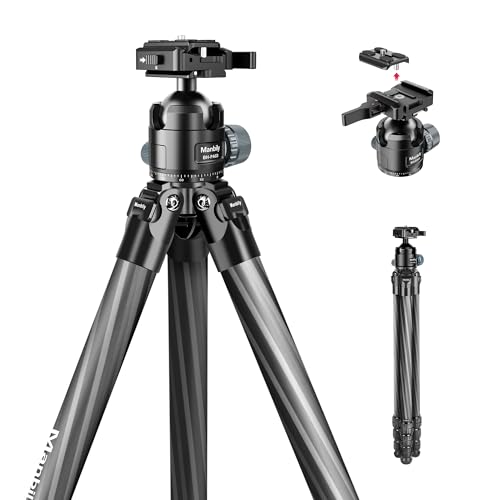
3.Manbily WZ-324PA03 Carbon Fiber Tripod
44mm ball head supports up to 44 lbs for stable shooting in the field

4.Jalarox Adjustable Tripod with 360° V Yoke
360° rotating V yoke tracks targets and cradles your rifle securely

5.PRIMOS 65815 Trigger Stick Gen3 Tripod
Quick-detach yoke switches from shooting support to panning optics

6.TKKOK Hunting Tripod with 360° Ball Head
Adjusts from 31.18 to 63.26 inches for varied shooting positions

7.BOG 1159188 DeathGrip Infinite Hunting Tripod
360° panning and 180° tilt support steady tracking of moving targets

8.Jalarox Adjustable Tripod with 360° V-Yoke
Lever locks set height from 21.25 to 69.3 inches for varied positions
1. YUNJITONN Hunting Tripod with 42mm Ball Head
YUNJITONN holds binoculars and other gear for hunting, shooting and outdoor use. Its 10-layer, 32.5-millimeter carbon-fiber tubes pair with aluminum alloy construction, giving the tripod a light 3.5-pound weight for carrying between viewing spots.
The legs extend from 26 to about 64 inches, so you can set the binoculars at a comfortable viewing height or lower them for a seated position. That range also lets you adjust the setup to different terrain and shooting positions.
A 42-millimeter ball head and Lever Arca-Swiss quick-release clamp let you attach compatible gear and reposition it. For binocular viewing, that head gives you a way to aim the mounted optics without moving the whole tripod.
Removable rubber feet grip uneven ground, which helps when a level patch of earth is hard to find. A leg-retention strap keeps the legs together for carrying, making it easier to move the tripod between outdoor locations.
The tripod comes in black and weighs about 3.5 pounds, a useful balance for people who need to carry their setup. Its stated height range suits both standing and lower viewing positions, while the ball head supports quick equipment changes.
This tripod suits hunters who want to mount binoculars on uneven ground and adjust their viewing height. Check that your binocular mount works with the Lever Arca-Swiss clamp before choosing it.
- 10-layer carbon fiber keeps carry weight low
- Extends from 26 to about 64 inches
- 42mm ball head enables quick gear aiming
- Removable rubber feet grip uneven ground
- Compatibility with binocular mounts is unspecified
2. BOG 1237508 DeathGrip Bantam Hunting Tripod
For hunting from a blind or across an open field, this BOG tripod gives you an adjustable base for firearm support and outdoor use. Its DeathGrip head clamps onto a firearm’s forend with non-marring rubber inserts.
The head tilts up to 120 degrees and pans through 360 degrees, letting you reposition the supported firearm to follow a target. The clamp can handle weapons weighing up to 40 pounds, according to the product specifications.
Its aluminum legs adjust from 20 to 42 inches, so you can set the tripod for kneeling or standing shooting positions. Each leg adjusts independently, which helps balance it on rough or uneven ground.
At about 3.1 pounds, it is light enough to carry to a ground blind or into an open field. The compact build also makes it easier to transport between hunting locations.
The Realtree Original finish gives it a camouflage pattern for outdoor use. The product data describes a firearm clamp, so binocular users should note that it does not specify a binocular mount or adapter.
This tripod suits hunters who want adjustable firearm support on uneven terrain and value a lightweight carry. Binocular buyers should check whether they can use a compatible mount before choosing it.
- Lightweight 3.1-pound build is easy to carry
- Legs adjust from 20 to 42 inches for varied positions
- Head tilts 120 degrees and pans 360 degrees
- Clamp supports firearms up to 40 pounds on rough ground
- No major cons
3. Manbily WZ-324PA03 Carbon Fiber Tripod
62.2 inches of height gives the Manbily tripod room to hold binoculars above brush or uneven ground. Its 8-layer carbon-fiber legs have a maximum diameter of 32 millimeters and support steady viewing outdoors.
The 44-millimeter ball head supports up to 20 kilograms, enough capacity for binoculars and other compatible gear. Its dual U-slots allow two 90-degree vertical positions, while the head turns 360 degrees horizontally and tilts up to 45 degrees.
The low-profile head keeps equipment closer to the tripod platform, and its wide base spreads the load. A large adjustment knob helps you set the viewing angle, while the CNC-machined aluminum head uses a ball-and-socket design to limit movement after tightening.
The included adapter works with Arca-Swiss and Picatinny fittings. Its 1/4-inch quick-release plate comes off to leave a Picatinny clamp, giving you more mounting options for compatible equipment.
Quarter-turn twist locks adjust the legs, which offer three angles for uneven ground or low viewing positions. The tripod reaches a minimum height of 10.2 inches, and its rubber feet can be swapped for the included metal spikes.
The package also includes an Allen key, user manual and a shoulder-strap carrying bag. This grey tripod suits hunters who want adjustable support for binoculars and value a carbon-fiber build with multiple mounting options.
- 20-kilogram capacity supports heavier binocular setups
- 8-layer carbon fiber legs provide steady support
- Arca-Swiss and Picatinny adapter broadens compatibility
- 360-degree head rotation helps scan the area
- 62.2-inch maximum height may limit tall users
4. Jalarox Adjustable Tripod with 360° V Yoke
Hunters and outdoor observers get a lightweight support that works with binoculars, spotting scopes and cameras. The Jalarox shooting tripod has a removable V yoke that rotates 360 degrees, letting you turn the supported optic to follow a view.
Its height adjusts from about 12 to 22 inches for different shooting positions and viewing angles. Aluminum legs and non-slip rubber feet help steady the setup on varied terrain, while the padded yoke cradles equipment.
The rubber lining helps protect a rifle’s finish, but it also gives binoculars or a spotting scope a cushioned resting place. For other mounts, the removable yoke includes a universal 1/4-to-3/8-inch adapter that fits monopods, camera tripods and shooting sticks.
At about 12 ounces, the tripod is easy to carry on hunting trips or outdoor excursions. Its foldable, detachable design packs into the included nylon bag for storage and transport.
The short height range suits seated, prone or low-position use better than standing observation. It can still serve as a compact rest for hunters who want to support binoculars or an optic close to the ground.
This portable stand suits hunters and outdoor observers who need a light, adjustable support for binoculars, scopes or cameras, and value a rotating padded yoke over a taller viewing platform.
- Rotating yoke helps track moving targets
- About 12 ounces for easy field carry
- Fits binoculars, scopes and camera gear
- Adjustable height suits low viewing positions
- Short 12-to-22-inch range limits standing use
5. PRIMOS 65815 Trigger Stick Gen3 Tripod
In the field, the PRIMOS Trigger Stick works as a height-adjustable tripod for hunting, shooting and photography. It spans from 24 to 62 inches, so you can position binoculars or a camera from a seated, kneeling or standing posture.
A trigger lets you change its height without twisting the legs. That makes it easier to reposition your viewing setup as the terrain or your stance changes.
The quick-detach yoke lets you switch from a shooting stick to a panning support for optics or cameras. For binocular users, that gives you a way to move your view across a scene while the stick supports your equipment.
Its legs open to extreme angles for uneven ground, brush or open fields. The adjustable stance helps you set up in varied spots, rather than relying on a level patch of ground.
A contoured, no-slip grip and reinforced rotating joint support quiet tracking of moving targets. The black tripod weighs about 1 pound and can also be configured as a monopod or bipod, making it a fit for hunters who want a compact support option for binoculars and other gear.
- Adjusts from 24 to 62 inches for varied stances
- Quick-detach yoke pans optics and cameras
- Wide leg angles suit uneven ground and brush
- Changes height with a one-hand trigger
- No major cons
6. TKKOK Hunting Tripod with 360° Ball Head
The 360-degree ball head lets this TKKOK tripod pan across a full circle, so you can reposition binoculars or other mounted gear without moving the legs. Its adjustable height ranges from about 31 to 63 inches.
The low-profile head includes a bubble level to help you check alignment on uneven ground. Three leg angles—20, 45 and 85 degrees—let you set the tripod for different positions and terrain.
Twist locks secure the legs at your chosen height, while multiple lever locks help hold the setup steady. Retractable rubber feet add traction on ground such as grass or hillsides.
Heavy-duty aluminum construction keeps the frame at about 9.9 pounds. The anodized surface resists abrasion, and a retention strap adds security for a firearm, though binocular users may not need that feature.
For transport, the legs fold together, and a hook-and-loop strap holds them in place. A high-density foam handle gives you a padded grip while carrying it between observation spots.
This black tripod suits hunters and outdoor observers who want height adjustment, broad panning and a folding design, and who can manage its nearly 10-pound weight.
- 360-degree panning helps reposition mounted gear
- Height adjusts from about 31 to 63 inches
- Three leg angles suit varied ground positions
- Aluminum frame has an abrasion-resistant finish
- About 9.9 pounds may feel heavy to carry
7. BOG 1159188 DeathGrip Infinite Hunting Tripod
BOG makes the DeathGrip Infinite useful for hunters who want one tripod for binoculars, scopes and shooting setups. Its Arca-Swiss plate and included DeathGrip Ultralite head let you switch between compatible optics and firearms.
The tripod adjusts from about 6.5 inches to 59.5 inches, covering prone, seated and standing positions. Three leg-angle locks set the legs at 20, 45 or 85 degrees for different ground and shooting positions.
For tracking, the ball head pans 360 degrees and tilts 180 degrees. The head also supports steady positioning as you follow a moving target or adjust the view through binoculars or a spotting scope.
The clamp grips firearms weighing up to 40 pounds, and rubber inserts help protect their surfaces while adding grip. Twist leg locks secure height adjustments, while a non-slip rubber grip helps you hold the tripod during setup and transport.
Its aluminum construction comes in Olive Drab Green, and the tripod weighs about 8 pounds. That weight may suit a fixed hunting spot better than a long walk; it’s best for hunters who value adjustable positioning and support for several types of gear.
- Adjusts from prone height to 59.5 inches
- Arca-Swiss plate works with optics and firearms
- Ball head pans 360° and tilts 180°
- Clamp supports firearms up to 40 pounds
- About 8 pounds may feel heavy on hikes
8. Jalarox Adjustable Tripod with 360° V-Yoke
With a 360° V-yoke rest and height adjustment from about 21 to 69 inches, this Jalarox tripod offers two useful features for hunting setups. Its padded yoke supports a rifle, so binocular users should note that the data describes a rifle rest, not a binocular mount.
The yoke rotates through 360 degrees, letting you follow movement horizontally or vertically without shifting your feet. Rubber padding cradles the rifle and helps protect its finish from scratches.
Three-section lever locks adjust the legs independently. You can set the tripod for sitting, kneeling or standing positions, and its built-in bubble level helps you check whether the setup sits level.
At 2.25 pounds, the aluminum tripod is light to carry on longer walks over uneven ground. Its rubber feet have retractable spikes, giving you options for hard surfaces or softer ground such as grass and mud.
The tripod folds down and secures with a strap for transport, and a nylon carry bag comes with it. Its black-red finish has an anodized coating, which the maker says resists chips and wear.
This is best suited to hunters who need a lightweight, adjustable rifle rest and may also want a stable support for binoculars. The listed features focus on rifle use, so binocular buyers should check compatibility before choosing it.
- Rotating yoke helps track movement without repositioning
- Height adjusts from about 21 to 69 inches
- Weighs just 2.25 pounds for easier carrying
- Retractable spikes suit grass, mud and hard ground
- Designed around a rifle rest, not binoculars
How to Choose the Best Hunting Tripods for Binoculars
Choosing a hunting tripod for binoculars comes down to steady viewing, usable height, easy setup, and a mount that fits your optics. Your terrain, typical glassing time, carrying distance, and budget all shape the right balance.
| If You Need | Look For | Expect |
|---|---|---|
| Steady views at high magnification | Wide legs, rigid tubes, secure head | More weight to carry |
| Long-distance glassing | Standing height, smooth panning head | Taller tripods take more space |
| Uneven terrain | Independent legs, adjustable angles | Setup takes longer |
| Fast movement between spots | Low weight, quick locks, carry strap | Lighter builds may flex more |
| Quick binocular attachment | Compatible plate or adapter | Extra adapters add cost |
| Low-angle viewing | Low minimum height, spreading legs | Lower setups slow repositioning |
| Wet or rocky ground | Spiked feet or replaceable tips | Spikes need care on hard floors |
| Tight budget | Aluminum legs, basic head | Heavier carry and fewer adjustments |
Stability Under Load
A steady tripod helps keep binocular images from shaking, especially at higher magnification or during long glassing sessions. Wider legs and thicker tubes usually resist movement better, while a firm head keeps the view from drifting after you aim.
Look for a stated load rating that comfortably exceeds the combined weight of your binoculars, adapter, and head. Load figures do not guarantee steadiness, but a small margin helps avoid pushing the tripod near its limit.
Tube diameter and leg construction also affect stiffness. Carbon fiber usually saves weight for its strength, while aluminum often costs less and handles rough use well; either can work if the legs lock firmly and do not twist easily.
Height and Viewing Position
The right maximum height lets you glass without bending forward, while a low minimum height helps when you sit, kneel, or look across a slope. Measure your usual viewing position and compare it with the tripod’s working range.
For standing use, many buyers want a tripod that reaches eye level without extending its center column, if one is included. Raising a column adds height but often makes the setup less steady, so prioritize leg height when possible.
A very tall tripod offers flexibility on uneven ground, but it takes more room in a pack and can feel less rigid when fully extended. Shorter models suit seated glassing and compact carry, but limit standing comfort.
Head Movement and Control
The head controls how smoothly you aim and follow animals, so look for easy panning and enough tilt to track across slopes. A 360-degree pan is useful for scanning, while broad tilt helps point binoculars above or below level.
Ball heads move quickly in several directions, but they can be harder to hold precisely while adjusting. A pan-and-tilt head separates those movements, which helps when you want controlled horizontal scanning without changing the vertical angle.
Pay attention to the locking method and handle placement, since a stiff or noisy adjustment can interrupt quiet glassing. For wildlife observation, smooth movement and secure locking matter more than a long list of movement angles.
Binocular Mount Compatibility
Binoculars need a secure connection to the head, and many models require a tripod adapter rather than attaching directly. Check whether your binoculars have a threaded socket or need an adapter that fits their hinge or bridge.
Quick-release plates save time when moving optics on and off the tripod, but plate styles are not universal. Match the plate or clamp standard to your adapter, and confirm the attachment locks securely before carrying the assembled setup.
Some tripods include a firearm clamp or V-shaped rest rather than a dedicated binocular plate. Those supports are not automatically suitable for binoculars, so confirm that the head accepts an appropriate adapter and holds it without slipping.
Leg Adjustment and Terrain
Independent leg adjustment helps level a tripod on rocky slopes, uneven ground, or between vegetation. Look for separate leg locks and several spread angles if you regularly glass from rough terrain or need a low, stable position.
Lever locks are quick to open and close, while twist locks have a slimmer profile and may collect less debris around protruding parts. Choose the system you can operate reliably with gloves and in cold weather.
A tripod that adjusts from very low to standing height offers more positions, but extra joints can add setup steps. Fewer sections often deploy faster; more sections pack shorter, which helps when space in your hunting pack is limited.
Carry Weight and Packed Size
Weight affects how far you are willing to carry a tripod, while packed length determines whether it fits beside other gear. For long hikes, compare the complete carry weight, including the head, plate, and any adapter you need.
Lightweight carbon-fiber builds can reduce fatigue on extended approaches, though they often cost more. Aluminum models tend to weigh more, but they suit buyers who value a lower purchase price or expect frequent contact with rough ground.
A carry strap, leg-retention strap, or storage bag can make transport easier and keep folded legs from spreading. These details are useful on active hunts, but they do not replace checking the tripod’s actual packed length.
Feet and Ground Grip
Rubber feet grip firm surfaces and help protect floors or rocks, while retractable or removable spikes can bite into soil, snow, or grass. Choose based on your usual terrain rather than assuming one foot style works equally well everywhere.
Spikes can feel less secure on rock or hard ground, and they may scratch surfaces during indoor storage. Replaceable feet offer flexibility, while fixed rubber tips suit buyers who mainly set up on solid ground.
Feet also affect noise during setup and repositioning. A stable grip reduces leg movement as you pan, but loose or worn tips can let the tripod shift and disturb your view.
Setup Speed and Noise
Quick leg locks and simple height controls help you get binoculars ready before animals move out of view. Trigger-operated adjustments can be fast, while separate locks give you more control over each leg position.
For quiet hunting, listen for clacking parts and check whether the head or legs move smoothly without sudden snaps. A reinforced joint or padded contact point can reduce noise, but careful handling still matters.
Fast setup has a trade-off: fewer adjustments may mean less precise leveling on uneven ground. If you often move between glassing points, prioritize easy deployment; if you settle in for long sessions, precise positioning may matter more.
Durability and Weather
Hunting tripods face dust, moisture, temperature swings, and repeated packing, so look for firm locks, secure joints, and materials suited to your conditions. Carbon fiber and aluminum resist corrosion better than untreated steel, though finish and maintenance still matter.
Sealed or simple lock designs are easier to keep working after exposure to grit and mud. After a trip, wipe the legs and joints clean, especially if the tripod has been used in wet or sandy conditions.
A robust build can add weight and cost, so match durability to how often and where you hunt. Occasional use in mild weather needs less protection than frequent backcountry trips through rain, snow, or brush.
Price and Value
Lower-priced tripods often use aluminum, basic heads, and fewer adjustment options, which can suit occasional use or short hikes. Spending more may buy lower carry weight, smoother head movement, stronger legs, or faster setup.
Paying extra is most worthwhile when you glass often, carry gear far, or use high-magnification binoculars that reveal small movements. For short sessions on easy ground, a simpler tripod may meet your needs without adding features you rarely use.
Compare the total cost with the accessories required for your binoculars, including an adapter or quick-release plate. A low initial price can be less appealing if essential mounting parts are sold separately.
Warranty and Support
A clear warranty gives you a path to repair or replacement if a lock, joint, or head fails during normal use. Read the terms for coverage length, exclusions, and whether accessories receive the same protection.
Availability of replacement feet, plates, and other small parts can extend a tripod’s useful life. This matters most for frequent hunters who depend on reliable equipment, while occasional users may place greater value on simple service terms.
Frequently Asked Questions
Do these hunting tripods need batteries or another power source?
The listed tripods are manually adjusted, and no power source is specified for them.
Which tripod is a good choice if keeping weight low matters?
The YUNJITONN weighs 3.5 pounds and uses 10-layer carbon fiber tubes for a rigid, lightweight build.
What comes in the box with each tripod?
The product details provided don’t specify the included accessories, so check the individual listing for what’s included.
Should I choose the BOG DeathGrip Bantam or the DeathGrip Infinite?
The Bantam offers 120° tilt and 360° panning, while the Infinite offers 180° tilt and 360° panning for tracking moving targets. Compare their listed features with your preferred range of movement before choosing.
Which tripod suits a range of shooting positions?
The TKKOK adjusts from 31.18 to 63.26 inches, while the Jalarox with lever locks adjusts from 21.25 to 69.3 inches.
Can these tripods help track moving targets or scan with binoculars?
The BOG DeathGrip Infinite provides 360° panning and 180° tilt, and the Jalarox V yoke rotates 360° for tracking. The PRIMOS Trigger Stick Gen3 has a quick-detach yoke that switches from shooting support to panning optics.
What should I look for in a stable shooting support?
Consider the Manbily WZ-324PA03, whose 44mm ball head supports up to 44 pounds, or the Jalarox V-yoke model, which cradles a rifle securely.
So, What Should You Buy?
For most hunters, the YUNJITONN is the best pick: its 10-layer carbon fiber tubes deliver rigidity at just 3.5 pounds. On a budget, consider the BOG DeathGrip Bantam for 120° tilt and 360° panning. For greater load capacity, the Manbily supports up to 44 pounds.
Choose the PRIMOS Trigger Stick Gen3 if you want a quick-detach yoke that switches between shooting support and panning optics. For flexible positioning, the TKKOK adjusts from 31.18 to 63.26 inches, while the Jalarox lever-lock model spans 21.25 to 69.3 inches. Pick the tripod that fits your setup and hunt.