

The best scales for bass fishing are accurate, gentle, and tough.
You land a thick-shouldered bass and your heart races. Is it a personal best? Will it cull your bag in a tournament? A good fish scale settles the question fast. It keeps the fish safe, records your weight, and helps you move on to the next cast.
I’ve tested many models in boats, on docks, and from kayaks. In this guide, I share what works, what fails, and how to pick the best scales for bass fishing without guesswork.
5 Best Scales for Bass Fishing
KastKing WideView Floating Digital Fish Scale

The KastKing WideView is built for bass anglers who fish hard. It floats. It is fully waterproof. The 2.5-inch LCD is large and easy to read in bright sun. The no-puncture lip gripper protects fish and keeps your hands away from hooks.
This model reads up to 110 lb, which is more than enough for any bass. It stores up to nine weights. That helps a lot in five-fish culling. I like the wide handle and the balanced feel. For the best scales for bass fishing, this one checks a lot of boxes.
Pros:
- Floating, waterproof body for safety around water
- No-puncture lip gripper for fish care and secure hold
- Big 2.5-inch LCD that is easy to read at a glance
- Stores up to nine weights for simple culling
- 110 lb capacity with stable readings and hold function
- Comfortable handle design for one-hand use
- High-visibility color that is easy to find in a boat
Cons:
- Slightly bulkier than ultra-thin pocket scales
- More memory than casual anglers may need
- Orange finish can show grime, needs quick wipe-downs
My Recommendation
I reach for this scale when I fish from a boat or kayak and expect fast bites. It is gentle on fish and fast to use. The memory bins and big display save time during tournaments. If you want the best scales for bass fishing for all-around use, this is a top pick.
| Best for | Why |
|---|---|
| Tournament culling | Nine memory slots and a bright, large LCD |
| Kayak anglers | Floating, waterproof build reduces loss risk |
| Fish care | No-puncture gripper protects bass lips |
Dr.meter 110 lb Fish Scale with Tape

The Dr.meter 110 lb scale is a fan favorite for two reasons. It is small. It is reliable. The backlit screen helps during early morning launches. A built-in tape measure lets you log length and girth without a second tool.
It runs on two AAA batteries, which are easy to find. The pocket size is great for bank fishing. It also helps as a backup scale in a boat. If you want one of the best scales for bass fishing at a friendly price, this is a strong choice.
Pros:
- Compact, pocket-size body fits bank bags and tackle trays
- Backlit LCD for dawn, dusk, and night clarity
- Built-in measuring tape for length checks and records
- 110 lb capacity covers any bass scenario
- Simple controls with quick hold reading
- Runs on common AAA batteries (included)
Cons:
- Hook style can stress fish if used on gills or jaw
- Not waterproof; avoid heavy rain or full dunking
- Smaller handle is tight with heavy gloves
My Recommendation
I like this scale for travel and for shore missions. It is small, accurate, and cheap to run. Add a separate lip gripper for gentle handling. It is one of the best scales for bass fishing if you want value and simple use in a tiny form.
| Best for | Why |
|---|---|
| Budget buyers | Low cost with core features and good accuracy |
| Bank fishing | Lightweight and easy to carry in a pocket |
| Night use | Backlit screen improves low-light visibility |
KastKing ToughTide USB Fish Scale + Lip Gripper

The KastKing ToughTide brings two things I love on the water: a lip gripper and USB charging. The ultra-thin body slides into slim tackle bags. The screen is crisp and the handle is shaped for a steady grip. A built-in tape helps log length for personal records.
The 65 lb capacity is ideal for bass. The rechargeable battery saves on disposables. I have charged it from a power bank on long weekends. If you favor modern gear, this is one of the best scales for bass fishing today.
Pros:
- USB rechargeable; no battery runs to the store
- Includes lip gripper for fish-safe weighing
- 65 lb capacity covers any largemouth or smallmouth
- Ultra-thin body fits glove boxes and kayak crates
- Ergonomic handle with solid leverage
- Built-in tape for quick length checks
Cons:
- 65 lb max is lower than 110 lb models
- Needs charging discipline before long trips
- Not rated to float; use a lanyard near water
My Recommendation
This is my pick for anglers who like clean rigs and modern power. USB charging is a real perk on week-long trips. The included gripper speeds safe handling. If you want the best scales for bass fishing with a slim body and green power, this is it.
| Best for | Why |
|---|---|
| Tech-savvy anglers | USB charging and an ultra-thin design |
| Travel and kayak | Lightweight body fits small storage spaces |
| Fish safety | Included lip gripper for gentle holds |
SNAIL TRAIL 50 lb Tournament Bass Scale
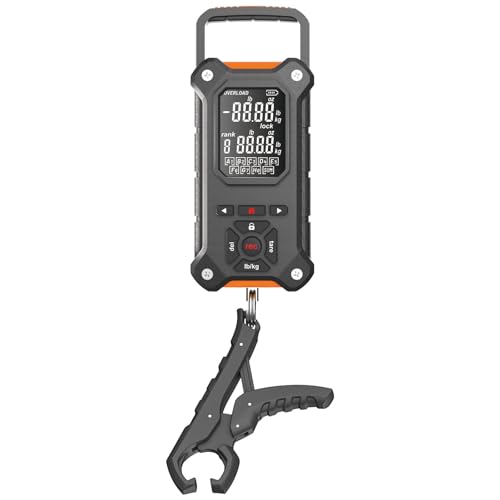
The SNAIL TRAIL scale targets tournament needs. It holds eight storage bins to track your five fish and backups. The high-contrast display is sharp even under mid-day glare. You get both a hook and a clamp for flexible holds.
The 50 lb capacity is more than enough for bass. The clamp shines when you want a jaw-safe grip. I like the quick toggle between stored bins in culling. If your target is the best scales for bass fishing for events, this model deserves a hard look.
Pros:
- Eight memory bins for livewell culling
- High-contrast display for sunlit decks
- Comes with hook and clamp for different tasks
- Fast bin toggling for weigh-and-cull speed
- Solid 50 lb capacity tuned to bass
- Good grip shape reduces hand fatigue
Cons:
- 50 lb max is lower than 65–110 lb rivals
- More features than casual anglers may use
- Not designed to float; use a tether
My Recommendation
I suggest this scale to tournament anglers who are serious about time. The eight bins keep you organized. The clamp reduces jaw stress, which helps fish health at weigh-in. It ranks high among the best scales for bass fishing if you fish events often.
| Best for | Why |
|---|---|
| Weekend tournaments | Eight memory bins and quick switching |
| Bright sun conditions | High-contrast display stays readable |
| Gentle handling | Clamp option protects fish lips |
Fishfun 110 lb Digital Hanging Fish Scale

The Fishfun 110 lb Digital Scale offers a big handle and a clean, simple layout. It includes a measuring tape for length checks. The display is bold and updates fast. It ships with three AAA batteries, which is handy when you open the box.
The frame feels tough and resists flex under load. The handle fits big hands and gloves. It lacks fancy extras, but it is steady and quick. If you want the best scales for bass fishing with a strong grip, this model is a solid fit.
Pros:
- Large handle that is comfortable with gloves
- 110 lb capacity with fast, stable readings
- Built-in tape for quick measurements
- Comes with three AAA batteries
- Sturdy body with low flex at load
- Simple buttons and bright display
Cons:
- Hook can be harsh on fish without a gripper
- Not waterproof; protect in heavy rain
- No memory bins for culling
My Recommendation
I like this one for cold weather and gloved hands. The big handle is a win in winter or early spring. Pair it with a lip gripper for fish care. Among the best scales for bass fishing, it stands out for simple power and a strong hold.
| Best for | Why |
|---|---|
| Cold-weather trips | Large handle works well with gloves |
| Simple operation | Clear controls and fast readings |
| Durability | Sturdy body resists flex and wear |
How to choose the best scales for bass fishing?
Picking the right scale should be simple. It is not always so. Features vary a lot by brand and price. Here is how I break it down to get the best scales for bass fishing for my needs.
Accuracy matters first. Look for stable readings with a hold function. A hold locks the number when the fish thrashes. It cuts stress on you and the fish.
Fish safety is next. A no-puncture lip gripper or clamp is best. Hooks can hurt gills or tear soft mouth tissue. A gripper keeps your catch in good shape for release.
Readability counts. Big fonts and bright screens help. Backlighting is useful at dawn and dusk. High-contrast displays fight glare on open water.
Power source affects long trips. USB rechargeable is great if you carry a power bank. AAA batteries are easy to replace anywhere. Both work well if you plan ahead.
Memory bins help if you fish events. They track each fish in your livewell. You can cull the smallest fast. That saves time and boosts focus.
Durability is key in wet worlds. Waterproof or water resistant builds live longer. Floating scales reduce loss risk. A lanyard is smart on any model.
Capacity should cover your target. For bass, 50–65 lb is plenty. A 110 lb scale can add utility for other fish or travel. Higher capacity does not equal better accuracy. Pick what you need.
Grip and ergonomics matter more than you think. A big handle helps with gloves and big hands. Thin bodies stash well in kayak crates. Try to picture how you hold it when the fish thrashes.
Expert tips for using a fish scale with bass
Have your scale ready before lifting the fish. This reduces air time and stress. Keep the fish wet and low over the deck or water. Quick actions keep bass healthy.
Use a lip gripper or clamp when possible. Avoid gill plates and gill covers. Do not hang a bass from the gills. This can harm the fish.
Support the body with your free hand when you can. A two-hand hold spreads the load. It also calms the fish for a faster reading. Gentle handling pays off in strong releases.
Use the hold function on your scale. Let the number lock. Then lower the fish fast. Time in the air should be short. That is good fish care.
Keep spare batteries or a power bank. Cold weather drains cells faster. Check your gear on Friday before a weekend event. A dead scale is a missed chance.
Wipe salt spray, mud, or slime off your scale after use. Dry the contacts and seams. Store it in a dry bag. This prevents corrosion and sensor drift.
How I test scales to find the best?
I test scales at home and on the water. At home, I check accuracy with known weights. I test hold times and display lag. I soak and dry models to check water resistance where rated.
On the water, I test in real fights. I check how fast the reading locks when a fish kicks. I judge glare on bright days. I note how the handle feels with wet hands.
I also test memory bins in culling drills. I time how long it takes to log five fish. I check how easy it is to switch bins and record changes. Fast use is a real edge.
I rate each unit for fish care. I look at gripper design. I check clamp pressure. I avoid any product that harms lips or gills. The best scales for bass fishing must be kind to fish.
FAQs Of best scales for bass fishing
Do I need a lip gripper for bass?
Yes, it helps. A lip gripper reduces mouth damage and holds steady. It also keeps hands safe from hooks.
What capacity is best for bass scales?
50–65 lb is ideal for bass. A 110 lb scale adds range for other species. Accuracy matters more than max weight.
Are waterproof scales worth it?
They are if you fish from kayaks or in rain. Waterproof units last longer and reduce failure from splashes.
How do memory bins help in tournaments?
They store each fish’s weight. You can see which is smallest fast. That makes culling quick and clean.
How often should I calibrate a fish scale?
Check it monthly during the season. Use known weights. Calibrate per the manual if readings drift.
Final Verdict: Which Should You Buy?
The KastKing WideView is my top all-around pick. It floats, protects fish, and speeds culling. For tight budgets, the Dr.meter is small, clear, and accurate. For USB fans, the ToughTide is slim and smart.
Tournament anglers should eye the SNAIL TRAIL for its eight bins. Big-hand users will love the Fishfun handle. Any of these are among the best scales for bass fishing when matched to your needs.