

The best tuna fishing rods are powerful, smooth, and built for hard fights.
Picture your spread humming at 7 knots as the long rigger explodes. Line dumps, the rod bows, and chaos hits the deck. At that moment, a cheap stick fails fast. A great tuna rod holds the line, glides on clean rollers, and puts the fish on ice.
I’ve tested and tuned gear for offshore trips for years. In this guide, I’ll help you pick the best tuna fishing rods for your boat, your target size, and your budget – so your next blow-up turns into a clean, quick gaff.
5 Best Tuna Fishing Rods
TRHUNTER 6′ Offshore Trolling Rod 80-120 lb

This TRHUNTER 6-foot rod is built to pull hard. The 80–120 lb class gives you headroom for heavy drag and big runs. Heavy-duty roller guides help keep heat and friction down during long fights. The carbon butt keeps weight in check while holding firm under a deep bend.
I like this size for tuna trolling close to the transom. It gives great leverage and fast control in tight spaces. The backbone is stout, so it lifts cleanly at color. Pair it with a high-capacity two-speed reel and you have a simple, tough setup for long days offshore.
Pros:
- Strong 80–120 lb rating for heavy drag and big tuna pressure
- Smooth roller guides reduce friction and protect your line
- Carbon butt helps trim weight without losing stiffness
- 6-foot length gives leverage and easier boat-side control
- Sturdy gimbal locks into a belt or rod holder with no twist
Cons:
- Shorter than some anglers like for wide lure spreads
- Roller hardware needs routine rinse and light oil
- Heavier build can tire arms on all-day stand-up fights
My Recommendation
If you troll for yellowfin or school-to-mid bluefin, this is a smart pick. The 6-foot length shines near the transom or corners. It also suits boats with low gunnels or tight cockpit layouts. It is one of the best tuna fishing rods for simple, strong, and low-maintenance duty.
| Best for | Why |
|---|---|
| Trolling in tight cockpits | Short length gives leverage and fast turns at color |
| Heavy drag work | 80–120 lb rating and strong backbone handle high pressure |
| Simple big-game setups | Rollers, gimbal, and carbon butt keep it tough and clean |
Fiblink 7′ Offshore Trolling Rod 30-120 lb

This 7-foot Fiblink brings reach and spread control to tuna trolling. It is offered in popular line classes from 30–50 up to 80–120. That range fits mixed tuna size and mixed spread roles. The 2-piece build helps with storage and travel to long-range ports.
Roller hardware helps line flow and heat control under load. The longer tip tracks lures well and keeps lines clear of wake chop. That smooth arc also helps absorb head shakes right at the boat. If you run a wide spread, this length makes your pattern work.
Pros:
- Two-piece design packs easier for travel and small cabins
- Multiple line classes cover school to larger tuna
- 7-foot length delivers better lure spacing in the spread
- Roller guides manage heat and friction during long runs
- Good value for a big-game roller rod
Cons:
- Ferrule joints can flex if not seated and checked
- Longer rod can be clumsy in tight corners at color
- Rollers need rinse and a drop of oil after each trip
My Recommendation
Choose this if you want one of the best tuna fishing rods for balanced trolling and wide spreads. It suits anglers who run four to six lines and need clean lanes. The 2-piece design is also great if you travel or store rods in a car or cabin. Pick your line class to match your tuna size and drag.
| Best for | Why |
|---|---|
| Wide trolling spreads | 7-foot length keeps lines clear and lures tracking |
| Travel and storage | Two-piece build fits cars, cabins, and rod tubes |
| Mixed tuna sizes | Line class options match school to larger fish |
Fiblink 6′ Bent Butt Trolling Rod
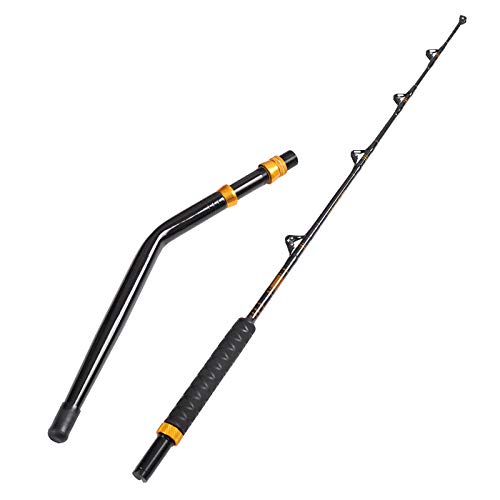
Here is a classic offshore setup for chair or gunnel fights. The bent butt angles the rod so the line runs clean off the transom. That geometry cuts fatigue and keeps drag smooth under load. The 2-piece butt and tip section also pack and store easier than a one-piece stick.
The rollers handle heavy mono or braid with topshots. The 6-foot length gives you control at color without losing lift. I like a bent butt when fishing heavy drag on bigger models. It is a proven style for long slug-fests on blue water.
Pros:
- Bent butt puts you in a strong, low-leverage position
- Two-piece design helps transport and storage
- Roller hardware reduces heat and line chafe
- 6-foot length balances lift and control at the boat
- Great for rod holders and fighting chairs
Cons:
- Not ideal for stand-up jigging or casting
- Heavier feel than straight-butt stand-up rods
- Butt hardware needs a fresh-water rinse after each run
My Recommendation
If you troll heavy lures or spreader bars and expect larger fish, this is for you. The bent butt helps fight big tuna with less strain on your back. It is one of the best tuna fishing rods when you want power and comfort in rod holders. Add a two-speed reel and a quality harness for best results.
| Best for | Why |
|---|---|
| Rod holder trolling | Bent butt angle keeps the load low and stable |
| Heavy drag fights | Comfortable geometry for long, steady pressure |
| Boat-side control | 6-foot length helps lift cleanly at color |
Fiblink 5’6″ Bent/Straight Butt Trolling Rod

This Fiblink gives you both butt styles in one package. Swap between bent and straight to match the day’s plan. The 5’6” length is short and strong, ideal for tight decks and steep sea states. It also helps you put max pressure on a stubborn fish at deep color.
Roller guides manage heavy mono or braid with a topshot. The short length pairs well with big conventional reels for trolling bars, ballyhoo, or plugs. I like this rod for mixed crews and charter work. One setup can do many jobs with a quick butt change.
Pros:
- Includes bent and straight butts for fast changeovers
- Short length gives strong leverage and control
- Rollers help line flow and reduce friction burn
- Great for small boats and tight corners
- Versatile for trolling styles and crew preferences
Cons:
- Extra hardware adds a little weight
- Butt joints must be checked for tight fit
- Short length not ideal for wide spreads
My Recommendation
If you want one of the best tuna fishing rods for flexibility, this is a top value. Use the bent butt in the holder for big-fish days. Switch to straight when you want stand-up feel or a different angle. It is great for crews that share rods or run different tactics in one trip.
| Best for | Why |
|---|---|
| Charter versatility | Swap butt styles to match anglers and tactics |
| Tight deck control | 5’6” length turns fast near the transom |
| Heavy pressure | Short rod gives better lift with strong drags |
Fiblink 5’1″ Bent Butt Trolling Rod 50-80 lb

This 5’1” bent butt is a compact lever for hard pulls. In the 50–80 lb class, it suits heavy yellowfin and many bluefin. The short length gives tight control at the boat and in rod holders. It is built with roller hardware for clean line flow and less heat.
I like it as a corner rod paired with a stout two-speed reel. The bent butt helps you stay low and steady as the fish circles. Short rods also play nice with multi-boat traffic and chop. If you fish near crowds or in rough seas, this rod works for you.
Pros:
- Very short for maximum leverage in the holder
- 50–80 lb class fits many tuna sizes and tactics
- Roller guides protect line under load
- Bent butt angles line flow cleanly off the transom
- Compact for storage in small boats
Cons:
- Not for wide spreads or long-leader casting
- Less ideal for giant-class bluefin
- Roller care needed to avoid salt lockup
My Recommendation
Pick this if you want one of the best tuna fishing rods for tight control and short decks. It is great for heavy yellowfin and many bluefin in the 50–150 lb range. It is also a smart corner rod for crowded fleets or rough days. Simple, stout, and compact is the charm here.
| Best for | Why |
|---|---|
| Rough-water trolling | Short rod controls line and keeps loads stable |
| Corner rod duty | Bent butt holds a clean angle off the stern |
| Small boat storage | Compact size fits tight spaces and cabins |
FAQs Of best tuna fishing rods
What power and line rating do I need for tuna?
Pick 30–50 lb for school fish and long fights. Move to 50–80 lb for big yellowfin and mid bluefin. Choose 80–120 lb for heavy drags and large fish. Match reel and line to the rod class.
Are roller guides worth it for tuna fishing?
Yes for trolling and heavy drag. Rollers lower friction and heat. They protect mono and braid topshots. Rinse and lube them after each trip.
Bent butt vs straight butt: which is better?
Bent butts are great in holders and chairs. They reduce strain and keep angle low. Straight butts suit stand-up and more mobility. Choose by your fight style and deck space.
One-piece or two-piece for offshore rods?
One-piece feels solid and simple. Two-piece packs and travels easier. With good ferrules, two-piece models fight very well. Check joints before each trip.
What length is best for trolling tuna?
Short rods (5’–6’) give leverage and control. Longer rods (6’6”–7’) improve spread and lure action. Mix lengths to shape your spread. Choose what fits your cockpit and crew.
Final Verdict: Which Should You Buy?
If you want simple power, the TRHUNTER 6′ is a strong, clean workhorse. For travel and spread control, the 7′ Fiblink shines. The bent-butt Fiblinks add comfort and leverage when drags get heavy.
Among the best tuna fishing rods, pick by deck space, fight style, and target size. Short and stout for control, longer for spread. Any of these can land your next fish of the year.