

Nighttime hunting often depends on seeing clearly through a compatible night-vision scope without adding visible light. A regular flashlight gives off light animals can see, while night-vision optics alone may struggle to show detail in very dark conditions.
For a more discreet view, an infrared illuminator adds light that a compatible night-vision device can detect. Its beam helps reveal detail in darkness, making it easier to scan nearby terrain without the visible glow of a standard flashlight.
Adjustable brightness helps you balance useful illumination with the scene, while focusable beams suit different distances. Compact designs are easier to carry, and rechargeable batteries can reduce the need to pack spare cells for an outing.
Illuminators vary in beam range, size, battery life, and compatibility, so your choice depends on your setup and hunting conditions. Explore the best hunting ir illuminators below to find one that suits your night-vision gear.
7 Best Hunting Ir Illuminators Reviews

1.DARKBEAM 501F-850 IR Flashlight, 5W 850nm
5W 850nm infrared light helps spot animals without disturbing them
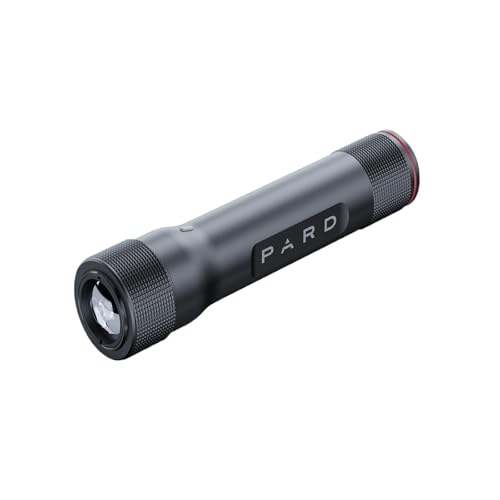
2.Pard TL3-940 IR Illuminator, 5W 940nm
940nm band avoids red exposure for more concealed night viewing

3.ATN BinoX 6 IR Illuminator Module, 940nm
Adds 940nm stealth night vision to ATN BinoX 6 binoculars in low light

4.oneleaf.ai Commander NV100 Night Vision
Built-in IR illuminator enables clear nighttime viewing up to 328

5.WAYLLSHINE 850nm IR Night Vision Flashlight
850nm infrared light works with night vision devices for clear viewing

6.Pard IR Illuminator 850nm for NV007V2 Pro
850nm illuminator fits NV008SP3, NV007V2 Pro, InfraX and NV007SP2

7.OWLNV N7 Dual IR Night Vision Monocular
Switch between 850nm and 940nm IR to detect targets up to 350m away
1. DARKBEAM 501F-850 IR Flashlight, 5W 850nm
DARKBEAM 850nm IR flashlight helps night-vision equipment show objects in the dark. Its 5W infrared LED is invisible to the naked eye, so you need a night-vision scope, monocular, camera or goggles to see the illuminated scene.
For hunting and observation, the infrared beam can help you spot animals without using a visible red beam. The maker also lists photography, including forensic work, as a use.
A focus-adjustable lens lets you narrow the beam for longer-distance viewing or widen it to cover more area. DARKBEAM says the spotlight can illuminate objects beyond 164 yards; the right beam width depends on the distance and your night-vision equipment.
The rechargeable battery comes included and runs for up to three hours per charge. You can recharge it from a 5V, 2A USB source, such as a power bank or laptop, and a full charge takes about three hours.
Its aluminum-alloy body is described as waterproof and drop-resistant for use in damp conditions. The flashlight weighs about 0.3 pounds, and its compact size makes it easier to carry on hunting trips or outdoor observations.
This 850nm illuminator suits hunters and wildlife observers who already have compatible night-vision equipment and want adjustable infrared coverage. It can also serve buyers who need infrared illumination for photography or indoor experiments.
- 850nm IR beam works with night-vision gear
- Adjustable focus suits near and distant views
- Included battery runs for up to 3 hours
- Lightweight body is easier to carry outdoors
- Requires separate night-vision equipment to view
2. Pard TL3-940 IR Illuminator, 5W 940nm
For hunting and observation with night vision, the Pard TL3 offers adjustable infrared illumination in a compact unit. Its 5-watt illuminator is available in 940nm, a wavelength suited to concealed observation because it avoids visible red exposure.
The 940nm option is less visible than the 850nm version, while the 850nm option gives a brighter beam and reaches farther. The TL3’s focus adjusts to suit different distances, and its telescoping lens narrows the beam for longer-range viewing.
This unit supplements a night-vision device rather than lighting an area on its own. Without night vision in use, it produces no useful visible light beyond a faint red glow, so it isn’t a general-purpose flashlight.
The included 30mm bracket lets you mount it, and the rugged body is designed for outdoor use. It fits the PARD Night Stalker 4K and PARD Night Stalker Mini, adding infrared illumination to those devices.
At about 0.4 pounds, it adds little weight to a setup. This black illuminator suits hunters and observers who need adjustable IR for compatible PARD night-vision equipment, especially when limiting visible red exposure matters.
- 940nm IR supports discreet observation
- Adjustable focus suits different viewing distances
- Telescoping lens narrows beam for longer reach
- Includes a 30mm mounting bracket
- Needs a night-vision device to be useful
3. ATN BinoX 6 IR Illuminator Module, 940nm
The 940 nm wavelength gives this ATN illuminator a near-infrared output for night use with BinoX 6 binoculars. Its design targets hunters who want to add illumination for viewing in low-light conditions.
This module works exclusively with ATN BinoX 6 binoculars, so it is not a general-purpose add-on for other night-vision devices. Check your binocular model before buying, since compatibility is the key requirement for using it.
The 940 nm specification identifies the illuminator’s infrared wavelength. The product description says it supports night vision without a visible signature, a useful feature for hunters who want illumination that is less apparent to the naked eye.
ATN describes the module as an upgrade to the binoculars’ low-light capability. It adds a dedicated illuminator rather than serving as a standalone viewing device, so it makes sense for someone who already owns compatible BinoX 6 binoculars.
The module comes in black. The listing does not provide details about brightness levels, beam distance, power source, controls or weight, so buyers who need those specifics may want to confirm them before choosing this unit.
For hunters who use ATN BinoX 6 binoculars and want a 940 nm IR module for night viewing, this focused accessory may fit the setup. Its exclusive compatibility makes it a poor choice for anyone using a different binocular model.
- 940 nm IR supports night vision use
- Made specifically for ATN BinoX 6 binoculars
- No visible signature, according to ATN
- Works only with ATN BinoX 6 binoculars
4. oneleaf.ai Commander NV100 Night Vision
Hunters and observers who need infrared viewing get a night vision monocular with a stated range of up to 328 yards in complete darkness. Its built-in IR illuminator supplies the light for that nighttime view.
A 1080P FHD CMOS sensor and a 0.4-inch panel show the image at a resolution of 3.69 million dots. The 60 fps refresh rate keeps the view updating smoothly as you scan a scene.
The NV100 also offers daytime color mode, so you can use it for observations in daylight as well as after dark. Long eye relief of up to 70 millimeters gives you room to position your eye comfortably at the eyepiece.
Built-in FHD video recording lets you save footage for later review, while slow motion mode offers another way to examine recorded scenes. These options may help hunters keep a record of what they observe.
The waterproof housing and high shock resistance suit outdoor use, while diopter and focus adjustments let you tune the view. The black unit can clip on as a night vision monocular, giving hunters and observers a recording-capable option for nighttime viewing.
- Views up to 328 yards in complete darkness
- 1080P sensor shows detail at 3.69 million dots
- 60 fps refresh rate keeps images updating smoothly
- Records FHD video and offers slow motion playback
- No major cons
5. WAYLLSHINE 850nm IR Night Vision Flashlight
For night hunting, the WAYLLSHINE 850nm IR Illuminator provides infrared light for use with night-vision equipment. Its 850nm wavelength is invisible to the naked eye, though the LED shows a faint red glow when switched on.
Night-vision cameras, scopes, monitors, monoculars and goggles can detect the beam. That makes this two-pack useful for hunting, night photography and observation with compatible equipment.
The light travels farther with the help of night-vision devices, but the distance also depends on the device you use. The product data does not give a specific range, so your setup affects how far the illuminator can help you see.
A tail button controls the single operating mode: press it to turn the flashlight on or off. The faint red glow at the LED offers a visible indication that the infrared light is running.
Each flashlight uses three AAA batteries in a holder, and the batteries are not included. You’ll need to supply those batteries before using either light.
Each unit weighs about half a pound and measures about 5.7 inches long. This pair suits hunters and night observers who already use compatible night-vision equipment and want two simple 850nm illuminators.
- 850nm IR light works with night-vision gear
- Pack of two supplies a pair of illuminators
- Tail switch gives simple on and off control
- AAA batteries are not included
6. Pard IR Illuminator 850nm for NV007V2 Pro
850nm infrared light sets the PARD IR Illuminator apart for night-vision use. It is listed for the NV007V2 Pro, InfraX, NV007SP2 and NV008SP3, so buyers with one of those devices can check compatibility before choosing an illuminator.
This model’s main stated feature is its 850nm wavelength. The listing does not give an illumination range, beam pattern or brightness figure, so buyers cannot compare those details from the available specifications. It also does not describe how the light performs in different conditions.
Compatibility is specific to four PARD night-vision devices: NV007V2 Pro, InfraX, NV007SP2 and NV008SP3. Matching the illuminator to the exact device matters, so check your night-vision model against that list before buying.
The unit comes in black and weighs about 0.1 pounds. That light weight may suit setups where keeping added gear to a minimum matters, and its compact item size is identified as IR1-850 in the specifications.
The listing provides little detail beyond wavelength, compatible devices, color and weight. It does not state battery type, power source, controls or mounting details, so buyers may need to confirm those points before deciding whether it fits their setup.
For hunters using one of the four named PARD devices, this illuminator offers a listed 850nm option in a light package. It suits buyers who have confirmed compatibility and do not need further performance details from the product listing.
- 850nm infrared wavelength for night vision use
- Compatible with four listed PARD night-vision devices
- Weighs about 0.1 pounds for a light setup
- No major cons
7. OWLNV N7 Dual IR Night Vision Monocular
OWLNV pairs 850nm and 940nm infrared illuminators for nighttime viewing, with a stated detection range of up to 350 meters. You can switch between wavelengths, and the title also identifies this as a 1080P clip-on scope for day and night use.
The rear-mount design attaches to an eyepiece measuring 38 to 45mm with a dual-screw lock. It uses no rail space, and the maker says the mount does not scratch optics or require re-zeroing the daytime setup.
For focusing, turn the diopter ring to sharpen the screen icons, then adjust the objective lens to focus on the target. The device has 3.0x base optical magnification and up to 3.5x digital zoom, for a stated total magnification of up to 10.5x.
Picture-in-Picture mode shows a magnified center area alongside the full field of view. It can record in 1080P Full HD and send a live view to a phone through built-in Wi-Fi.
An IP67 rating means the unit has a stated level of protection against water and dust, and it is described as recoil-resistant to 6,000J. A rechargeable 3.7V battery powers it, and the black unit weighs about 1.5 pounds.
This is the last choice in our roundup, and it suits hunters who want dual infrared wavelengths, recording and phone viewing in a rear-mounted device. Buyers should check that their optic’s eyepiece falls within the 38 to 45mm fit range.
- Switches between 850nm and 940nm IR
- Detects targets up to 350 meters away
- Records 1080P video and streams to phones
- PIP shows magnified and full views together
- Fits only eyepieces measuring 38 to 45mm
How to Choose the Best Hunting Ir Illuminators
Choosing a hunting IR illuminator involves more than brightness: wavelength, beam shape, and your night-vision device all affect what you can see. Consider where you hunt, how far you need to illuminate, and whether a faint visible glow is acceptable.
| If You Need | Look For | Expect |
|---|---|---|
| Longer-distance viewing | Focusable, narrow beam | Smaller area illuminated |
| Close-range scanning | Wide flood setting | Less reach per beam |
| Minimal visible glow | 940nm wavelength | Shorter useful range |
| Greater illumination reach | 850nm wavelength | Faint red glow |
| Long outings | Replaceable or spare batteries | More weight to carry |
| Device-specific mounting | Listed compatibility and bracket size | Fewer mounting options |
| Simple backup lighting | Standard batteries and basic controls | Less adjustability |
Wavelength And Visibility
An 850nm illuminator usually gives a night-vision device more usable light at a given power, which helps when you need a longer view. Its infrared source can show a faint red glow, so it is not fully invisible to nearby observers.
A 940nm unit gives off less visible glow, which suits cautious observation or locations where a red point could draw attention. The trade-off is often less illumination range, so compare real-world viewing needs rather than choosing by wavelength alone.
Your night-vision device also affects the result, because sensors vary in how well they respond to each wavelength. Match the illuminator to the device’s stated wavelength support, and favor 850nm when reach matters more than concealment.
Beam Shape And Focus
A focusable beam lets you switch between a narrow spotlight and a wider flood, so one light can serve distance viewing and nearby scanning. A fixed beam is simpler, but it limits how you adapt to changing terrain.
For open fields, a tighter beam sends more light toward a distant target, while a broad beam covers more ground at close range. The trade-off is reduced brightness across the wider area, so choose for the distances you use most.
Look for smooth, usable adjustment rather than a claim of “long range” alone. A telescoping lens or adjustable head can change beam width, but it adds parts that need secure handling and careful alignment.
Useful Range
Range claims do not always describe the same thing: some refer to detecting an object, while others mean seeing useful detail. Treat advertised distances as a starting point, since weather, vegetation, sensor quality, and target size affect what appears in the view.
Choose an illuminator for the distance you actually observe, not the largest number in a listing. A modest range is often enough for wooded areas, while open terrain may call for a stronger, more focused beam.
If possible, compare the illuminator’s stated reach with the night-vision device’s own range and wavelength. The weaker part of the setup sets your practical limit, so a powerful light cannot make a low-performing sensor show clear detail.
Device Compatibility And Mounting
A dedicated illuminator may fit only certain night-vision devices, and a listed model name is more useful than a general claim of universal fit. Confirm compatibility before buying, especially for proprietary modules or device-specific brackets.
For a separate flashlight, look at the mount diameter, attachment style, and where it sits on your setup. A bracket that fits the tube still needs clearance from controls and optics, or it may be awkward to operate.
Clip-on and scope-mounted systems have their own fit requirements, including eyepiece or objective dimensions. Measure your equipment and confirm the stated range before ordering, because small size differences can prevent a secure fit.
Output And Power
Wattage gives a rough sense of electrical input, but it does not tell you exactly how much infrared light reaches the scene. Lens design, beam focus, and sensor sensitivity also shape the picture, so avoid picking by wattage alone.
A 5-watt unit may suit compact, routine observation, while demanding long-distance use benefits from a focused beam and a device with good infrared sensitivity. Look for clear specifications alongside power, including wavelength and beam adjustment.
Higher output can draw down a battery faster and produce more heat, so it is not automatically the best choice. If you use the light briefly or at close range, a lower-powered option may be easier to carry and run.
Power And Runtime
For rechargeable models, compare stated runtime, charging method, and charge time with the length of your outings. A three-hour claim may be enough for short sessions, but long nights call for a spare battery or a way to recharge.
Battery-powered lights offer a different kind of flexibility: common cells are easy to replace, but batteries add ongoing cost and weight. Check whether batteries are included, and make sure the holder and cell type are clearly specified.
Cold weather can reduce battery life, and frequent use of the brightest setting drains power sooner. Carry a backup source for extended trips, and avoid assuming that a built-in rechargeable battery will last a full night.
Controls And Adjustability
Simple on/off controls are easy to use in the dark, while multiple settings offer more control over brightness or beam. Extra controls add steps, so consider whether you will use them with gloves or while handling other equipment.
A tail switch is easy to find by touch on a handheld light, but a mounted unit may need a different switch position. Check the control location and whether it can be reached without shifting your grip.
Focus adjustment is useful when you move between near and distant viewing, though it should hold its setting during handling. A straightforward design suits occasional use; frequent changes make accessible, secure controls more valuable.
Size, Weight, And Durability
A light weighing a few ounces is easier to carry for long periods, while a heavier model may include a bracket or larger battery. Think about the total mounted weight, not just the illuminator’s listed weight.
Hunting conditions expose equipment to bumps, moisture, and dirt, so look for a stated water or dust rating when those risks apply. An IP rating describes tested resistance, but it does not mean the unit is indestructible.
Also consider how you will store and transport the light. A compact body suits a small kit, while a larger assembly can be easier to adjust but needs more room and a secure mount.
Price And Value
Lower-priced options often keep things simple, with basic controls, standard batteries, or fewer mounting features. They suit occasional close-range use, but the total cost rises if batteries or compatible mounts must be bought separately.
Paying more is worthwhile when the added features solve a real need, such as a compatible device-specific fit, rechargeable power, or adjustable focus. Compare the complete setup cost rather than the light’s price by itself.
Do not assume a higher price guarantees longer range or better visibility. Look for clear wavelength, power, runtime, fit, and warranty details, then spend extra only for features that match your use.
Warranty And Support
A clear warranty gives you a route to help if the light fails, while vague coverage can leave repair or replacement costs unclear. Read the terms for duration, exclusions, and whether accessories or batteries are covered.
For device-specific modules, confirm that the seller supports your exact model and can answer fit questions. Keep purchase details and follow the stated charging and care instructions, since misuse can affect coverage.
Frequently Asked Questions
Do these IR illuminators need batteries, or do they use a built-in power source?
The product details provided don’t specify power sources for these models. Check each product’s listing for battery requirements and whether a battery is included.
What’s the difference between 850nm and 940nm IR?
The DARKBEAM 501F-850 and WAYLLSHINE use 850nm IR, while the PARD TL3-940 and ATN BinoX 6 module use 940nm, which is intended for more concealed viewing with less red exposure.
Should I choose the DARKBEAM 501F-850 or the PARD TL3-940?
Choose the DARKBEAM for 850nm illumination; choose the PARD TL3-940 if minimizing visible red exposure is your priority.
What comes in the box with each product?
The available product details don’t list box contents. Check the seller’s listing to confirm whether batteries, mounts, or other accessories are included.
Which option is made to work with an ATN BinoX 6?
The ATN BinoX 6 IR Illuminator Module is designed to add 940nm illumination to ATN BinoX 6 binoculars in low light.
What should I pick for a compatible PARD night-vision device?
The PARD IR Illuminator 850nm is specified for the NV008SP3, NV007V2 Pro, InfraX, and NV007SP2. Check your device model before buying to confirm compatibility.
Which reviewed options have a stated detection or viewing distance?
The oneleaf.ai Commander NV100 lists nighttime viewing up to 328, and the OWLNV N7 lists target detection up to 350m; the product details don’t state units for the Commander’s figure.
So, What Should You Buy?
For most hunters, the DARKBEAM 501F-850 is the straightforward pick, with 5W of 850nm infrared light for spotting animals. Choose the WAYLLSHINE for a budget-friendly 850nm option, or the Pard TL3-940 if avoiding visible red exposure matters most.
Need more reach? The OWLNV N7 offers switchable 850nm and 940nm IR, with detection up to 350m. ATN BinoX 6 owners can add the compatible module, while the Pard 850nm suits select Pard devices. Pick the model that best fits your setup and priorities.