

A sharp hunting knife helps you prepare game, handle camp tasks, and keep field work moving smoothly. A pocket stone or improvised edge can take time to use, and a standard kitchen sharpener may lack the compact design and angle control you need outdoors.
For a practical field fix, a hunting knife field sharpener gives you a portable way to restore an edge. Pull-through slots guide the blade across abrasive surfaces, while rod-style sharpeners reach curves and let you touch up an edge without a workshop.
Many models pair coarse and fine surfaces, so you can refresh a dull blade and refine its edge in one compact tool. Non-slip grips offer steadier handling, and lightweight designs fit easily in a hunting pack or pocket.
Sharpeners vary in size, abrasive type, and sharpening method, so consider your knife and how you travel. Compare the best hunting knife field sharpeners below to find a practical choice for your kit.
8 Best Hunting Knife Field Sharpeners Reviews

1.WORK SHARP Guided Field Knife Sharpener
220 and 600 grit diamond plates repair and refine edges in the field
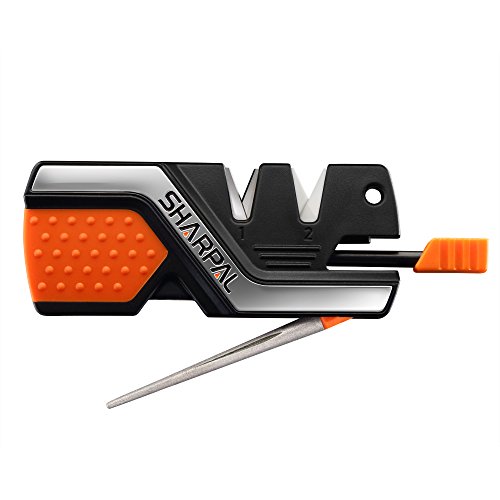
2.SHARPAL 101N Pocket Knife Sharpener, 6-in-1
Carbide and ceramic slots set a new edge and hone blades smooth

3.WORK SHARP Portable Pocket Knife Sharpener
20° and 25° angle guides help you sharpen and hone blades consistently

4.Sharp Pebble FKS2 Field Knife Sharpener
220-grit plate repairs dull blades while 600-grit sharpens edges

5.WORK SHARP Folding Field Knife Sharpener
400-grit diamond and ceramic plates maintain consistent knife edges

6.Smith's PP1 Pocket Pal Knife Sharpener
Fold-out diamond rod sharpens serrations, edges and fish hooks

7.Gerber Edgefield Pack Knife Sharpener
Coarse carbide restores knife edges; fine ceramic hones them smooth

8.WORK SHARP Benchstone Knife Sharpener
Three abrasive sides restore edges with diamond and hone with ceramic
1. WORK SHARP Guided Field Knife Sharpener
Work Sharp Guided Field Sharpener helps hunters and anglers maintain knife edges away from home. Its five sharpening surfaces cover edge repair, honing, serration sharpening and polishing, so you can handle several sharpening tasks with one manual tool.
The coarse 220-grit and fine 600-grit diamond plates repair and refine blade edges. Ceramic rods hone blades and sharpen serrations, while the leather strop polishes the finish after sharpening.
Built-in guides set the sharpening angle at 20 or 25 degrees. They help you keep a consistent bevel on hunting knives, pocket knives and other blades while working in the field.
For fishing trips, a groove in one ceramic rod gives you a place to sharpen fish hooks. The sharpener also has a broadhead wrench and a lanyard hole for added field use.
At about 5 ounces, this black sharpener fits in a pack or tackle box for hunting, fishing, camping and everyday carry. Its manual design needs no batteries or cords, and the abrasives come with it.
This compact tool suits hunters, anglers and campers who want several sharpening surfaces and useful field features in one portable sharpener.
- Five surfaces handle repair, honing, and polishing
- 220- and 600-grit plates refine blade edges
- Angle guides help keep bevels consistent
- Hook groove and broadhead wrench aid field tasks
- No major cons
2. SHARPAL 101N Pocket Knife Sharpener, 6-in-1
For hunting trips that call for edge touch-ups in the field, this SHARPAL sharpener packs several blade tools into a pocket-size body. Its coarse carbide V-notch resets dull or damaged edges, while the fine ceramic slot hones them for a smoother finish.
A preset sharpening angle guides each pass through the slots. The tapered medium-grit 400 diamond rod works on serrated blades and gut hooks, while a grooved diamond rod handles fishhooks.
You can use it on straight-edge knives as well as serrated blades, and it can also sharpen a kitchen chef knife. The carbide and ceramic abrasives passed a 10,000-use field test, according to SHARPAL.
The built-in ferro rod adds a fire-starting tool, and a high-pitched whistle provides an emergency signal. Both extras share the same compact tool, so hunters can keep sharpening and signaling gear together.
Its black-and-orange body weighs about 0.15 pounds and has a lanyard hole for attaching it to gear. It suits hunters who want a lightweight field sharpener with added outdoor tools, though the whistle and fire starter may matter less to buyers focused only on blade care.
- Six tools cover blades, hooks, fire, and signaling
- 400-grit diamond rod handles serrations and gut hooks
- Preset angle guides sharpening through the slots
- Weighs about 0.15 pounds for field carry
- No major cons
3. WORK SHARP Portable Pocket Knife Sharpener
20° and 25° angle guides give the Work Sharp pocket sharpener two fixed sharpening angles for field touch-ups. Its 320-grit diamond plate uses a 20° guide, while the fine ceramic rod uses a 25° guide.
The diamond plate can refresh an edge, and the ceramic rod offers a finer sharpening surface for follow-up work. Together, they give hunters two sharpening options in one compact tool for maintaining a knife during a trip or at home.
Its pocket size and weight of about 0.1 pounds make it easy to carry with hunting gear. The self-contained parts need no assembly, so you can take it out and begin sharpening in the field without setting up separate pieces.
The black sharpener measures about 6.5 inches long, a size that fits easily into a pocket or pack. Its portable format also suits a home or shop kit, giving it uses beyond field care.
Work Sharp is a fourth-generation family-owned company based in Ashland, Oregon, and has engineered sharpening tools in the United States for more than 40 years. That background may matter to buyers who value a company with a long history of making sharpening equipment.
For hunters who want a lightweight, ready-to-carry sharpener with two guided angles, this model offers a straightforward field option. Its small format and self-contained design suit people who want to maintain a hunting knife without bringing a larger sharpening setup.
- Two guided angles suit different sharpening stages
- Diamond plate and ceramic rod offer two surfaces
- About 0.1 pounds for easy pack carry
- Self-contained design needs no field setup
- Fixed 20° and 25° guides limit angle choice
4. Sharp Pebble FKS2 Field Knife Sharpener
Hunters and other outdoors users get a compact field kit that handles several blade-maintenance jobs in one tool. Its guided diamond system includes 220-grit and 600-grit plates, letting you repair a dull edge with the coarser surface and refine it with the finer one.
The carbide slot offers quick touch-ups, while the two-slot sharpener also includes a ceramic slot. For more controlled work, the guided angle system helps beginners keep their sharpening strokes consistent. The kit suits routine maintenance, rather than major blade reshaping.
A diamond rod reaches serrations and gut hooks, which flat plates may not handle as well. The tool works with straight-edge blades too, so one kit can serve several knives used for hunting, fishing, hiking or everyday carry.
The six functions also include a leather strop, a ferro fire starter and an emergency whistle with a bottle opener. These extras add useful field options without requiring separate tools, though the sharpening parts remain the main reason to carry it.
Its plates press into place at an angle and click securely into position. At about 0.4 pounds, the black-and-orange sharpener is small enough for a pack, tackle box or outdoor kit.
This Sharp Pebble sharpener suits hunters who want portable edge upkeep and a few practical extras in one small package. Its guided system also makes it a reasonable choice for newer users, as long as they need regular touch-ups rather than heavy reprofiling.
- 220- and 600-grit plates handle repair and honing
- Guided angles help beginners sharpen consistently
- Rod sharpens serrations and gut hooks
- Six functions include a fire starter and whistle
- Designed for maintenance, not heavy reprofiling
5. WORK SHARP Folding Field Knife Sharpener
Packs and pockets suit the WORK SHARP Folding Field Sharpener, which folds down for carry and handles touch-ups away from home. For hunting knives, its two abrasive surfaces offer separate steps for sharpening and honing.
The 400-grit diamond plate uses 20-degree guides to help keep the sharpening angle consistent. After shaping an edge, you can use the fine-grit ceramic plate with its 25-degree guides for honing.
A non-slip handle gives you a steadier grip while you work, and the guides help keep fingers away from the sharpening surfaces. That controlled hold can be useful when maintaining a knife or small tool outdoors.
Its folding design and pocket clip make it easy to carry in a pack or pocket. At about 0.13 pounds, it adds little weight to field gear, and the black finish keeps its appearance simple.
The sharpener also suits hunting tools and other small implements, so it can serve beyond knife maintenance. WORK SHARP says it designs, engineers and calibrates its sharpening machines in Ashland, Oregon; this compact option suits hunters who want a portable sharpener for field touch-ups.
- Diamond plate and ceramic plate handle two stages
- 20° and 25° guides help maintain angles
- Folding body and clip suit pocket carry
- Non-slip handle steadies your grip in the field
- Fine ceramic plate may need a diamond stage first
6. Smith’s PP1 Pocket Pal Knife Sharpener
The fold-out diamond-coated rod is the Pocket Pal’s most useful field feature for hunting knives. Its tapered shape reaches serrations and standard edges, and it can also sharpen small gut hooks and fish hooks.
For a dull or damaged straight-edge blade, the coarse carbide slot offers a quick pull-through sharpening stage. Fine ceramic stones then smooth and polish an edge, and they work with both serrated and standard blades.
The preset crossed blades provide fixed sharpening angles, so you don’t have to set an angle yourself. The diamond rod adds another option for blade shapes and hooks that may not suit the pull-through slots.
At about 3.5 inches long and 1 inch wide, this handheld sharpener fits easily in a pack or pocket. It weighs about 1 ounce, and its lanyard hole lets you attach it to a backpack or keychain.
The carbide and ceramic stones are reversible and replaceable, which lets you change their orientation and replace them over time. This compact tool suits hunters who want several sharpening options for knives and hooks while out in the field.
- Diamond rod sharpens serrations and small hooks
- Coarse carbide slot quickly sharpens dull blades
- Ceramic stones work on standard and serrated edges
- Weighs about 1 ounce for easy carrying
- Reversible, replaceable stones extend its usefulness
- Coarse carbide slot only suits straight edges
7. Gerber Edgefield Pack Knife Sharpener
Gerber makes the Edgefield Pack Knife Sharpener for hunters and campers who need to touch up a blade outdoors. Its ceramic and carbide surfaces handle two different sharpening jobs, so the tool can hone an edge or help restore one that has dulled.
The coarse carbide surface works on a worn knife edge, while the fine ceramic surface hones the blade. That gives you a choice between more substantial sharpening and a finer touch-up, depending on the edge’s condition.
A textured pinch grip gives your fingers a place to hold the sharpener during each pass. The compact body measures about 7 inches long, weighs just under an ounce and is less than an inch wide, so it takes little space in a pack.
The included carabiner lets you attach it to gear for a hunt or camping trip. You can keep the sharpener close at hand instead of burying it among the rest of your kit.
Its small size and dual-grit surfaces suit field maintenance more than a large, dedicated sharpening setup. The listed color differs between the title and specifications, which call it Coyote Brown and red, respectively.
This Gerber sharpener suits hunters and campers who want a very light, portable tool for basic blade touch-ups away from home. Its ceramic honing surface, carbide sharpening surface and carabiner make it easy to carry for outdoor use.
- Ceramic and carbide grits handle two edge tasks
- Under an ounce, so it adds little pack weight
- Carabiner keeps the sharpener close on trips
- Textured grip helps you hold it during sharpening
- Short body may limit grip for larger hands
8. WORK SHARP Benchstone Knife Sharpener
With medium and fine diamond plates plus a fine ceramic stone, the WORK SHARP Benchstone gives hunters three abrasive surfaces for field edge care. Its 400-grit diamond plate restores a dull edge, while the 800-grit plate refines it and the ceramic stone finishes the blade.
The sharpening guides set the angle at 20 or 25 degrees, helping you keep each pass consistent. You can remove the guides for freehand work, and separate guides for 15- and 17-degree angles are available.
Pivot-Response lets the abrasive follow a curved blade to maintain contact as you sharpen. Lock it in place to make a rigid surface for sharpening a wider range of knives and tools.
The three-sided design lets you switch between the diamond plates and ceramic stone as the edge needs different stages of sharpening. The included plates measure about 1.25 by 6 inches, and the black sharpener weighs about 0.15 pounds.
Replacement abrasives are available, so you can service the sharpener over time. This is our final pick for hunters who want guided angle options and several sharpening surfaces in a compact manual tool.
- Three abrasives cover edge repair and refinement
- Guides offer 20- and 25-degree sharpening angles
- Pivoting surface follows curved blades while sharpening
- Lightweight at about 0.15 pounds for field carry
- 15- and 17-degree guides are sold separately
How to Choose the Best Hunting Knife Field Sharpeners
Choosing a hunting knife field sharpener is about matching its abrasive surfaces, sharpening angles and carry style to your blades and trips. Your priorities may change if you sharpen damaged edges, maintain serrations or want extra outdoor tools.
| If You Need | Look For | Expect |
|---|---|---|
| Repairing a dull edge | Coarse diamond or carbide stage | More steel removed |
| Routine edge maintenance | Fine ceramic or diamond surface | Slower work on damage |
| Sharpening serrations | Tapered rod or ceramic rod | More careful, slower sharpening |
| A light pack option | Compact body and low weight | Smaller sharpening surfaces |
| Multiple outdoor tools | Hook, tool or survival features | Extra bulk or cost |
| Flexible sharpening angles | Guides or removable guides | More setup or practice |
Abrasive Stages
The abrasive stages set how much steel a sharpener removes and how smooth an edge becomes, so they should match your knife’s condition. Coarse surfaces restore damaged or very dull edges; fine surfaces maintain or refine them.
Diamond plates cut steel efficiently and work on many blade types, while ceramic surfaces hone an edge with lighter material removal. A sharpener with both gives you more options, but adds steps and sometimes more bulk.
Carbide V-notches remove metal quickly, which helps when an edge needs resetting in the field. They are less suited to routine touch-ups, so look for a finer stage if you want to preserve steel.
A practical setup includes a coarse stage for repair and a fine stage for maintenance. Grit numbers help compare abrasives: lower numbers are coarser, while higher numbers leave a finer finish.
Sharpening Angles
A consistent angle helps create an even edge, especially if you have little sharpening experience. Built-in guides reduce guesswork, but their preset angles may not match every knife’s existing bevel.
Many field sharpeners guide blades around 20 or 25 degrees per side. A narrower angle can produce a keen edge, while a wider angle often favors durability for demanding outdoor work.
Match the guide to your knife’s bevel when possible; changing angles takes more steel removal and effort. If you sharpen several knives with different edge styles, removable guides or freehand surfaces offer flexibility.
Blade Compatibility
A sharpener should suit the blade shapes you carry, not just standard straight edges. Check whether its slots or rods work with hunting knives, small tools, serrations, gut hooks or fishhooks.
Serrations have recessed teeth that flat plates cannot reach evenly, so a tapered rod is useful for maintaining them. Work one groove at a time and follow the tooth shape rather than dragging the rod across the whole edge.
Gut hooks and fishhooks also need narrow, shaped surfaces to reach their curves. If these tools are part of your kit, confirm that a rod fits the shape; otherwise, a basic edge sharpener may be simpler.
Edge Repair Needs
A field sharpener is most useful when it fits the kind of edge problem you expect. Light touch-ups need less aggressive abrasives, while chips, rolled edges or severe dullness require more work and metal removal.
For routine upkeep, a fine ceramic surface or medium diamond abrasive offers controlled sharpening. For a damaged edge, a coarse plate or carbide stage works faster, but use light pressure to avoid removing unnecessary steel.
Field tools have limited surface area, so major repairs take patience. If you expect frequent heavy damage, consider a larger sharpening surface for camp or home and carry a compact tool for maintenance.
Size And Carry
Weight and shape affect whether a sharpener stays in your pack or pocket. Compact models often weigh only a few ounces, while larger multi-stage designs may offer more surfaces at the cost of space.
A pocket-sized sharpener suits day hunts and minimalist kits, but its short surface can make long blades harder to sharpen evenly. A longer plate gives you more contact and control, though it takes more room.
Look at the whole carry setup, including clips, lanyard holes, folding parts and cases. A secure attachment helps prevent loss, while a folding design can protect exposed rods or abrasive surfaces.
Grip And Control
Sharpening requires steady control, especially when working with a hunting knife outdoors. Textured handles, a stable body and clear angle guides help reduce slips, while gloves or wet hands make grip design more important.
Small pocket tools are easy to carry but may be harder to hold securely during longer sessions. A larger body or non-slip grip gives more control, though it adds weight and takes up pack space.
Keep fingers away from the blade’s path and follow the sharpener’s intended motion. A tool that offers a stable hold is especially useful when you need to touch up an edge in cold or damp conditions.
Manual Features
Manual sharpeners need no batteries or cords, which suits remote trips and keeps the tool simple. Their speed depends on pressure, technique and the abrasive, so plan on a little practice before relying on one outdoors.
Some models add a fire starter, whistle, bottle opener or hook tool. These features can reduce the number of separate items in your kit, but they do not replace a dedicated tool when reliability is essential.
Prioritize the sharpening surfaces first, then decide whether extras are worth carrying. A multi-function tool makes sense for compact kits, while a simpler sharpener may be easier to use and pack.
Price And Value
Lower-priced sharpeners often focus on a coarse and fine stage in a small body, which can cover basic field touch-ups. Check that the abrasive types and blade compatibility suit your knives before choosing on price alone.
Spending more may bring additional grit options, guided angles, a larger sharpening surface or useful carry features. Those additions are worth paying for when you will use them regularly, not simply because the tool has more functions.
Compare the price with replacement parts and construction details, especially for reversible or replaceable stones. A straightforward sharpener can offer better value for occasional use, while frequent users may benefit from more stages and a sturdier design.
Durability And Maintenance
A field sharpener gets packed with other gear, so exposed plates, rods and folding joints need protection from knocks and dirt. Check whether the design folds, locks or includes a cover for vulnerable sharpening surfaces.
Replaceable or reversible stones can extend service life, but confirm replacement parts are available and affordable. Rinse or brush away metal filings after use, and keep abrasives dry when the manufacturer recommends it.
Warranty And Support
Warranty coverage varies, so read the terms for defects, wear and replacement parts before buying. Abrasive surfaces naturally wear down, and that wear may not be covered even when the sharpener itself is protected.
Clear instructions and accessible support are useful if you are learning guided or freehand sharpening. Keep the receipt and warranty information with your purchase details, especially for a tool intended to remain in your hunting kit.
Frequently Asked Questions
Which field sharpener works without a power source?
These are portable sharpeners, so no electrical power source is listed. Choose based on the sharpening features you need, such as the WORK SHARP Guided Field Knife Sharpener’s 220- and 600-grit diamond plates.
What sharpening materials do these products use?
The lineup includes diamond, carbide, and ceramic abrasives. For example, the SHARPAL 101N uses carbide and ceramic slots, while the WORK SHARP Benchstone has diamond and ceramic abrasive sides.
What comes with the WORK SHARP Folding Field Knife Sharpener?
Its listed sharpening surfaces are 400-grit diamond and ceramic plates. The product details provided don’t specify additional included items.
Should I choose the SHARPAL 101N or Smith’s PP1 Pocket Pal?
The SHARPAL 101N has carbide and ceramic slots for setting and honing an edge, while the Smith’s PP1 has a fold-out diamond rod for serrations, edges, and fish hooks. Pick the one that better matches the blades and sharpening jobs you expect to handle.
How can I sharpen a dull hunting knife in the field?
The WORK SHARP Guided Field Knife Sharpener uses a 220-grit diamond plate to repair edges and a 600-grit plate to refine them. The Sharp Pebble FKS2 also has a 220-grit plate for dull blades and a 600-grit plate for sharpening edges.
Which option helps maintain a consistent sharpening angle?
The WORK SHARP Portable Pocket Knife Sharpener has 20° and 25° angle guides for sharpening and honing. Choose the guide that matches the angle you want to maintain.
Can these sharpeners handle serrations or fish hooks?
The Smith’s PP1 Pocket Pal is specifically listed with a fold-out diamond rod for sharpening serrations and fish hooks. The other product details provided don’t identify those tasks as features.
So, What Should You Buy?
For most hunters, the WORK SHARP Guided Field Knife Sharpener is the best pick: its 220- and 600-grit diamond plates handle both edge repair and refinement. On a budget, consider the SHARPAL 101N, whose carbide and ceramic slots reset and hone blades.
Choose the WORK SHARP Benchstone for three abrasive sides, or the Folding Field model for diamond and ceramic plates. For serrations and fish hooks, Smith’s PP1 has a fold-out diamond rod. Pick the sharpener that fits your field needs and head out prepared.