

A life jacket lets you focus on the quiet, steady rhythm of a day on the water while carrying hunting gear. Regular outdoor clothing may keep you warm, but it does not provide flotation, and bulky gear can make movement awkward.
For that added support, a hunting life jacket combines flotation with practical storage. Its buoyant materials help keep you afloat, while pockets hold calls, shells, and other small essentials close at hand instead of loose in a boat or pack.
Many jackets use camouflage patterns to blend into outdoor surroundings, adjustable straps to help you get a secure fit over layers, and roomy pockets that keep gear accessible. Some also add shell loops or fleece-lined hand warmers for comfort during cool outings.
Models differ in fit, flotation rating, pocket layout, and warmth, so consider your clothing layers and time on the water. Explore the best hunting life jackets below to find one suited to your days outdoors.
7 Best Hunting Life Jackets Reviews
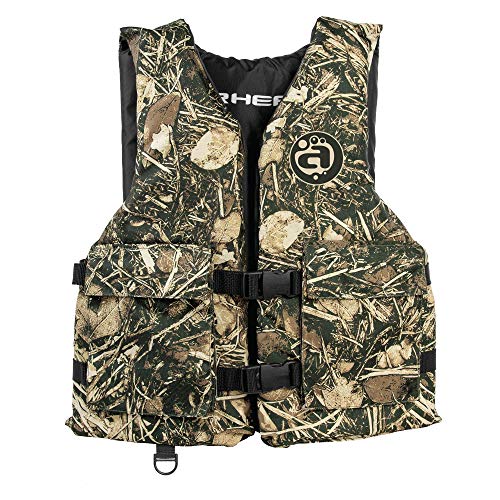
1.AIRHEAD Sportsman Life Jacket with Pockets
Two large front pockets keep handy essentials close while you boat

2.Momarsh ZD1H Hunting Life Jackets 40 lb
40 lb of buoyancy provides twice the lift of a Type III foam jacket

3.Momarsh T1H Hunting Life Jackets Type II
Over 35 lb of buoyancy provides more than twice the minimum rating

4.Bradley 1693 Camo Life Vest for Adults
Enclosed sides reduce chafing for comfort while fishing or hunting

5.Onyx A/M-24 Inflatable Life Jacket with Camo
Automatic or manual inflation gives you two ways to activate buoyancy

6.HWAYAN 609 Inflatable PFD Vest 150N Buoyancy
150N buoyancy inflates in 3–5 seconds when you pull the cord manually

7.JKSPORTS Fly Fishing Vest with Foam
Four chest and four zipped front pockets keep essential gear organized
1. AIRHEAD Sportsman Life Jacket with Pockets
AIRHEAD Sportsman keeps hunters afloat during fishing and other general boating activities. Its US Coast Guard Type III approval suits situations where a quick response is likely, while the lightweight Poly-E flotation inside provides buoyancy.
Two sturdy body belts help secure the adult universal-size vest, and its open-sided cut allows airflow around the body. The less bulky shape also leaves room to move during paddling and other water sports, which can matter when reaching for gear or shifting position.
The camo pattern and earth tones suit buyers looking for subdued colors on the water. Two large front pockets hold handy essentials, and a D-ring gives you a place to attach compatible items.
Its 200-denier fabric resists UV exposure and stains, according to the product specifications. That material detail may appeal to hunters who want a vest for regular outdoor use, though the listing does not describe a specific camouflage pattern or pocket closure.
The adult universal fit is intended for a wide range of sizes, but it does not provide a precise chest measurement in the supplied specifications. Open sides add breathability in warm conditions, while the body belts provide the listed adjustment points.
This camo life jacket suits hunters who boat or fish and want Type III flotation, front storage and room to move. Buyers who need a tightly enclosed design or detailed fit measurements may want to compare other options.
- USCG Type III approval for boating safety
- Two large pockets hold handy essentials
- Open sides help airflow in warm weather
- Lightweight flotation supports easier movement
- Open-sided cut leaves more of the sides exposed
2. Momarsh ZD1H Hunting Life Jackets 40 lb
For waterfowl hunters who want an inflatable vest, the Momarsh Lifeline combines 40 pounds of buoyancy with automatic inflation when immersed in water. Its Type II auto-inflatable design provides a different option from a foam life jacket.
The maker says it provides twice the buoyancy of a Type III foam life jacket. That extra buoyancy may matter to hunters who want more support on the water, while the automatic inflation helps the vest respond when it gets immersed.
A wide neck opening and breathable 3D mesh panels shape the fit around hunting layers. Memory foam padding across the back adds cushioning, and the vest fits chest measurements from 30 to 56 inches.
Ripstop fabric and reflective strips form part of its construction. The reflective details help with visibility, while the Optifade Waterfowl Timber pattern suits its waterfowl-hunting focus.
This one-size-fits-most vest uses a 38-gram zippered Arc Chassis. It conforms to USCG guidelines, though the data does not identify a specific approval or certification.
For hunters comparing life jackets for waterfowl outings, this model brings automatic inflation, substantial stated buoyancy and a padded back. Its wide chest-size range may also help accommodate different body types and clothing layers.
- 40 pounds of buoyancy for added support
- Inflates automatically when immersed in water
- Memory foam back padding adds cushioning
- Fits chest sizes from 30 to 56 inches
- One-size fit may not suit every hunter
3. Momarsh T1H Hunting Life Jackets Type II
Over 35 pounds of buoyancy gives the Momarsh Lifeline strong flotation for waterfowl hunters. It is a U.S. Coast Guard Type II PFD, and the maker says it provides more than twice the buoyancy of a Type III foam vest.
When properly inflated, it is designed to turn most unconscious wearers face-up in the water. That design also makes it suitable for many rough-water uses, according to the product details.
The vest has a 3D mesh lining and a memory-foam back strap for comfort. A padded, 2-inch adjustment slider lets you adjust the fit, while its one-size-fits-most sizing accommodates a range of wearers.
A kill-switch attachment lets you connect the engine cut-off switch while underway. The title also lists a 33-gram inflator, a minimal profile and a splash-proof exterior pocket, though the details do not specify how the inflator operates.
A zippered pocket holds small accessories, such as items a hunter may want close at hand. The Optifade Timber color suits its hunting focus, and the PFD is aimed at hunters who want inflatable flotation with space for small essentials.
- More than 35 pounds of buoyancy for flotation
- Type II design suits many rough-water uses
- Kill-switch attachment connects while underway
- Padded, adjustable fit with mesh and memory foam
- One size may not fit every hunter well
4. Bradley 1693 Camo Life Vest for Adults
Hunters who need flotation for calm inland water get a Type III PFD with the Bradley adult life vest. It is UL listed and approved by the U.S. Coast Guard for use in calm water or close to shore.
The vest is designed to help keep a wearer floating face-up, with the head tilted back. That makes its stated use relevant for waterfowl hunting, while its title also lists fishing, ocean kayaking and wakeboarding.
Enclosed sides help limit chafing during wear. Two-inch adjustable straps and quick-release buckles let you adjust the fit and fasten or release the vest.
Polyester Cordura fabric and closed-cell PE foam make up the vest. It comes in an oversized dual-size fit for adults, so check the fit against your needs before choosing it.
Its marine color-block design has black buckles and an interior. At about 1.5 pounds, it is relatively light to carry along with hunting gear, though the stated flotation use is limited to calm inland water or close to shore.
This vest suits adult waterfowl hunters who need an approved flotation aid for calm-water outings and also want a design listed for fishing or kayaking.
- Coast Guard-approved Type III flotation for calm water
- Face-up flotation design helps position the wearer
- Enclosed sides help reduce chafing during wear
- Adjustable straps and quick-release buckles aid fit
- Intended for calm water or close to shore
5. Onyx A/M-24 Inflatable Life Jacket with Camo
The Max-5 Camo Onyx inflatable life jacket suits hunting trips on the water, where automatic and manual inflation give you two ways to activate it. It inflates when submerged, or you can pull the handle to inflate it yourself.
U.S. Coast Guard approval makes it a certified option for eligible adult users. The jacket is designed for people aged 16 and older who weigh over 80 pounds, so check those limits before choosing it.
Its 30- to 52-inch chest range covers a range of adult fits. The low-profile design named in the title keeps this inflatable style focused on wearing a life jacket without the bulk of a traditional vest.
If the main inflation method does not provide enough air, you can use the backup oral inflation tube. That gives you another way to inflate the jacket when needed.
The camouflage finish fits hunting use, while the automatic/manual system also suits outings where you want a choice of inflation method. It is best for hunters who meet the age, weight and chest requirements and want an inflatable, Coast Guard-approved jacket.
- Automatic or manual inflation offers two options
- USCG approval adds certified flotation protection
- Backup oral tube offers another inflation method
- Fits adult chests from 30 to 52 inches
- Only fits users over 80 pounds and age 16+
6. HWAYAN 609 Inflatable PFD Vest 150N Buoyancy
Manual inflation gives this HWAYAN life jacket a specific role for hunting near water: it provides flotation without restricting movement during water activities. Its 150N buoyancy supports adults weighing 105 to 330 pounds, with chest sizes from about 36 to 62 inches.
Pulling the cord inflates the vest in three to five seconds after submersion, according to the product details. The white camouflage pattern suits outdoor use, while two reflective strips on the airbag help make the wearer more visible in darkness.
The jacket includes a 33-gram carbon dioxide cylinder and a whistle. Its design also has rescue loops for hook attachment, and it can automatically turn the wearer’s head so the face stays above water.
For backup inflation, an oral tube lets you add air by mouth and release it by twisting the cap. The carbon dioxide cylinder can be replaced after use, but replacement cylinders are sold separately.
A PVC mesh tote bag supports carrying and storage, and the jacket weighs about 1.6 pounds. Maintenance is limited to surface cleaning; the instructions say not to machine-wash it and to keep it away from sharp edges.
This manual-inflation vest may suit hunters who need a compact flotation option for boating, fishing or other water activities. It requires pulling the cord to inflate, so buyers should consider that operation when choosing a life jacket.
- 150N buoyancy supports adults up to 330 pounds
- Inflates in three to five seconds after submersion
- Reflective strips and whistle aid water visibility
- Oral tube provides a manual inflation backup
- Manual inflation requires pulling the cord
7. JKSPORTS Fly Fishing Vest with Foam
JKSPORTS makes a flotation vest with storage for paddling and other water activities. Its replaceable EPE foam provides buoyancy, and an inside zipper lets you remove the foam when you want a thinner, more breathable vest.
Four chest pockets, four zipped front pockets, two side mesh pockets and a large back pocket give you room for small essentials. That storage can help keep useful gear close while you paddle, sail or boat.
The low-profile foam design suits paddling, while the breathable mesh lower back and mesh lining help air circulate around the vest. Grass camouflage is the listed color, and the vest weighs about 1.5 pounds.
Chest accessory loops and attachment ladders let you add small items to the vest. A lash tab offers another place to secure a small accessory, so you can organize lightweight gear for time on the water.
The title lists swimming, sailing, boating and kayaking, but the product details do not give a buoyancy rating or a fit range. Buyers who need a vest for a specific activity should check that it suits their needs before choosing it.
This is our final pick for hunters who also want pockets and removable foam for paddling or boating. Its storage and breathable mesh suit buyers who value carrying small essentials, while those needing a hunting-specific fit should verify that detail first.
- Replaceable foam provides buoyancy for water use
- Ten front and side pockets hold small gear
- Removable foam lets you wear a thinner vest
- Mesh back and lining help air circulate
- No major cons
How to Choose the Best Hunting Life Jackets
The right hunting life jacket should match your water, weather, clothing, and time spent afloat. Fit, flotation style, pockets, and legal approval all affect comfort and safety, so compare them before choosing.
| If You Need | Look For | Expect |
|---|---|---|
| Calm-water hunting | Approved Type III foam vest | More bulk around the torso |
| A slimmer fit | Automatic inflatable PFD | Regular inspection and rearming |
| Manual control | Pull-cord inflation and oral tube | You must act before inflation |
| Room for layers | Broad adjustable chest range | More strap adjustment |
| Gear close at hand | Secure pockets and attachment loops | Added bulk and snag points |
| Long wear in warm weather | Mesh panels and padded straps | Less coverage than full foam |
| Low-light visibility | Reflective strips and whistle | Brighter details may stand out |
Approval and Water Conditions
Start with the label and the water where you hunt, because a vest suited to calm inland water is not automatically suitable offshore. In the United States, look for U.S. Coast Guard approval and the stated PFD type.
Type III foam vests are generally intended for conscious wearers in calm or inland water, and they may not turn an unconscious person face-up. Type II inflatables are designed to provide face-up flotation, but their approval and conditions still matter.
Read the label’s limits for activity, wear, and user size rather than relying on a product’s hunting description. If you hunt rough water, far from shore, or in cold conditions, ask local authorities or a boating-safety professional what rating suits that risk.
Fit and Secure Wear
A life jacket only helps if it stays on during a fall, so fit comes before pockets or camouflage. Match your chest measurement and body weight to the maker’s stated range, then try it over the layers you expect to wear.
Universal and dual-size labels cover a range, not every body shape; a loose vest can ride up when you enter the water. Fasten every belt or buckle, raise your arms, and have someone pull upward at the shoulders to see whether it shifts.
Inflatable styles often use a wider chest range, but their straps still need firm adjustment. Choose a fit that stays secure without restricting breathing, shouldering a firearm, or reaching into a blind.
Flotation Style and Buoyancy
Foam vests provide flotation without needing a cylinder to fire, which suits buyers who want a ready-to-wear option. They usually take up more space and feel warmer, so try the vest with your hunting coat before buying.
Inflatables pack flotation into a smaller profile, but they depend on an inflation system and correct upkeep. Look at the stated buoyancy and PFD type; figures such as 35 or 40 pounds describe lift, not a guarantee of suitability for every user.
A manual model inflates only after you pull its handle, while an automatic model is designed to inflate after immersion. Pick the operating style you can use in your likely conditions, and understand that an inflatable is not a substitute for wearing it.
Inflation and Upkeep
For an inflatable, learn exactly how it fires before you head out: automatic models respond to water, while manual models require a deliberate pull. Automatic systems suit people who could lose consciousness, but rain, spray, or wet storage may trigger some mechanisms.
Look for a clear status indicator, an accessible oral inflation tube, and instructions for replacing the CO₂ cylinder and activation parts. An oral tube lets you add air by mouth if the main system fails, but it does not replace routine inspection.
Inspect the bladder, seams, closure, cylinder, and firing mechanism as directed by the maker, and keep the vest dry when stored. If you do not want to track service parts or inspection dates, foam flotation is simpler to maintain.
Layering and Movement
A hunting vest must stay comfortable through long sits and still let you reach, paddle, and shoulder equipment. Check whether straps can be adjusted over a base layer and insulated jacket, since fit can change sharply between seasons.
Slim inflatable designs reduce bulk at the chest, while foam panels add coverage and can limit arm movement. Test the movements you use most, including raising both arms and turning your torso, before deciding which shape suits your setup.
Mesh panels and padded back sections may ease heat and pressure during long wear, but they do not make every vest cool in heavy clothing. For warm-weather hunts, favor breathable contact areas; for cold hunts, leave room for insulation without loosening the vest.
Pockets and Attachments
Pockets keep small gear within reach, but their placement and closure deserve attention around water. Look for zippers or secure flaps, and decide whether the pockets fit your calls, license, and other essentials without pressing into your chest.
A D-ring or kill-switch attachment point gives a place to secure compatible equipment, while loops and lash points hold selected accessories. These features are useful only when their location suits your gear; loose cords and dangling items can snag.
More pockets add storage but also add bulk, and an overloaded pocket can affect comfort. Keep essential safety items accessible, and carry valuables in a closure that suits spray and splashes rather than assuming every pocket is waterproof.
Fabric and Visibility
Hunting colors help a vest blend with surroundings, but low visibility can make you harder for other boaters to spot. Reflective strips, a whistle, and rescue loops are useful safety details, especially when light is poor or a recovery is needed.
Check the fabric description for abrasion resistance and UV or stain protection, then consider how often the vest will rub against boat edges or wet gear. Tougher fabric may hold up better, but it can feel heavier or less flexible.
A light-colored or reflective vest may stand out more than camouflage, which can be a trade-off during hunting. Prioritize visibility when boating safety calls for it, and follow local rules about signals and required safety equipment.
Weight and Bulk
The listed vest weight helps with packing, but it does not show how bulky the vest feels once worn. Foam models generally occupy more space, while inflatables tend to sit closer to the body until deployed.
If you hike into a hunting spot, compare packed size and weight with your other equipment. A lightweight vest is easier to carry, but do not choose one that sacrifices a secure fit or the approval needed for your water.
Price and Value
Lower-priced options often provide basic foam flotation and adjustable straps, while higher prices may buy an inflatable system, a slimmer profile, or added storage. Compare approval, fit, and upkeep before treating extra features as value.
Paying more makes sense if an inflatable design helps you wear the vest consistently or its fit suits your layers better. Include replacement cylinders and activation parts in the cost; a simpler foam vest may cost less to keep ready.
Care and Warranty
Read the care instructions and warranty before purchase, especially for inflatables with replaceable firing parts. A warranty can cover certain defects, but it usually does not remove your responsibility for inspection, correct storage, or replacing used components.
Confirm how the maker handles repairs and which parts are serviceable, because an unavailable cylinder can leave an inflatable unusable. Keep the manual with your gear and inspect the vest before each outing, following its stated schedule.
Frequently Asked Questions
Do the inflatable hunting life jackets need a power source?
The Onyx A/M-24 and HWAYAN 609 use inflation systems rather than foam alone; the Onyx offers automatic or manual activation, while the HWAYAN inflates manually by pulling its cord.
What materials or construction features should I compare?
Compare the style and features that suit your needs: the Momarsh ZD1H and T1H provide buoyancy, while the Bradley 1693 has enclosed sides designed to reduce chafing. Check each product’s specifications for material details.
What comes in the box with these life jackets?
The listed product details don’t specify included accessories, so check the seller’s listing for what’s included before ordering.
Should I choose the Momarsh ZD1H or the Momarsh T1H?
The ZD1H is listed with 40 lb of buoyancy, while the Type II T1H is listed with over 35 lb. Compare their intended use and fit, and choose the model that best matches your boating conditions.
Which jacket is best for keeping small essentials close?
The AIRHEAD Sportsman has two large front pockets, while the JKSPORTS Fly Fishing Vest has four chest pockets and four zipped front pockets for organizing gear.
How do I activate the inflatable jackets?
The Onyx A/M-24 can inflate automatically or manually. The HWAYAN 609 is manually activated by pulling its cord; follow the product instructions for operation and care.
So, What Should You Buy?
For most hunters, the AIRHEAD Sportsman is the best pick, with two large front pockets for essentials. Choose the Momarsh ZD1H for 40 lb of buoyancy, or the T1H for over 35 lb. The Bradley’s enclosed sides suit buyers prioritizing comfort, while the Onyx offers automatic or manual inflation.
For a manually inflated option, consider the HWAYAN; for organized gear, the JKSPORTS has eight front pockets. Choose the life jacket that best matches your needs and boating conditions.