

Good hearing protection lets you focus on the hunt while keeping loud shots from overwhelming your ears. Ordinary foam earplugs can reduce noise, but they may muffle conversation and make it harder to hear nearby sounds clearly.
Electronic hunting muffs help balance protection with awareness. Their cushioned ear cups cover your ears, while built-in microphones let you hear voices and quiet outdoor sounds; loud impulse noises trigger sound reduction to help protect your hearing.
Many models also offer adjustable volume, a comfortable headband, and a foldable design for easy packing. Some include Bluetooth, so you can listen to audio between hunting sessions without removing your muffs.
Fit, noise reduction, battery life, and extra features vary, so consider your usual hunting conditions and how long you wear them. Explore the best hunting muffs below to find a pair that suits your needs.
7 Best Hunting Muffs Reviews

1.Walker's GWP-RSEM Electronic Earmuffs
Two microphones amplify safe sounds so you can hear your surroundings
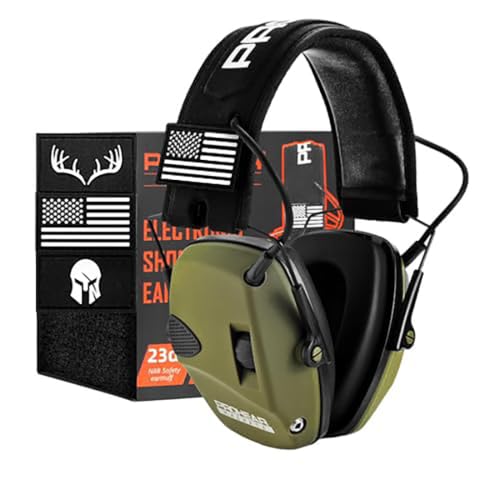
2.PROHEAR 066 Electronic Hearing Protection
Amplifies sounds up to 4x and suppresses gunshots in under 0.01s

3.BASSDASH Camo Hunting Muffs with Hand Warmth
Fleece lining and elastic cuffs help keep hands warm on cold hunts

4.BASSDASH Reversible Insulated Hunting Muffs
Reversible camo and blaze orange sides offer concealment and safety

5.Maniaacer Camo Hunting Hand Muff with Fleece
Polar fleece lining helps keep hands warm during cold outdoor trips

6.Rhino Valley Camo Hunting Hand Muff
Waterproof PVC coating helps keep hands dry in rain and snow outdoors

7.TICONN Noise Cancelling Ear Muffs, 26dB
26dB noise reduction helps protect hearing in loud hunting settings
1. Walker’s GWP-RSEM Electronic Earmuffs
Walker’s Razor Slim earmuffs protect hearing during shooting and hunting while amplifying safer sounds around you. Their 23 dB Noise Reduction Rating helps reduce hazardous noise, and two high-gain microphones pick up sound from all directions.
The microphones enhance lower frequencies to give amplified sounds a more natural quality. This lets you hear surrounding activity while wearing hearing protection at a range or in the field.
Slim ear cups keep the profile low, and cushioned pads support extended wear. The design also allows maneuvering at a shooting range or in the field, where a bulky fit could get in the way.
A padded metal-wire headband supports the earmuffs, while a sound-dampening composite forms the housing. A rubberized coating helps guard the interior electronics, and the Mossy Oak Bottomland finish suits outdoor use.
A recessed knob on the outside adjusts volume while helping prevent accidental changes. The battery door also opens from the exterior, and an audio input jack lets you connect a phone or another sound source for music.
At about one pound, these electronic earmuffs suit hunters and shooters who want hearing protection with amplified awareness of surrounding sounds. Their audio input also makes them useful for listening between shooting sessions.
- 23 dB rating helps reduce hazardous noise
- Two mics amplify sounds from all directions
- Low-profile cups allow easier maneuvering
- Audio jack supports music from a phone
- About one pound may feel bulky for travel
2. PROHEAR 066 Electronic Hearing Protection
For hunting and target practice, PROHEAR electronic earmuffs pair an NRR of 23dB with sound amplification for hearing protection and conversation. Their electronics suppress harmful noises such as gunshots in under 0.01 seconds and boost quieter sounds up to four times their natural volume.
They meet ANSI S3.19 noise-reduction standards and suit shooting ranges, hunting, woodworking, mowing and chainsaw use. The slim ear cups have cutaways for a shooting fit, while an accessible volume knob makes it easier to adjust sound with gloves on.
The earmuffs run on two AAA batteries, which provide up to 300 hours of use; the batteries are not included. Their IPX4 rating covers resistance to water, sweat and dust, useful for outdoor sessions.
Wide ear cups with soft cushions and a padded, telescoping headband help spread pressure across the head. At about 0.6 pounds, they are lightweight for extended wear, and the cups fold for packing in a bag.
A 3.5mm cable, carrying pouch, user manual and decorative patches come in the package. These green muffs suit hunters and range users who want amplified ambient sound along with hearing protection, and can also serve for other noisy tasks.
- Suppresses gunshot noise in under 0.01 seconds
- Amplifies quieter sounds up to four times
- NRR 23dB and ANSI S3.19 compliance
- Up to 300 hours from two AAA batteries
- AAA batteries are not included
3. BASSDASH Camo Hunting Muffs with Hand Warmth
One large zippered pocket keeps a hunting license, keys and other essentials close at hand, while the Bassdash Camo Hunting Muff gives both hands a warm place to rest. Its fleece lining helps protect fingers from cold during winter hunts.
Ten exterior shell holders keep ammunition ready for quick reloads, and a small center pocket carries compact gear. Two inner pockets hold hand warmers, giving you another way to keep your hands warm outdoors.
An adjustable nylon waistband fits over bulky winter clothes and accommodates waist sizes up to about 53 inches, including clothing. Elastic cuffs fit different hand sizes and make it easier to slide hands in and out while helping retain warmth.
Swivel clips at the top and bottom attach the muff to waders or a tool belt. That gives hunters options for carrying it while moving, rather than relying only on the waistband.
The Autumn Forest camouflage pattern is designed to break up your outline for concealment. It also coordinates with other Bassdash hunting clothes in the same pattern, and the one-size design suits a range of outdoor uses.
Beyond hunting, this muff can serve during ice fishing, shooting and other cold-weather activities. It suits hunters who want warmth, shell storage and several pockets together, though buyers should check how its one-size fit works with their clothing and preferred carry setup.
- Ten shell holders keep ammunition ready for reloads
- Two inner pockets hold hand warmers
- Adjustable waist fits clothing up to about 53 inches
- Swivel clips attach to waders or tool belts
- One-size design may not suit every wearer
4. BASSDASH Reversible Insulated Hunting Muffs
Hunters who want warm hands and a reversible visibility option get both from this BASSDASH hunting muff. Its fleece-lined, padded construction is made for cold-weather hunts, ice fishing, winter camping and walks, keeping your fingers covered while leaving your hands easy to slip in and out.
The front shows Grunge Camo for blending into forest surroundings, while the reverse side is blaze orange for visibility. The pattern is BASSDASH’s patented camo design, and the muff can pair with other Bassdash hunting clothes in the same pattern.
An adjustable nylon waistband fits over bulky winter layers for waists up to 60 inches. Elastic cuffs accommodate different hand sizes and help hold warmth inside, so you can tuck your hands away without struggling to reach them.
Storage includes a large zippered front pocket for items such as a hunting license or keys. An inner pouch holds disposable hand warmers, giving you a place to keep them separate from the main pocket.
The muff comes in Grunge Camo and reverses between the camo and blaze-orange sides. That gives hunters a choice between concealment and a more visible color, depending on which side they wear outward.
This design suits hunters and ice fishers who need insulated hand coverage over winter clothing, plus campers and walkers who want a reversible cold-weather muff with room for small essentials.
- Reverses between camo and blaze orange
- Waistband fits over layers up to 60 inches
- Front zip pocket and hand-warmer pouch
- Elastic cuffs help keep hands warm
- No major cons
5. Maniaacer Camo Hunting Hand Muff with Fleece
In the woods or at a campsite, this camo hand muff gives you a warm place to tuck your hands while keeping them ready for outdoor activities. Its polar fleece lining adds insulation for cold-weather hunting, hiking, camping and fishing.
The soft fleece interior helps hold warmth around your hands, while the Oxford fabric outer shell and shoulder strap resist water and sun exposure. That combination suits changing outdoor conditions, though the listing does not give a temperature rating or specific water-resistance level.
A jungle camouflage print covers the outside, with military-green fleece and woven straps. The pattern is intended to help the muff blend into forest surroundings, making it a practical choice for hunters who want their gear to match a wooded setting.
You can adjust the shoulder strap to carry the muff around your neck or waist. That keeps it close while you move, and lets you take your hands out when you need to handle other gear.
A front zipper pocket holds small hunting essentials where you can reach them quickly. The package includes one muff, and its stated size is 8 by 20 inches, giving your hands space inside without adding a larger bag.
This camo hand muff suits hunters who want insulated hand coverage and a small storage pocket, as well as campers, hikers and anglers who spend time outdoors in cold weather.
- Fleece lining adds warmth for cold outings
- Adjustable strap supports neck or waist carry
- Zipper pocket keeps small essentials close
- Water-resistant Oxford shell helps outdoors
- No major cons
6. Rhino Valley Camo Hunting Hand Muff
Waterproof PVC coating is the first useful detail on the Rhino Valley hand muff, helping shield your hands from rain, snow and melted snow during outdoor outings. Inside, polar fleece lining and PP cotton insulation add warmth, while stretch cuffs help keep cold air out.
The layered construction suits long stretches outdoors, such as waiting during a hunt or sitting by a campsite. Its jungle camouflage pattern is intended to blend into forest and grassland surroundings, which can help reduce visibility while you keep your hands warm.
An exterior pocket holds small items such as a phone, keys, batteries or hunting accessories. That keeps frequently used essentials close at hand without requiring a separate bag for them.
The adjustable strap gives you two ways to carry the muff: around your neck or secured at your waist. This hands-free setup can suit hunting, hiking, camping and fishing, depending on the activity and clothing you wear.
Its brown color and camouflage pattern suit outdoor use, while the pocket and flexible carrying options add practical storage. This muff is a good fit for hunters and other outdoor users who want insulated hand coverage with a water-resistant exterior.
- Fleece and PP cotton insulation help retain warmth
- Waterproof PVC coating helps keep hands dry
- Adjustable strap allows neck or waist carry
- Exterior pocket keeps small essentials within reach
- No major cons
7. TICONN Noise Cancelling Ear Muffs, 26dB
TICONN makes these hunting muffs for people who need hearing protection in loud settings such as hunting trips and construction sites. They carry an NRR 26dB rating; the title also lists SNR 33dB, giving buyers two ratings to compare when choosing protection.
Soft memory foam cushions and an adjustable headband support a more comfortable fit during extended wear. You can adjust the band to suit different head sizes, while the cushions sit around the ears.
The ABS plastic shell and reinforced metal frame have passed a 1.5-meter drop test, according to the product details. They are also rated for temperatures from minus 20 to 50 degrees Celsius, which covers cold and hot conditions.
Their foldable design helps reduce the space they take up in a bag or storage area. That makes them easier to carry between hunting locations, and the listing also names sleeping, gardening and air travel as other possible uses.
The muffs meet ANSI S3.19-1974 and CE EN 352-1 standards. They come in black and weigh about 0.7 pounds, so they can travel with other gear without adding much weight.
For hunters who also want a pair for travel, yard work or other loud environments, these adjustable muffs offer useful protection ratings and a portable foldable shape. Check the listed NRR and SNR ratings against the protection level you need.
- NRR 26dB rating helps reduce loud noise
- Foldable design makes them easier to carry
- Adjustable band fits a range of head sizes
- Memory foam cushions support extended wear
- No major cons
How to Choose the Best Hunting Muffs
Choosing hunting muffs means balancing hearing protection, awareness, fit, and cold-weather comfort, since the right features depend on your firearm, hunting conditions, and how long you stay outdoors. Decide whether you need electronic ear protection, a hand warmer, or both.
| If You Need | Look For | Expect |
|---|---|---|
| Gunshot protection | Published NRR, snug ear seals | More coverage may feel bulky |
| To hear surroundings | Electronic microphones, volume control | Batteries add weight and upkeep |
| A clear cheek weld | Slim ear cups | Less room for thick padding |
| Long hunts | Padded headband, low weight | Lighter builds may feel less sturdy |
| Warm hands | Insulated lining, elastic cuffs | Added bulk around your waist |
| Wet-weather use | Water-resistant shell, sealed seams | Stronger protection may cost more |
Hearing Protection
For firearm use, start with the labeled noise reduction rating, or NRR, which estimates how much sound protection the muff provides under test conditions. A higher number offers more protection, but the fit around your ears still affects real-world results.
A snug seal matters because gaps let sound reach your ears, even when the label lists a high rating. Glasses, hat brims, and hair can break that seal, so try the muffs with your usual hunting gear.
Electronic muffs use microphones to pass along quieter sounds while limiting sudden loud noise; passive muffs block sound without amplifying it. Choose electronic models when hearing conversation or nearby movement matters, and passive models when simplicity is the priority.
No earmuff should be treated as permission to ignore safe firearm practices or other hearing protection guidance. For particularly loud firearms or repeated shooting, ask a hearing professional about adding earplugs beneath muffs.
Sound Awareness
Electronic amplification helps you hear speech and outdoor sounds without removing your protection, but the amount and clarity vary by model. Look for adjustable volume and microphones that capture sound from more than one direction.
Some models amplify quieter sounds several times, while others focus on making low-level noises easier to hear. Consider whether you want a natural listening level or stronger amplification, since excessive volume can make wind and handling noise distracting.
A fast response to sudden loud sounds helps reduce the time a gunshot reaches your ears at full volume. Look for a stated suppression response time when available, and remember that published protection ratings remain important too.
Fit And Cheek Weld
Slim ear cups are useful when you shoulder a rifle or shotgun, because bulky cups may press against the stock and disturb your aim. Try the position with your firearm unloaded, following safe handling practices.
The headband should hold the cups evenly over both ears without slipping or pressing painfully. Adjustable bands suit different head sizes and hats, while padding helps during long sits, but thicker padding may add heat and bulk.
For a reliable seal, the cushions should surround each ear rather than rest on it. Memory foam or soft cushioned seals may improve comfort, though the shape of your glasses and head also affects the fit.
Weight And Wearing Comfort
Lightweight muffs are easier to wear through a long hunt, especially when you are walking or glassing. Compare the stated weight and consider whether batteries, a hat, or other equipment make the fit feel heavier.
A padded headband spreads pressure across the top of your head, while smooth adjustment helps keep the cups aligned. If you wear head protection or a thick winter hat, check that the band still fits securely.
Heat buildup can become uncomfortable in warm weather, while exposed skin around the cups can feel cold in winter. Choose cup depth and cushion material for your usual conditions, and avoid a fit that loosens when you move.
Controls And Power
Exterior volume controls let you adjust sound without taking the muffs off, which is handy when conditions change. Recessed controls are less likely to turn accidentally, but make sure you can operate them with gloves.
Battery type affects both convenience and the weight carried on your head. Check whether the muffs use common replaceable batteries, how long the maker estimates they last, and whether you are willing to bring spares.
A stated battery-life figure is only a guide, since cold temperatures and frequent use can shorten runtime. For long trips, pack fresh batteries and learn how to switch the unit off when you do not need amplification.
Weather Resistance
Hunting often brings rain, snow, sweat, or damp brush, so weather protection helps electronic muffs last longer. Look for a stated water-resistance rating rather than assuming that a camouflage finish or plastic shell is waterproof.
An IPX4 rating indicates protection against splashing water, not submersion or prolonged soaking. If you hunt in heavy rain, store electronic gear dry between outings and follow the maker’s care instructions.
For cold weather, check the stated operating temperature when one is provided. Cushioned cups and electronics may behave differently in freezing conditions, so keep spare batteries warm and avoid leaving equipment exposed unnecessarily.
Hand-Warming Design
A hunting hand muff is a separate kind of product from hearing-protection earmuffs, so first decide whether warmth for your hands is the need. Fleece lining and insulation hold heat, while a roomy opening lets you tuck hands inside quickly.
Elastic cuffs help keep warmth in and let different hand sizes enter comfortably. Try the opening with your gloves, since a narrow cuff can slow access and a loose cuff can let cold air in.
Some hand muffs include pockets for disposable hand warmers, while others rely on insulation alone. Warmers add heat on long, cold sits, but take up space and require replacement after use.
Carrying And Storage
A waist belt keeps a hand muff close while leaving your hands free, while a shoulder or neck strap offers another carrying position. Adjustable straps help fit different layers, but extra webbing can snag on brush.
Zippered pockets secure small items such as calls or keys, while shell loops keep ammunition accessible. Choose storage that suits your routine, since extra pockets and shell holders add bulk and do not replace a dedicated safe ammunition carrier.
Attachment clips can help keep a muff in place as you move, but their location and strength affect convenience. Look for a carry setup that stays comfortable when worn over your winter clothing and does not interfere with firearm handling.
Materials And Durability
For electronic muffs, sturdy shells and a strong adjustable frame help withstand regular packing and use. Materials such as ABS plastic or reinforced metal provide clues about construction, but hinges, adjustment points, and cushions also deserve attention.
Hand muffs face brush, moisture, and repeated handling, so compare the outer fabric and lining. A coated shell can shed water, while fleece and synthetic insulation add warmth; no fabric choice removes the need for drying after a wet hunt.
Removable or replaceable cushions are useful if the maker offers them, because worn seals can reduce comfort and protection. Review care instructions before buying, especially if the product includes electronics or a water-resistant coating.
Audio Connections
Some electronic muffs include a 3.5mm input for a phone or other audio source, while others have no listed audio connection. Decide whether you will use one, and confirm that your device supports the required cable connection.
A wired connection adds a cable that can catch on branches or interfere with movement. It may suit stationary use or simple audio playback, but leave it disconnected when it is unnecessary.
Price And Value
Lower-priced choices often focus on basic passive protection or straightforward hand warming, which suits occasional use and simpler needs. Confirm that the protection rating, fit, and materials still match your hunting conditions before paying less.
A higher price may bring electronic sound awareness, more adjustment, weather protection, or added carrying features. Pay extra for features you will use regularly, rather than assuming cost alone means better protection or comfort.
Warranty And Support
A clear warranty can help if hinges, electronics, straps, or stitching fail during normal use. Read what the coverage excludes, how long it lasts, and whether you must register the product or keep proof of purchase.
For electronic models, confirm where to get instructions and support for battery or control problems. For hand muffs, look for care guidance that explains washing, drying, and maintaining any coating or insulation.
Frequently Asked Questions
Which hunting muffs need batteries?
The Walker’s GWP-RSEM and PROHEAR 066 are electronic earmuffs, so check their product details for the required power source. The other listed products are hand muffs or passive hearing protection.
What materials and weather features should I look for?
For warmth, the BASSDASH Camo Hunting Muffs with Hand Warmth and Maniaacer Camo Hunting Hand Muff have fleece lining. The Rhino Valley hand muff has a waterproof PVC coating for rain and snow.
What comes in the box with each pair?
The listed product details don’t specify package contents, so check each seller’s listing for included accessories or batteries before buying.
Should I choose the Walker’s GWP-RSEM or the PROHEAR 066?
Choose the Walker’s if hearing nearby sounds amplified by two microphones is your priority; choose the PROHEAR 066 if you want sound amplification and rapid gunshot suppression. Compare their fit and power requirements as well.
Which option is best for keeping my hands warm?
The BASSDASH Camo Hunting Muffs with Hand Warmth has fleece lining and elastic cuffs, while the Maniaacer hand muff has polar fleece lining. Either may suit cold outings; consider which design fits your needs.
What should I choose for changing visibility needs?
The BASSDASH Reversible Insulated Hunting Muffs has camo and blaze orange sides, letting you switch between concealment and visibility.
How do I protect my hearing in loud hunting settings?
The TICONN earmuffs provide 26dB noise reduction. For amplified environmental sounds, consider electronic options such as the Walker’s GWP-RSEM or PROHEAR 066.
So, What Should You Buy?
Walker’s GWP-RSEM is the best pick for most hunters, with two microphones that amplify safe sounds so you can stay aware of your surroundings. For enhanced sound amplification and quick gunshot suppression, choose the PROHEAR 066; for straightforward hearing protection, the TICONN offers 26dB noise reduction.
Cold-weather hunters can choose the fleece-lined BASSDASH Camo Hunting Muffs with Hand Warmth or the Maniaacer hand muff, while the Rhino Valley suits wet conditions. Prefer reversible camo and blaze orange? Pick BASSDASH’s insulated muff. Choose the model that matches your hunt and needs.