

A rangefinder helps you judge distance across open ground, making it easier to plan a shot and assess the terrain. Without one, you may rely on estimating by eye or checking a map, neither of which gives a quick distance reading to a specific target.
For a more direct reading, a hunting rangefinder measures the distance to the object you aim at and displays it on screen. You can check how far an animal or landmark sits without guessing, helping you make more informed decisions in the field.
Many models offer magnification to bring distant targets into view, scan modes to update readings as you sweep across terrain, and compact designs that fit easily in your pack. Clear displays help you read distances in changing light.
Range, accuracy, size, and battery life vary, so consider the terrain and distances you expect to cover. Explore the best hunting rangefinders under 100 below to find one that suits your hunting needs.
8 Best Hunting Rangefinders Under 100 Reviews

1.TIDEWE HR-F700 700 Yard Hunting Rangefinders
6.5X magnification and five modes measure distance, angle and speed

2.REVASRI 1000 Yard Hunting Rangefinder
1000-yard range and 6.5X magnification help you see targets clearly
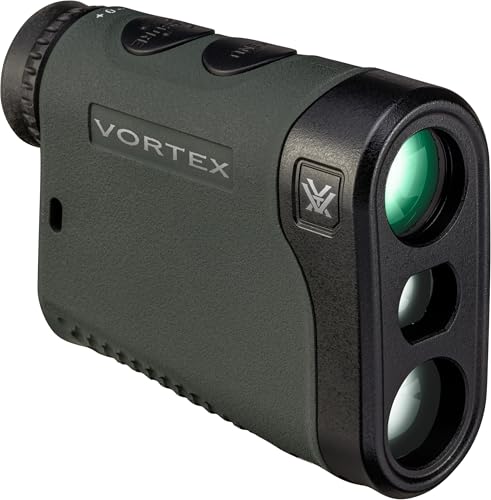
3.Vortex Triumph HD 850 Laser Rangefinder
Ranges game up to 350 yards, with 5X magnification for clear viewing

4.AOFAR HX-700N 700 Yard Hunting Rangefinder
Measures up to 700 yards with ±1 yard accuracy for confident ranging

5.Mossy Oak Rechargeable Hunting Rangefinders
Measures up to 1200 yards with ±1-yard accuracy in under 0.5 seconds

6.WOSPORTS H-116H 1200 Yard Hunting
1200-yard range and bow mode help you make informed shots in the field

7.PEAKPULSE LC1200A 1400 Yard Hunting
Angle compensation gives true horizontal distance for elevated shots

8.ACPOTEL PF2E 1200 Yard Hunting Rangefinder
Rain and fog mode filters particles for accurate readings in bad
1. TIDEWE HR-F700 700 Yard Hunting Rangefinders
TIDEWE helps hunters judge shot distances, angles and movement with a rechargeable 700-yard rangefinder. Its 6.5x magnification brings targets closer in the view, while distance, speed and scan functions give you several ways to assess what lies ahead.
It measures from 3 to 700 yards with accuracy within about 1 yard, and readings take as little as 0.46 seconds. Continuous scan mode can check trees, brush edges, trails, feeders and moving targets as you look across an area.
The rangefinder reports straight-line, vertical and horizontal distances, along with speed. Those measurements can help you compare a target’s position from a tree stand or check a lane before bow hunting and target shooting.
A simple LCD shows the distance data, and the buttons handle the main controls. A short press of MODE changes functions, while holding Power starts scan mode; the plus and minus knob adjusts focus, and holding MODE switches between yards and meters.
At about 5.7 ounces, the compact Leaf Camo unit is easy to carry in a pocket or hunting pack. Its rechargeable Li-ion battery supports up to 21,000 measurements per charge, and the included lanyard and storage bag help keep it close and protected.
This rangefinder suits hunters who want several distance readings and scan capability in a lightweight unit. It can also serve hikers and target shooters who need to check distances across outdoor terrain.
- Measures up to 700 yards with 1-yard accuracy
- Reads distances in as little as 0.46 seconds
- Reports straight-line, vertical and horizontal distance
- Rechargeable battery supports up to 21,000 readings
- Weighs about 5.7 ounces for field carry
- No major cons
2. REVASRI 1000 Yard Hunting Rangefinder
For hunting in open areas, the REVASRI rangefinder measures targets up to 1,000 yards away with 6.5x magnification. Its laser readings have an accuracy of plus or minus 1 yard, while angle measurements are accurate to plus or minus 1 degree.
Seven modes cover ranging, all-in-one measurements, scanning, speed, two-point height, golf distance compensation and storage. Mode memory brings back the last setting after shutdown, so you can resume with the mode you chose before.
In continuous scan mode, one press tracks multiple targets. The display updates angle, height, horizontal distance and straight-line distance as you move between them; golf mode can also lock onto a selected target.
Multilayer-coated glass lenses and a transmissive LCD provide the viewing system. The maker says the view remains bright and easy to see for people wearing glasses, which can help during field use.
The rechargeable built-in lithium-ion battery charges through USB-C. At about 4 ounces, the unit is light to carry, and its rain-proof design suits outdoor use. The package includes a case, lanyard, cleaning cloth, USB cable and manual.
With its hunting range, scanning and measurement modes, it suits hunters who want more than a single-distance reading, as well as golfers who may use its target lock and distance compensation mode.
- Measures targets up to 1,000 yards away
- 6.5x magnification helps view distant targets
- Seven modes cover varied measuring tasks
- Scan tracks multiple targets with one press
- Rechargeable battery charges through USB-C
- No major cons
3. Vortex Triumph HD 850 Laser Rangefinder
850 yards is the maximum range for reflective targets, while the Vortex Triumph HD 850 reaches trees up to 500 yards and game up to 350 yards. Those distances suit common deer-hunting situations, where readings help you judge how far a target is before taking a shot.
Three ranging modes—LOS, HCD and Scan—give you options for measuring distance, while Normal, First and Last target modes help select which object to range. The 5x magnification brings distant targets closer in the viewfinder.
Its HD optical system uses selected glass elements, fully multi-coated lenses and a 21mm objective lens. These features support light transmission and color accuracy, helping you see the view through the rangefinder in both bright and low-light conditions.
A black LCD display presents readings, and the rangefinder has a waterproof, shockproof build for outdoor use. Its soft-touch exterior gives you a more secure hold in wet conditions or while wearing gloves.
The unit weighs about 0.3 pounds, so it adds little weight to a hunting pack. Vortex includes a soft carry case for storage and transport, making this a sensible choice for hunters who want multiple ranging options and coverage for game out to 350 yards.
- Ranges game up to 350 yards for hunting
- Three ranging modes suit different situations
- Three target modes help select what to range
- Waterproof and shockproof for outdoor use
- 5x magnification brings distant targets closer
- Game range tops out at 350 yards
4. AOFAR HX-700N 700 Yard Hunting Rangefinder
Bow hunters who want a simple way to check distances get range and speed modes in the AOFAR HX-700N. It measures from 5 to 700 yards, so you can check how far away a target is before choosing your next move.
Its pin sensor technology provides six-times magnification and measures to within one yard. The magnified view helps you locate a target, while the stated accuracy gives you a more precise distance reading.
Range mode measures distance, and Speed mode is another option for different situations. The rangefinder also identifies target objects, making it a straightforward choice for beginners who want two basic modes.
The body weighs about 0.4 pounds and is described as waterproof and dustproof. Its compact build is easy to carry while hunting, and the rugged design suits outdoor use.
A CR2 battery comes in the package, along with a carrying pouch, portable rope, carabiner, cleaning cloth and user manual. These included items help you carry and maintain the rangefinder without sourcing the listed basics separately.
For bow hunters seeking a lightweight rangefinder with magnification and a useful distance range, this model covers the core needs. Its 700-yard limit makes it a fit for buyers who do not need a longer-range unit.
- Measures targets from 5 to 700 yards
- Six-times magnification helps view distant targets
- Accuracy within one yard aids distance checks
- Weighs about 0.4 pounds for carrying afield
- Includes a CR2 battery and carrying pouch
- 700-yard range may limit longer-distance use
5. Mossy Oak Rechargeable Hunting Rangefinders
In forests and fields, the Mossy Oak rangefinder combines a camouflage finish with distance readings up to 1,200 yards. Its 6x magnification and HD optical system help you pick out targets while hunting, shooting, or golfing.
Range Mode measures distance, Speed Mode tracks moving targets, and Scan Mode checks multiple objects continuously. Readings take less than half a second, with stated accuracy within one yard, so you can check a target’s distance without a long wait.
The IP54-rated housing resists dust and water, making it suited to everyday outdoor conditions such as rain and dirt. Its camouflage design fits wooded and field settings, while the included carrying pouch helps keep it together with the supplied lens cloth and USB-C cable.
A built-in 750mAh rechargeable battery supports up to 20,000 measurements per charge. You can recharge it through USB-C instead of replacing disposable batteries, and its weight of about 0.35 pounds makes it easy to carry on hikes or hunting trips.
This model suits hunters who want several measurement modes, long-range readings, and a compact rechargeable unit. Golfers and shooting-range users can also use its distance and scan functions for checking targets outdoors.
- Measures distances up to 1,200 yards
- 6x magnification helps identify distant targets
- Up to 20,000 measurements per charge
- Fast readings with accuracy within one yard
- No major cons
6. WOSPORTS H-116H 1200 Yard Hunting
M1 Range Mode gives this WOSPORTS rangefinder a straightforward way to check target distance, while its maximum range reaches 1,200 yards. The 6x magnification helps you view a target as you take a reading in the field.
Four modes cover different hunting needs. M2 Bow Hunting Mode provides range data for bow hunting, while M3 Slope Mode gives angle-adjusted distance readings for terrain with elevation changes.
M4 Speed Mode tracks moving targets, and M1 also supports rapid scanning. Continuous scanning helps you check distances across a hunting area, whether you’re watching for deer or turkey.
The rangefinder also measures angle and height, alongside distance and speed. You can switch between meters and yards by holding the MODE button for three seconds.
At about 0.3 pounds, its compact, deep-camo body is suited to one-handed use while you scan. The package includes a carry case, so there’s a place to store it between outings.
For hunters comparing rangefinders under $100, this model offers several measurement modes and a long stated range. It suits bow hunters and other field users who want distance, slope, speed and height readings in one device.
- Measures distances up to 1,200 yards
- Six-times magnification helps view targets
- Four modes cover varied hunting needs
- Weighs about 0.3 pounds for one-hand use
- No major cons
7. PEAKPULSE LC1200A 1400 Yard Hunting
PEAKPULSE makes this rangefinder for hunters who need distance readings on level ground, steep slopes and elevated bow shots. It measures out to 1,400 yards with ±1-yard accuracy, giving you a reading to use when judging a target’s distance.
Its three modes measure basic distance, horizontal distance for angle shots and vertical height for scouting. Angle compensation calculates horizontal distance on slopes, so bow hunters can use the ground-level distance rather than estimate it themselves.
The 6X magnification helps you view distant targets, while the LCD glass display shows readings. High light transmission supports viewing at dawn and dusk, and vibration feedback signals when the device locks onto a target.
One-button mode switching lets you change measurements without navigating several controls. The rangefinder also has an IP54 waterproof rating, and its camouflage body is made for carrying in the field.
It runs on two AAA batteries, and the package includes four batteries in two sets. Each set provides more than 5,000 measurements, so you can replace the batteries without relying on a charging cable.
The package also includes a carrying case, lanyard and user manual. Weighing about 0.3 pounds, this rangefinder suits hunters who want angle-aware distance and height readings in a compact device.
- Measures up to 1,400 yards for distant targets
- ±1-yard accuracy supports careful distance checks
- Three modes cover distance, angle and height
- Two battery sets provide over 5,000 readings each
- No major cons
8. ACPOTEL PF2E 1200 Yard Hunting Rangefinder
With 0.5-yard accuracy and a 1,200-yard range, the ACPOTEL hunting rangefinder gives you quick distance readings for targets across open ground. Its 6× magnification helps you view distant targets, and measurements take about 0.3 seconds.
Rain & Fog Mode filters rain, dust and particles for readings in poor weather. The maker says this mode can deliver accurate measurements in those conditions, which can help when mist or falling rain makes a target harder to range.
Seven modes cover different hunting tasks: Rain & Fog, Single, Bow, Scanning, Vertical Height, AUTO Height and Speed. You can choose a mode for measuring distance, scanning an area, checking height or measuring speed.
Its 5.2-ounce weight keeps it light to carry during a day outdoors. The rangefinder runs on included AAA batteries, and the maker says they can last an entire hunting season without frequent charging.
The listed range suits many hunting situations, though the maker’s estimate that it covers 90% of them may not fit every hunt. The product also includes a donation from part of its profit to tree-growing and sustainability efforts.
As the final option in this roundup, it suits hunters who want a lightweight rangefinder with several measurement modes, 6× magnification and a long stated range. Buyers who hunt in rain or fog may also value its dedicated weather mode.
- 1,200-yard range reaches distant targets
- 0.5-yard accuracy supports precise readings
- Seven modes cover varied hunting tasks
- Weighs 5.2 ounces for light carry
- No major cons
How to Choose the Best Hunting Rangefinders Under 100
Choosing a hunting rangefinder under $100 means balancing usable distance, clear readings, slope tools, and field durability. Your hunting style, terrain, weather, and comfort with charging or replacing batteries should guide the choice.
| If You Need | Look For | Expect |
|---|---|---|
| Bowhunting on slopes | Angle compensation, close-range readings | More modes to learn |
| Open-country distance | Realistic game-range rating | Longer claims on reflective targets |
| Quick target checks | Fast readings, scan mode | More battery use while scanning |
| Low-light viewing | Clear optics, readable display | Dimmer displays in bright sun |
| Wet-weather hunts | Waterproof rating, sealed body | Higher cost for stronger protection |
| Light carry | Compact body, low weight | Smaller controls or display |
| Simple power | Replaceable battery | Spare cells add pack weight |
Useful Range
A maximum range often describes a reflective target, not an animal. Trees and game absorb or scatter the laser, so their practical distance is usually shorter than the headline figure.
For hunting, look for separate range claims for reflective objects, trees, and game. A stated game range near your usual shooting distance is more useful than a very large maximum that applies only to bright targets.
Open fields reward extra reach, but thick timber rarely does. If most shots are under 300 yards, reliable readings at close and medium distances should matter more than a distant maximum.
Target Lock
A rangefinder must return the distance to the animal, not a branch or background behind it. Narrow aiming marks and target-acquisition features help separate a small target from nearby objects.
Scan mode updates readings as you sweep across a scene, which helps locate an animal or compare distances to landmarks. It is useful in open terrain, though repeated scanning can use more battery.
Some units offer first-target and last-target settings, which prioritize the nearest object or the farthest one in the aiming path. First-target selection suits brushy areas; last-target selection helps when measuring beyond foreground branches.
For bowhunting, look for a clear way to range close targets and confirm the animal rather than surrounding foliage. A steady hold and a visible aiming point still matter, since electronics cannot fix poor alignment.
Angle Compensation
A shot uphill or downhill changes the effective horizontal distance, so a straight line reading can mislead when choosing a hold or aiming point. Angle compensation estimates the distance relevant to the shot.
Look for a mode that reports horizontal distance or a bow-specific corrected distance, and learn how it displays the result. Some devices show both line-of-sight and adjusted figures, while simpler ones show only one.
This feature is especially useful in steep country and tree stands, where vertical angle is large. On level ground, a standard distance reading may be enough, so extra modes are less valuable.
Magnification And View
Magnification makes distant animals easier to spot through the rangefinder, but higher power also magnifies hand movement. Around 6x is common and gives a practical balance for handheld ranging.
A larger objective lens gathers more light, but it can add bulk. Compare the view and controls with your expected use, especially if you range in dim dawn light or hold the device with gloves.
Optics are not described by magnification alone. Look for a bright, sharp image and an aiming mark that stays visible against dark fur, pale sky, and shaded vegetation.
Reading Speed And Accuracy
Fast readings reduce the time an animal waits while you aim, and they help when a target moves. A stated response around half a second or less suits most hunting situations.
Accuracy claims near one yard are common in this price range, but the distance and target type can affect results. Read the specified accuracy and consider whether it fits your normal shot distances.
A tighter claim, such as half a yard, sounds useful, but field steadiness and target lock can matter more than a small difference on paper. Practice on known distances before relying on readings during a hunt.
Display And Controls
The display should show the distance clearly without hiding the target. LCD readouts can be hard to see against dark backgrounds or in low light, so consider the display color and brightness.
Buttons should be easy to find and press without shifting your aim. Simple controls are helpful in cold weather, while several modes offer more options but need practice before a hunt.
Yards and meters are both useful, but select one unit and keep it consistent with your map, range card, and shooting setup. Confusing units under pressure can lead to a poor hold.
Weather And Build
Rain, dust, and bumps are ordinary field hazards, so look for a stated water-resistance rating or clear waterproof claim. IP54 protection resists dust and splashing water, but it is not full submersion protection.
A waterproof body suits wet hunts, while a dust-resistant design helps in dry, windy country. Ratings differ, so do not assume that the word “waterproof” means every device can handle heavy rain or immersion.
Weight affects how often you carry the unit, especially on long walks. Models around five to six ounces are light enough for many hunters, while heavier bodies may feel steadier in hand.
Battery And Charging
Rechargeable batteries reduce the need to pack spare cells, but they require charging before a trip and access to a cable or power bank. Check the stated measurement count and charging connection.
Replaceable batteries are easy to swap in the field, though spare cells add cost and pack weight. Confirm the battery type and keep a spare if your hunt lasts several days.
Cold weather can shorten battery life, and heavy scanning adds demand. For remote trips, choose a power setup you can maintain easily rather than relying only on a large claimed measurement count.
Modes And Use
Range, scan, speed, height, and slope modes serve different jobs, but extra settings do not help if they slow down operation. Pick the features that match your terrain and hunting method.
Speed readings suit moving targets or general observation, while height estimates can help judge an object’s size. These functions are secondary for many hunters, so prioritize dependable distance readings first.
A bowhunter often benefits from angle compensation and close-range performance, while a rifle hunter may value longer usable range and quick target lock. Choose a mode set that fits your actual shots.
Price And Value
Under $100, buyers usually find basic distance readings, common 6x magnification, and a few useful modes. Higher-priced options in this bracket may add stronger weather protection, more target settings, or rechargeable power.
Pay more when a specific feature solves a real problem, such as reliable slope readings for steep terrain or better protection for wet hunts. Extra modes alone are not a reason to spend more.
Warranty And Support
A clear warranty can reduce the cost of faults, but coverage terms vary. Read the length, exclusions, and repair or replacement process before buying, especially for water damage and accidental drops.
Keep the receipt and store the rangefinder in its case between hunts. A warranty is useful backup, while careful storage helps protect the optics, buttons, and battery compartment.
Frequently Asked Questions
Which of these rangefinders use rechargeable batteries?
The Mossy Oak Rechargeable Hunting Rangefinder is identified as rechargeable. Check the other models’ product details for their specific power source.
Which rangefinder has the longest stated range?
The PEAKPULSE LC1200A is listed with a 1,400-yard range, the longest among these eight products.
Should I choose the REVASRI 1000 Yard or the Vortex Triumph HD 850?
Choose the REVASRI if its 1,000-yard range and 6.5X magnification suit your needs. The Vortex Triumph HD ranges game up to 350 yards and has 5X magnification.
Which models can help with elevated shots?
The PEAKPULSE LC1200A provides angle compensation for true horizontal distance, while the TIDEWE HR-F700 measures angles as well as distance and speed.
Which rangefinder is suited to bow hunting?
The WOSPORTS H-116H includes a bow mode to help inform shots in the field.
Which one has a mode for rainy or foggy conditions?
The ACPOTEL PF2E has a rain and fog mode designed to filter particles for readings in poor conditions.
What comes in the box with each rangefinder?
The product details provided do not specify the included accessories, so check each listing for its box contents before buying.
So, What Should You Buy?
For most hunters, the TIDEWE HR-F700 is the best all-around pick, pairing 6.5X magnification with five useful measuring modes. On a budget, consider the AOFAR HX-700N; for more reach, choose the PEAKPULSE LC1200A or REVASRI 1000 Yard. The Mossy Oak offers fast readings, while the WOSPORTS adds bow mode.
For elevated shots, the PEAKPULSE’s angle compensation is a practical advantage; in rain or fog, look to the ACPOTEL PF2E. Choose the model that matches your hunting conditions and priorities, and head into the field with confidence.