

A hunting saw helps you trim branches, clear a campsite, and process game with a compact tool you can carry outdoors. A pocketknife can handle small cuts, but its short blade and light cutting edge make thicker wood slower to manage.
For those tougher jobs, a hunting saw gives you a toothed blade designed to cut through wood with steady strokes. Its longer edge can speed up branch work, while a folding or sheath design helps protect the blade and pack it with your gear.
Many models offer comfortable grips that help you maintain control, and coarse teeth clear wood efficiently. Lightweight frames keep your pack manageable, while rust-resistant materials can make cleanup easier after time outdoors.
Blade length, tooth design, and folding style vary, so consider what you plan to cut and how you carry your gear. Explore the best hunting saws below to find a practical tool for your outdoor trips.
7 Best Hunting Saws Reviews

1.Gerber Vital Pack Folding Saw with Sheath
3.4-inch corrosion-resistant blade cuts through game with control

2.HME BSWS Fixed Bone Saw with Scabbard
Non-slip grip gives you secure control when cutting in wet conditions

3.ProSSS Bone Saw with Replaceable Blade
Hardened 4-inch 65Mn blade cuts bone and meat during field processing
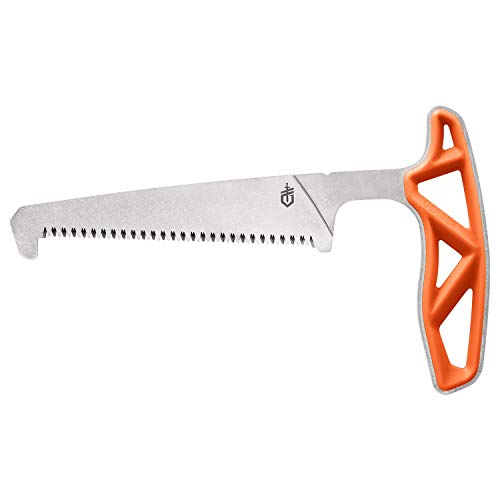
4.Gerber EXO-MOD Hunting Saws with Sheath
Lightweight skeletonized handle reduces pack weight on hunting trips

5.ProSSS Folding Bone Meat Saw with Spare Blade
67HRC 65Mn steel blade delivers durable cutting power in the field
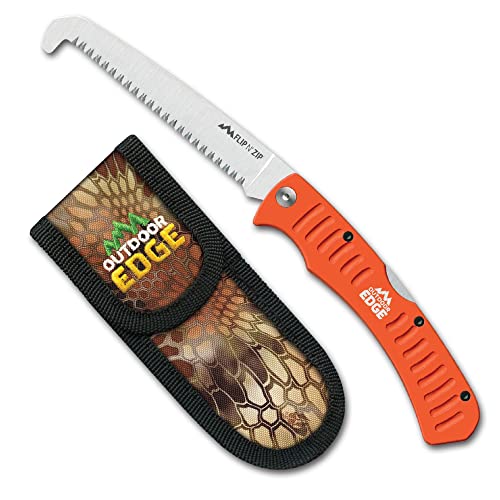
6.OUTDOOR EDGE FW-45 Hunting Saws with Sheath
4.4-inch triple-ground blade cuts bone, wood and tough hide with ease
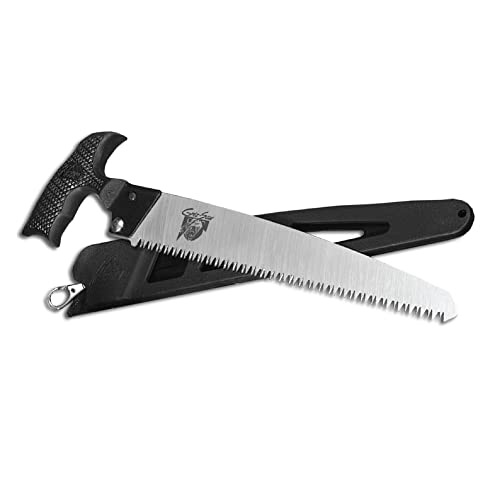
7.OUTDOOR EDGE OEGW2 Hunting Saws with Sheath
T-shaped handle supports straight-wrist cutting from any angle
1. Gerber Vital Pack Folding Saw with Sheath
Gerber Vital Pack is a compact folding saw for cutting through game and carrying on hunting trips. Its 3.4-inch corrosion-resistant steel blade has cross-cut saw teeth, which the maker says cut through big game comfortably.
The saw’s blunt tip helps prevent punctures while working around delicate areas. A T-shaped handle with a textured rubber grip and rubber overmold gives your hand a secure place to hold, while the orange color makes the tool easy to spot.
At 6 inches long overall and about 3 ounces, it packs into a small space in a hunting kit. The included fabric sheath hooks onto a pack or belt, so you can keep the saw close while hiking, camping or fishing.
This compact design also suits bushcraft, work wear, a toolbox or everyday carry. The handle’s shape gives you a defined grip for hand sawing, and the pull catch helps keep the folding saw closed when you carry it.
The 3.4-inch blade is short, so it may not suit jobs that need a longer reach or wider cuts. For hunters who want a small saw for game processing and a sheath for pack or belt carry, this orange Gerber is a practical option; it also fits lightweight outdoor kits.
- Cross-cut teeth are made for cutting game
- Blunt tip helps protect delicate areas
- Sheath hooks onto a pack or belt
- Weighs about 3 ounces for light carry
- Short 3.4-inch blade limits reach
2. HME BSWS Fixed Bone Saw with Scabbard
For field dressing game or processing meat outdoors, the HME bone saw gives hunters a fixed stainless steel blade made for cutting through bones and other hard materials. Its sharp edge supports clean, controlled cuts during hunting and camping tasks.
The compact saw also works for meat processing, so it can handle more than field dressing alone. Its one-size format keeps the tool straightforward to carry, while its fixed design offers a ready-to-use blade for outdoor cutting jobs.
An included scabbard covers the blade during transport and storage. That helps protect the edge between uses and keeps the blade enclosed when the saw is packed with other gear.
The orange handle has a non-slip grip for a steadier hold in wet or slippery conditions. That can help you keep control while cutting, and the grip also supports comfort during outdoor work.
At about 0.2 pounds, the saw adds little weight to hunting or camping equipment. The listing describes its construction as suited to outdoor use and tough materials, though it gives no blade length or other size measurements.
This fixed stainless steel bone saw suits hunters who need a lightweight cutting tool for field dressing, meat processing and camping. It also fits buyers who want a scabbard for blade storage and a grip designed for wet conditions.
- Sharp blade cuts bones and hard materials
- Scabbard covers blade for storage and transport
- Non-slip grip supports control in wet conditions
- About 0.2 pounds for lightweight field carry
- Fixed blade offers no folding option
3. ProSSS Bone Saw with Replaceable Blade
4 inches of hardened 65Mn steel give this ProSSS hunting saw a compact blade for cutting bone and meat in the field. The blade’s quenching process increases its hardness, making it suited to hunting and meat processing.
The redesigned nylon and POE handle adds material around the narrow grip area to help resist cracking or breakage during sawing. Its ergonomic, nonslip grip supports controlled strokes outdoors, where a steady hold helps guide the blade through bone and meat.
You can replace the blade when it wears or needs changing, rather than replacing the whole saw. The kit includes one spare blade, so you have another ready for continued use during a hunting trip.
The saw measures about 6.5 inches tall and weighs about 0.1 pound, so it takes up little space among hunting gear. Its compact size also makes it practical to carry when larger cutting tools would be inconvenient.
A belt sheath comes with the saw and keeps it close at hand in the field. The small form, replaceable blade and strengthened handle make this a focused option for hunters who need a portable saw for processing game.
- Hardened 4-inch blade cuts bone and meat
- Nylon and POE handle helps resist breakage
- Spare blade lets you replace a worn one
- Belt sheath keeps the saw close at hand
- 4-inch blade may limit larger cutting jobs
4. Gerber EXO-MOD Hunting Saws with Sheath
Hunters who want a compact saw for trips into the field get a 7Cr steel sawtooth blade and a full tang build in this orange Gerber EXO-MOD Pack Saw. Its slender profile fits backpack or hip carry for hunting, hiking, backpacking and camping.
The skeletonized handle keeps the design lightweight for carrying outdoors. At about 2.6 ounces, the saw adds little weight to a pack, while its roughly 7.5-inch length keeps it compact among other gear.
A stackable, snap-together sheath makes it easier to carry and store the saw with other EXO-MOD gear. Its narrow shape also suits a hip carry setup when you want the saw close at hand during a hunting trip.
The listing identifies a sawtooth blade made from 7Cr steel, but does not give its blade length or cutting capacity. Buyers who need those details to compare saws may want to check with the seller before choosing.
This straightforward pack saw suits hunters and campers who value a light, compact cutting tool for outdoor trips. Its small carry profile and included sheath make it a practical choice when pack space matters.
- Lightweight 2.6-ounce build is easy to pack
- Full-tang 7Cr steel blade for sturdy cutting
- Stackable snap-together sheath packs neatly
- Slender profile suits backpack or hip carry
- No major cons
5. ProSSS Folding Bone Meat Saw with Spare Blade
In the field or at a campsite, the ProSSS folding saw gives hunters a tool for cutting bone and other outdoor materials. Its 7-inch blade uses 65Mn steel with a stated hardness of 67HRC, built for cutting tasks such as butchering game and trimming branches.
The triple-ground teeth help the blade cut through material, while the steel’s wear resistance supports repeated use. A spare replaceable blade comes with the saw, so you can switch blades when the installed one becomes dull or worn.
Three locking positions—120, 150 and 180 degrees—let you set the blade angle for different cuts. A button lets you fold or unfold it, and a safety lock keeps the blade secured during use.
The folding design makes it easier to pack than a fixed saw. Its orange color also makes it easier to spot among outdoor gear, while the included storage bag helps protect it during travel.
At about 0.8 pounds, it is light enough to carry on hikes or hunting trips. The listed size is 7 inches, and its stated uses include cutting branches, preparing firewood and building shelters.
This saw suits hunters who want a compact folding tool for field butchering, along with campers and hikers who may also need to cut wood. The extra blade and adjustable locking angles add useful flexibility for outdoor tasks.
- 67HRC 65Mn steel blade handles field cuts
- Spare blade lets you replace a dull one
- Three locking angles suit different cutting positions
- Folding design and bag help with carrying
- Seven-inch blade may limit larger cuts
6. OUTDOOR EDGE FW-45 Hunting Saws with Sheath
Triple-ground teeth give the Outdoor Edge Flip N’ Zip Saw a 4.4-inch 65Mn spring-steel blade for cutting bone, wood and tough hide. Its tooth pattern helps it handle hunting and field-sawing tasks where a compact folding saw is useful.
The blade folds into a 6061-T6 aircraft-grade aluminum handle. A lock-back mechanism holds it open while you saw, helping prevent it from folding during use. The handle has a textured grip for a more secure hold.
At about 2.5 ounces, it adds little weight to a hunting pack. The orange anodized finish also makes the handle easier to spot among gear, while its folding design keeps the blade tucked away for carrying.
The saw comes with a nylon sheath and clip, so you can carry it close at hand while keeping the folded blade covered. Its roughly 4.4-inch blade is suited to smaller cutting jobs rather than replacing a full-size saw for larger work.
The handle’s size and shape favor portability over a long grip, and the short blade limits how much material it can cut with each stroke. Still, the lock, textured handle and carry sheath make it a practical option for hunters who want a lightweight saw for bone and wood.
This folding saw suits hunters who value low pack weight and need a compact tool for field cuts, with a blade designed for bone, wood and hide.
- 4.4-inch blade cuts bone, wood and hide
- Lock-back holds the blade open while sawing
- Weighs about 2.5 ounces for light carry
- Textured orange handle is easier to grip and spot
- Nylon sheath and clip support covered carry
- Short blade means smaller cuts per stroke
7. OUTDOOR EDGE OEGW2 Hunting Saws with Sheath
OUTDOOR EDGE makes the GrizSaw for hunters who need a compact saw to cut bone and wood in the field. Its 8-inch, triple-ground 65Mn spring steel blade has a chrome coating and a diamond-cut edge to help it cut through tough material.
The T-shaped handle lets you hold the saw with your wrist straight while cutting from different angles. That position can reduce fatigue during longer jobs, such as processing game or cutting wood outdoors.
At 11.3 inches overall, it gives you an 8-inch blade in a handheld fixed-blade design. The black saw weighs about 0.4 pounds, so it is light to carry with other hunting gear.
A glass-and-nylon sheath covers the blade between uses. Its quick-release design and swivel clip let you attach the sheath to a belt and turn it as needed while carrying the saw.
The product title identifies the sheath as locking and made from Zytel, while the item details describe its glass-and-nylon construction. That gives buyers a useful carrying option, though the listed information does not specify how the lock works.
Outdoor Edge says customers can contact the company about replacement and service requests. This hunting saw suits people who want a lightweight tool for cutting bone and wood, with a shaped handle for field work and a belt-attachable sheath.
- 8-inch blade cuts tough bone and wood
- T-handle supports straight-wrist cutting
- Weighs about 0.4 pounds for carrying
- Quick-release sheath has a swivel clip
- No major cons
How to Choose the Best Hunting Saws
Choosing a hunting saw affects how easily you process game, trim branches, and carry tools into the field. The right choice depends on what you cut, blade length, folding or fixed construction, grip, carry method, maintenance needs, and price.
| If You Need | Look For | Expect |
|---|---|---|
| Processing small game | Compact blade, fine teeth | Slower cuts through large bones |
| Cutting large bones | Longer blade, rigid frame | More bulk in your pack |
| One tool for camp and game | Cross-cut teeth, versatile length | Less specialization for either job |
| Easy pack carry | Folding design, light weight | A hinge needing regular cleaning |
| Fast access at your belt | Fixed blade, fitted sheath | More exposed carrying bulk |
| Secure handling with wet hands | Textured, shaped grip | A larger handle to pack |
| Long trips between resupply | Replaceable blade, spare included | Extra parts to carry |
Cutting Jobs
Start with the material you expect to cut most often, because bone, hide, and wood place different demands on a saw. A compact meat saw suits field dressing and processing, while camp tasks call for useful reach through branches.
For meat and bone, look for teeth designed to clear cutting debris and a blade suited to the size of bones you handle. A hunting saw made for bone may also cut wood, but frequent branch work can favor a general-purpose cross-cut pattern.
If you need one saw for game and camp, seek a middle ground in blade length and tooth design. That choice saves pack space, but it will usually cut less efficiently than a tool dedicated to one task.
Blade Length
A short blade is easier to control around joints and packs neatly, but it takes more strokes through thicker material. For small game or occasional trimming, roughly four inches can be manageable without adding much bulk.
Longer blades suit larger bones, thicker branches, and jobs where a longer stroke helps clear material. Around seven to eight inches gives more reach, but adds carried length and can feel awkward in tight spaces.
Blade length alone does not tell you how much cutting room you have, so compare it with the handle and overall length. A usable grip and clear space for your hand help prevent knuckles from striking the work.
Tooth Design
A cross-cut tooth pattern is intended to slice across wood fibers, which suits branches and general camp chores. For bone, look for teeth shaped to clear material from the cut, because packed debris slows sawing and increases effort.
Triple-ground teeth have faces sharpened to form a more aggressive cutting profile, often useful for bone and tough hide. Tooth patterns vary, so match the stated use to your main task rather than assuming one design handles every material equally.
Very coarse teeth can remove material quickly, but they may feel less controlled on small cuts. Finer teeth offer more control, though they can take longer on thick bone; consider the animal sizes and cut locations you handle.
Folding Or Fixed
A folding saw keeps its blade covered inside the handle, which makes it easier to pack beside clothing and other gear. Its hinge and lock add parts that need cleaning after contact with blood, fat, or dirt.
A fixed saw avoids a folding joint and is ready to use as soon as it leaves its sheath. It takes more room and depends on a secure cover, so consider belt placement and pack space before choosing.
For either style, inspect how the blade stays in position during a cut. A folding model needs a firm lock with no blade play, while a fixed model needs a sheath that holds securely without making removal difficult.
Handle And Control
Wet, cold hands make grip shape especially important, because a slick handle is harder to control near bone. Look for textured surfaces, a shape that fills your palm, and enough room for a gloved hand.
T-shaped handles offer a strong pulling grip for some bone-cutting strokes, while straight handles can feel more familiar for varied cuts. Choose the shape that suits your preferred hand position, and avoid a grip that forces your wrist sharply sideways.
Handle materials affect weight, comfort, and resistance to impact, but listed material alone does not settle fit. If possible, consider handle thickness and contour alongside gloves you wear in the field, since poor fit can tire your hand.
Blade Strength And Care
Steel type and heat treatment influence edge holding, toughness, and resistance to corrosion, but no steel removes the need for care. Look for a blade intended for bone or wood, and clean and dry it after each use.
A hard blade may keep its edge longer, while a brittle blade can be more vulnerable to damage if twisted. Use a straight push-pull motion rather than levering, and follow any maker guidance for sharpening or replacement.
Corrosion-resistant steel helps when a saw is exposed to moisture, but it still benefits from drying before storage. Coated or treated blades may reduce rust exposure, though coatings can wear where teeth contact bone and wood.
Blade Replacement
Replaceable blades help keep a saw useful after its teeth wear or the blade is damaged. Look for a replacement that is available in the correct size and fitting, because a spare is little use if it is hard to source.
An included spare gives you a backup during a trip, but it adds a small item to carry and protect. Keep replacement blades covered and secured, and learn how they attach before relying on a change in the field.
For a fixed or folding saw with a non-replaceable blade, edge care becomes more important over time. Consider whether you can sharpen it with tools you already carry, or whether replacement means buying another complete saw.
Carry And Storage
A sheath or cover keeps teeth away from hands, clothing, and pack fabric, while also making the saw quicker to retrieve. Check that it fully covers the blade and stays closed during walking or climbing.
Belt clips suit hunters who want a saw close at hand, while pack carry keeps the belt less crowded. A swivel attachment can follow body movement, but extra hardware may snag on brush or straps.
Orange handles and sheaths are easier to spot in leaves or low light, which helps prevent a tool from being left behind. Bright color does not replace safe storage, so keep the teeth covered whenever the saw is not in use.
Weight And Size
A lightweight saw reduces the load on long hikes, but very small tools can be tiring during extended cuts. Compare the full carry weight, including sheath and spare blade, rather than looking only at the saw’s stated weight.
Compact designs suit backpackers and hunters who already carry several tools, while a larger saw offers more leverage and reach. Pick the smallest size that still handles your usual cuts without forcing repeated, short strokes.
Price And Value
Lower-priced saws often cover basic field processing and occasional camp cutting, while higher prices may bring a longer blade, stronger construction, or replaceable parts. Pay more when those details solve a frequent need, not simply for extra features.
Include the cost and availability of replacement blades when comparing long-term value. A modestly priced saw with hard-to-find parts can cost more to keep ready, while a spare included in the package reduces immediate backup expense.
Warranty And Support
Warranty terms can differ on blades, handles, locks, and normal wear, so read the exclusions before buying. A clear repair or replacement process is useful if a part fails, but it does not cover damage from misuse.
For a saw that will see regular field use, look for support details and a straightforward way to obtain parts. Occasional users may place more weight on a simple design and careful maintenance than extended coverage.
Frequently Asked Questions
Are these hunting saws powered by batteries or fuel?
None of the listed saws is described as powered; they are hand-operated saws for field processing and cutting.
What materials are the blades made of?
The ProSSS Bone Saw uses a hardened 4-inch 65Mn blade, while the ProSSS Folding Bone Meat Saw has a 65Mn steel blade rated 67HRC. The other descriptions emphasize blade features such as corrosion resistance or tooth design rather than specifying the material.
What comes in the box with each saw?
The product names indicate that the Gerber Vital Pack, Gerber EXO-MOD, OUTDOOR EDGE FW-45, and OUTDOOR EDGE OEGW2 include sheaths, while the HME BSWS comes with a scabbard. The ProSSS Folding Bone Meat Saw includes a spare blade, and the ProSSS Bone Saw has a replaceable blade; check the listing for any other included items.
Should I choose the Gerber Vital Pack or the HME BSWS?
Choose the Gerber Vital Pack for its 3.4-inch corrosion-resistant blade and controlled cutting. The HME BSWS may suit you better if a non-slip grip for wet conditions is a priority.
Which saw is suited to cutting bone and meat during field processing?
The ProSSS Bone Saw is specifically described as cutting bone and meat during field processing. The OUTDOOR EDGE FW-45 is another option, with a triple-ground blade intended for bone, wood, and tough hide.
Which saw is designed for straight-wrist cutting from different angles?
The OUTDOOR EDGE OEGW2 has a T-shaped handle that supports straight-wrist cutting from any angle.
How can I reduce the weight of my hunting pack?
The Gerber EXO-MOD has a lightweight skeletonized handle designed to reduce pack weight on hunting trips.
So, What Should You Buy?
For most hunters, the Gerber Vital Pack is the best pick, pairing a corrosion-resistant blade with controlled cutting. On a budget, choose the HME for its secure wet-weather grip; for durable cutting power, the ProSSS Folding Bone Meat Saw is a strong option.
Want a lighter pack? The skeletonized Gerber EXO-MOD fits the bill. For a versatile blade, pick the OUTDOOR EDGE FW-45; for angled cuts, choose the OEGW2. Match your saw to the job, and head into the field with confidence.