

The best weights for bass fishing match your rig, depth, and cover.
You want bites fast. You also want your lure to act right. The wrong sinker kills action, spooks fish, and wastes your time. I’ve lost fish by choosing a weight that was too heavy for grass or too light for wind and current.
In this guide, I break down the best weights for bass fishing and show you when to use each style. I also share picks I’ve tested across lakes, rivers, and ponds. If you fish Texas rigs, Carolina rigs, or finesse plastics, the right weight turns lookers into biters.
5 Best Weights for Bass Fishing
Bullet Worm Sinkers for Bass (Painted Slip)
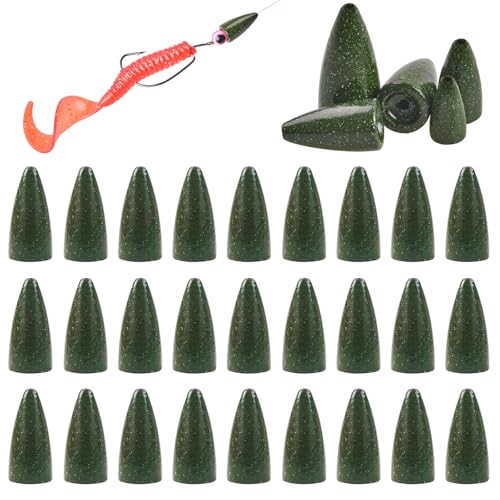
These painted bullet worm sinkers are a simple, do-it-all pick for Texas and Carolina rigs. The slip design lets your bait breathe, so bass hold on longer. The paint reduces flash and blends with your plastic for a cleaner look. I like this style when I need a smooth glide through grass and brush.
The finish holds up better than many budget options, which cuts down on chipping. That matters when you are skipping docks or dragging over rock. The hole is smooth, so it does not fray line. If you want the best weights for bass fishing at a great value, this set hits the sweet spot for everyday use.
Pros:
- Painted finish reduces flash and blends with soft plastics
- Smooth inner channel protects line on long casts
- Slip style gives natural bait movement and better feel
- Glides through grass and light brush with fewer snags
- Good range of sizes for Texas or Carolina rigs
- Budget friendly for anglers who lose weights in cover
Cons:
- Paint can chip after many casts on hard riprap
- Less dense than tungsten, so slightly larger profile
- Not ideal for ultra-deep water where sensitivity is key
My Recommendation
This set is best for anglers who fish Texas rigs in mixed cover. It also fits Carolina rigs when you want a softer entry and a slow fall. If you want the best weights for bass fishing on a budget, it is hard to beat for day-to-day trips. The finish and shape help you keep contact and feel more bites.
| Best for | Why |
|---|---|
| Texas rigs in grass | Bullet shape slides clean and reduces hang-ups |
| Clear water plastics | Painted finish cuts flash and looks natural |
| Budget-conscious anglers | Solid performance without the high tungsten price |
50pcs Bullet Worm Slip Sinkers for Bass

This 50-pack gives you a bulk stash of bullet weights for heavy cover. I carry them for pitching and flipping where I know I will lose gear. The slip style keeps plastics moving in a straight line. The holes are generous, so line passes clean and fast.
They shine when you need a steady fall rate and repeat casts. If you fish tournaments or long trips, this pack keeps your box full. It is not fancy, but it works. For many anglers, the best weights for bass fishing are the ones you can afford to lose without worry.
Pros:
- Large quantity for regular use in heavy cover
- Smooth bore protects line with braided and fluoro setups
- Consistent weight sizing improves repeatability
- Ideal for Texas rigs, pitching, and flipping
- Cost-effective for anglers who break off often
- Easy to peg with bobber stops for punching mats
Cons:
- Not as compact as tungsten for tight grass mats
- May scuff with constant contact on rock
- No paint means more flash in ultra-clear water
My Recommendation
Pick this 50-pack if you flip wood, docks, and grass all day. It is also a smart buy if you guide or fish with family and need backups. The best weights for bass fishing do not need to be fancy; they need to be there when you need them. This bulk set offers that peace of mind.
| Best for | Why |
|---|---|
| Flipping and pitching | Slip design and consistent sizes for repeat casts |
| Braided line setups | Smooth bore reduces fray under load |
| High-loss zones | Budget bulk pack keeps you fishing all day |
DAMIDEL 100-Pack Mixed Nail Weights

Nail weights are a must for finesse. This 100-pack covers six sizes for Neko rigs, wacky worms, and weighted stick baits. The insert style adds weight without large hardware. I like how easy they slide into soft plastics without tearing.
The range lets you tweak fall rate fast. Go light for a slow quiver. Go heavier to hit bottom in wind. The best weights for bass fishing often come down to control, and these give you that control for a very fair price.
Pros:
- Six sizes cover most finesse scenarios
- Insert design stays put in worms and stick baits
- Great for Neko and weight-forward wacky rigs
- Budget-friendly bulk for practice and tournaments
- Lets you fine-tune fall rate without changing hooks
- Compact box makes organization easy
Cons:
- Lead is less dense than tungsten, so larger profile
- May slip in very soft, salted plastics without glue
- Not ideal for heavy current or deep water finesse
My Recommendation
Get this kit if you love Neko and wacky rigs around docks, brush, and rock. It is perfect for clear water and pressured fish. The best weights for bass fishing should let you adjust fast, and this box does just that with six sizes ready to go. Add a dab of gel super glue if your plastics are super soft.
| Best for | Why |
|---|---|
| Neko rigs | Insert weight shifts balance for nose-down action |
| Wacky stick baits | Subtle sink with natural shimmy in clear water |
| Fine-tuning fall rates | Six sizes help match wind and depth |
Reaction Tackle Tungsten Nail Weights 1/32oz

These tungsten nail weights are tiny but dense. Tungsten packs more weight into less space, so your bait looks natural. I reach for them when bass are fussy and I need a clean profile. They also hold in plastics well and give great bottom feel.
The 1/32 oz size shines in calm water and shallow docks. The compact shape slips through cover and keeps your bait’s shimmy. For finesse anglers, these can be the best weights for bass fishing in clear water. You gain sensitivity and control without bulky gear.
Pros:
- High-density tungsten for a compact profile
- Excellent sensitivity for reading bottom
- Holds in plastics with less tear and wobble
- Perfect for Neko or subtle wacky rigs
- Small size reduces spooking in clear water
- Durable finish stands up to rock
Cons:
- More expensive than lead options
- Only one size in this pack
- Small pieces are easy to drop or lose
My Recommendation
Choose these if you need the most stealth and feel. I like them for high-pressure lakes and sight fish. The best weights for bass fishing can be small, and these nails prove it. If you fish tournaments or gin-clear water, they pay off fast.
| Best for | Why |
|---|---|
| Clear water finesse | Tiny profile keeps bait natural and quiet |
| Reading bottom | Tungsten transmits rock, mud, and shell |
| Pressured bass | Subtle weight helps get bites near boats |
Dr.Fish 50-Pack Bullet Weights 3/16 oz

This 3/16 oz bullet weight is a sweet spot for many lakes. It falls fast enough to contact bottom, yet it stays light for a natural look. I reach for 3/16 oz in light wind or when dragging a Texas rig on points. The shape slides well through scattered grass.
Fifty pieces mean you can rig for you and a buddy. The bore is smooth for mono, fluoro, or braid. If you like to keep rigs simple, these can be the best weights for bass fishing in mid-depth water. They make a great anchor set for any tackle box.
Pros:
- Versatile 3/16 oz size fits many conditions
- Good balance of fall rate and subtle entry
- Slides through light grass and brush
- Smooth channel protects a range of lines
- Bulk pack supports frequent rigging and practice
- Ideal for Texas and simple Carolina rigs
Cons:
- Not as compact as tungsten for tight mats
- Single size limits deep water flexibility
- Finish can dull with repeated rock contact
My Recommendation
Use these when you fish 6–15 feet with light wind and moderate cover. They are great for new anglers and for those who like one reliable size. The best weights for bass fishing should be easy to use and easy to trust. This 3/16 oz pack is both.
| Best for | Why |
|---|---|
| Mid-depth Texas rigs | 3/16 oz keeps contact without overpowering the bait |
| Light wind days | Falls steady but not too fast |
| Beginner-friendly setups | Simple, proven size that catches fish |
How to Choose the Best Weights for Bass Fishing?
Pick weight by cover, depth, wind, and bait action. Start light, then go heavier until you feel bottom. If you bury in grass, drop weight or change shape. If wind drifts your line, go heavier or switch to tungsten for smaller size.
Match shape to the job. Bullet weights slip through grass and brush. Drop shot and cylindrical weights resist snagging in rock. Nail weights fine-tune soft plastics without hardware. The best weights for bass fishing do one thing well in each spot.
Think density. Tungsten is denser than lead, so it is smaller and more sensitive. It costs more, but it transmits bottom feel better. Lead is budget friendly and still catches fish. It is larger for the same weight and less sensitive, but it is a workhorse.
Weight Shapes and When to Use Them
Bullet: Texas rigs, pitching, flipping, and light punching. It slides and keeps a straight pull through cover. Use pegged for mats. Use unpegged for open water.
Nail: Neko and wacky rigs. Insert into the head or tail of a worm. It adjusts fall rate without killing the shimmy. It is stealthy for clear water.
Drop shot: Cylindrical or teardrop. Great for vertical fishing and rock. Swivel clip lets you change sizes fast. It keeps your bait above snags.
Egg and barrel: Carolina rigs and drift rigs. They roll less on bottom and keep the leader free. Good in sand and light shell beds.
Split shot: For tiny plastics and gentle presentations. Pinch on the line. It is fast to add or remove. Not great in thick cover.
Size Guide by Depth and Conditions
Shallow (0–6 ft): 1/32–1/8 oz for finesse, 1/8–3/16 oz for Texas rigs. Keep it light to let baits glide. Bass often feed up in the column.
Mid-depth (6–15 ft): 3/16–1/4 oz for Texas rigs, 1/8–3/16 oz nails for Neko. Add weight for wind. Use the smallest weight that holds bottom.
Deep (15+ ft): 1/4–1/2 oz for Texas and Carolina rigs, 3/8–3/4 oz for drop shot in current. Go tungsten if you need compact size. Heavier gets you down fast.
Wind and current: Bump up one size. You need to feel bottom or the bait. If your line bows, you lose control. The best weights for bass fishing keep your line tight.
Lead vs. Tungsten vs. Brass vs. Steel
Lead: Cheap and easy to find. Larger for the same weight. Lower sensitivity. Still a strong pick when you lose gear often.
Tungsten: Dense, compact, and very sensitive. Higher cost. Great in rocks and heavy cover. Helps you read the bottom and detect light bites.
Brass and steel: Mid-price. Harder than lead. Good for Carolina rigs when you want more click with beads. Not as dense as tungsten.
Regulations: Some waters restrict lead. Check local laws before you go. The best weights for bass fishing are also legal and safe for your lake.
Rigging Tips for Maximum Bites
Pegging: Use a bobber stop above a bullet weight for mats. It keeps the bait and weight together. This helps punch through thick stuff.
Unpegged: In open cover, leave the bullet free. It lets the bait move on its own. That often gets more bites from wary fish.
Leader length: On Carolina rigs, start with 18–24 inches. Shorten in grass. Lengthen in clean bottoms. Adjust based on how high fish hold.
Hook and plastic: Match weight to hook and bait size. Heavy weights need strong hooks. Light weights pair with lighter wire hooks for better action.
Seasonal Weight Choices
Spring: Light Texas rigs and nails for slow falls near beds and flats. Bass track slow baits well in cool water.
Summer: Heavier bullet weights for punching mats at midday. Go to tungsten for a compact profile in thick grass. Use drop shot when the sun is high over deep structure.
Fall: Mix it up. Shad chasers like fast drops near bait. Use 3/16–1/4 oz bullets on points and creek bends. Neko rigs catch roaming fish on docks.
Winter: Slow down with small nails and tiny weights. Feel your bait. Keep contact with the bottom and pause longer. The best weights for bass fishing in winter are small and subtle.
Common Mistakes and Quick Fixes
Too heavy in clear water: Your bait falls like a rock and looks wrong. Fix it by dropping one size.
Too light in wind: You cannot feel bottom. Fix it by adding weight or switching to tungsten.
Wrong shape for cover: You snag and waste time. Fix it by changing to bullet in grass and cylinder in rock.
Ignoring line: Thick line adds drag. It slows the fall. Go to a smaller diameter to keep your weight honest.
Care, Storage, and Safety
Use small boxes with size labels. Keep tungsten and lead separate to avoid dents. Store nails in a divider to stop them from spilling.
Check paint and bores. Smooth any burrs with a small file. Replace scuffed weights to protect your line.
Handle lead with care. Wash hands after use. If your waters ban lead, switch to tungsten or steel. The best weights for bass fishing also fit your local rules.
Advanced Tuning Tricks
Sound and click: Add a glass bead with brass or tungsten on a Carolina rig. The click can call fish in stained water.
Color match: Painted bullets can match green pumpkin or black plastics. That reduces flash in sun. It helps in shallow, clear lakes.
Two-step falls: Insert a small nail in the tail with a light bullet on the line. The bait drops nose-first, then glides. It looks like a real baitfish.
Balance check: In a sink, drop your rig and watch. Tweak weight until the lure sits how you want. The best weights for bass fishing make your bait act alive.
Budget vs. Premium: What Matters Most
Buy budget lead for grass, wood, and high-loss spots. You will lose some. Keep it simple and affordable there.
Spend on tungsten for rocks, deep water, and finesse. That feel finds more fish. Missing one bite costs more than the price gap.
I mix both. Lead for risky casts. Tungsten when I must feel every pebble. That blend gives me the best weights for bass fishing across seasons.
FAQs Of best weights for bass fishing
What weight should I use for a Texas rig?
Start with 1/8–3/16 oz in shallow to mid-depth water. Go to 1/4–3/8 oz in wind or thicker cover.
Are tungsten weights worth the price?
Yes, for rock, deep water, and finesse. Tungsten is smaller and more sensitive, so you feel more bites.
When do I peg a bullet weight?
Peg in thick grass or mats to keep bait and weight together. Leave it unpegged in open water for more action.
What size nail weight for a Neko rig?
Try 1/32–1/16 oz in calm, shallow water. Go heavier in wind or deeper than 10 feet.
Is lead legal everywhere?
No. Some lakes and states restrict lead. Check local rules and switch to tungsten or steel if needed.
Final Verdict: Which Should You Buy?
For all-around value, the painted bullet worm sinkers and the 50-pack bullets cover most Texas and Carolina needs. They are reliable, simple, and budget wise.
For finesse, the DAMIDEL mixed nails and Reaction Tackle tungsten nails shine. Add the Dr.Fish 3/16 oz for a perfect middle ground. These picks are the best weights for bass fishing across real bass water.