

A compact limb saw helps you clear shooting lanes, trim branches near a stand, and pack light on the trail. Without one, you may rely on a pocketknife, which lacks the long, toothed blade that cuts through thicker limbs efficiently.
That’s where a hunting limb saw earns its place in your pack. Its sharp teeth cut on each stroke or one direction, depending on the design, helping you remove obstructing branches with more control than a small knife can offer.
Many saws fold to protect the blade between uses, while a locking mechanism keeps it steady during cuts. A curved blade can grip limbs, and a comfortable handle helps you work through trimming tasks without tiring your hand as quickly.
Blade length, folding style, weight, and handle grip vary, so consider the branches you expect to cut and how far you’ll carry your gear. Explore the best hunting limb saws below to find one that suits your time outdoors.
8 Best Hunting Limb Saws Reviews

1.SAGEN Hunter's Field Saw Bone Splitter
4 oz, 5-inch saw cuts field dressing time and helps prevent injuries

2.Lanties 2-Pack Stainless Steel Bone Saw
Sharp serrated blades cut bones, frozen meat, ribs and pig's feet

3.HME HME-HS-1 12-Inch Curved Hand Saw
Sharp 12-inch curved blade cuts branches and limbs for outdoor tasks

4.Gerber EXO-MOD Hunting Pack Saw with Sheath
4116 stainless steel blade and full tang build stand up to hunting
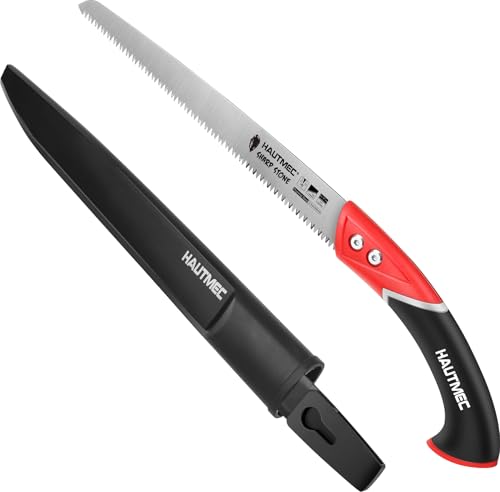
5.HAUTMEC 12-Inch Pruning Saw With 7 TPI
Triple-cut 7 TPI teeth bite deep and clear wood fast with less effort

6.Loggers Art Gens 24-Inch Pocket Chainsaw
24-inch two-sided chain cuts a 3-inch limb in less than 10 seconds

7.Silky PocketBoy Curved Blade Folding Saw
Curved blade and pull-cut technology speed cutting by 15-20% over

8.Homoyoyo Folding Tree Pruning Saw for Camping
Compact folding design makes the saw easy to carry for outdoor cutting
1. SAGEN Hunter’s Field Saw Bone Splitter
SAGEN Saw I handles pelvic bone and rib cuts during field dressing for deer and other game. Its compact design weighs about 4 ounces, giving hunters a small tool to carry when processing game away from home.
The hardened stainless steel blade resists rust and holds its edge without sharpening. That means you can use it for field dressing without planning routine blade maintenance, while the steel suits work around bone.
The handle has an ergonomic shape for a secure grip during cuts. SAGEN says the saw can reduce cutting time and lower the risk of accidental cuts compared with hunting knives, while also helping limit organ damage.
At about 5 inches long, it fits easily with other hunting gear. The listed weight is about 2 ounces, while the product description rounds it to 4 ounces, so buyers may want to check which figure applies to their saw.
This black field saw is made in the USA. It comes with a 30-day satisfaction guarantee, though the available details do not specify a carrying sheath or other included accessories.
For hunters who need a small saw for processing deer and other game, the Sagen Saw I offers a rust-resistant blade and a grip shaped for controlled handling. Its compact size also suits buyers who want a dedicated bone-cutting tool in their field kit.
- About 5 inches long for compact carry
- Hardened steel blade resists rust and dulling
- Blade stays sharp without regular sharpening
- No major cons
2. Lanties 2-Pack Stainless Steel Bone Saw
For trimming limbs at camp or cutting meat outdoors, the Lanties two-pack offers compact hand saws with serrated stainless steel blades. The blades are designed to cut bones, frozen meat, ribs and pig’s feet, so these saws can handle food preparation as well as hunting tasks.
Each saw measures about six inches long and has a sharp serrated blade for cutting through bone and other meat. The compact size makes them easy to grip, store and carry for camping or outdoor cooking.
The orange handles have an ergonomic shape and a non-slip surface, giving you a steadier hold while sawing. Their bright color also makes them easier to spot among kitchen or camp gear.
Stainless steel construction resists rust, and the saws can be cleaned and reused. The set includes two saws, so you have a spare for replacement or another person can use one.
Each saw weighs about 0.23 pounds, based on the listed 0.46-pound weight for the pair. This set suits hunters and campers who want small hand saws for cutting meat and bones, though the product details focus more on meat processing than on trimming tree limbs.
- Two saws provide a spare or shared tool
- Stainless steel blades resist rust during use
- Non-slip handles support a steadier grip
- Meat-cutting details leave limb use unclear
3. HME HME-HS-1 12-Inch Curved Hand Saw
12 inches of curved steel blade give this HME hand saw reach for cutting limbs at a hunting spot, campsite or trail. Its sharp cutting edge handles branches and other wood, making it useful for clearing a path or preparing firewood.
The blade suits pruning and general outdoor cutting as well as camp tasks. Its curved shape and 12-inch length give you a dedicated hand saw for work on limbs without relying on a powered tool.
An ergonomic handle gives you a secure hold, including in wet or slippery conditions. That grip helps you guide each cut while working outdoors, where damp hands or weather can make handling more difficult.
The included scabbard covers the blade during storage and transport. It also gives the saw a place to go between jobs, which is useful when carrying it with hunting or camping gear.
At about 1 pound, the saw adds some weight to a pack but remains a straightforward carry for trips where cutting wood or clearing limbs matters. The orange finish makes the tool easy to distinguish from gear around camp.
This HME saw suits hunters who need a fixed-blade hand saw for trimming limbs, clearing trails and cutting firewood. It can also serve campers, hikers and gardeners who want one tool for outdoor wood-cutting tasks.
- 12-inch curved steel blade cuts limbs efficiently
- Scabbard protects the blade during transport
- Non-slip grip supports secure handling when wet
- One-pound weight is easy to carry outdoors
- No major cons
4. Gerber EXO-MOD Hunting Pack Saw with Sheath
Hunters and outdoors workers get a compact saw for field dressing and pack carry with the Gerber EXO-MOD. Its 4116 stainless steel blade has crosscut teeth for cutting, while the full tang construction supports the blade through the handle.
The skeletonized handle keeps the saw light for a backpack or hip carry. It weighs about 2.6 ounces, and its slender shape takes up little room among other hunting gear.
An ergonomic grip gives your hand a comfortable place to hold during cutting. The handle uses glass-filled polypropylene, and the blade’s stainless steel construction adds durability for outdoor use.
The included sheath has a drain hole, a belt mount and a locking mechanism. That gives you a way to carry the saw on a belt and keep the blade covered between uses.
Its sheath can snap together with other sheaths in Gerber’s EXO-MOD series to form a kit. The saw measures about 7.6 inches overall, so it suits buyers who want a small tool for deer hunting or a survival kit.
This black bone saw suits hunters who need a lightweight cutting tool for field dressing, as well as outdoors workers who want a compact saw for pack or belt carry.
- 4116 stainless steel blade has crosscut teeth
- Weighs about 2.6 ounces for light carry
- Sheath locks and mounts on a belt
- EXO-MOD sheaths snap together as a kit
- No major cons
5. HAUTMEC 12-Inch Pruning Saw With 7 TPI
On trail hikes and property edges, the HAUTMEC pruning saw gives hunters a 12-inch blade for clearing limbs and cutting wood. Its fixed SK5 steel blade is 1.4 millimeters thick, which helps it stay stiff during firm strokes.
Triple-cut teeth with 7 teeth per inch bite into wood and clear chips during cuts. The edges are induction-hardened, and a low-friction coating helps the blade move through dense logs while adding rust protection in damp conditions.
The one-piece hard-grip handle transfers pressure to the blade and stays easy to clean after contact with dirt or tree resin. Its weather-resistant design suits outdoor jobs such as trimming branches and handling storm debris.
A rigid ABS sheath covers the blade and attaches at the waist for hands-free carrying. It also lets you draw the saw without snagging, which is useful when moving along a trail or working around a large property.
At about 0.8 pounds, it is light to carry between cutting spots. This red-and-black saw suits hunters who need a hand tool for trimming limbs, along with homeowners and landscapers who maintain trees and wooded land.
- 12-inch SK5 blade handles substantial limbs
- 7 TPI triple-cut teeth clear wood quickly
- Coating helps cutting and guards against rust
- Belt sheath keeps the blade covered on hikes
- Fixed blade offers no folding storage
6. Loggers Art Gens 24-Inch Pocket Chainsaw
Bidirectional teeth are the defining feature of this Loggers Art Gens pocket chainsaw, giving hunters a hand-powered option for trimming limbs around a hunting site. Its 24-inch chain has 31 teeth and cuts in both directions.
The maker says its double-blade teeth cut three times faster than saws with teeth on one side. It also claims the saw can cut a 3-inch limb in less than 10 seconds, though results can depend on the wood and the person using it.
At 24 inches long, the chain can reach overhead branches and fit into narrow grooves. Its length also keeps the user farther from the branch, and the maker says one or two people can operate it.
Nylon handles provide a grip that the maker says remains comfortable when wet. The green saw weighs about 0.4 pounds, and its case can attach to a belt or go inside a backpack for carry between cuts.
Heat-treated steel forms the chain, while its flexible, compact design suits camping, hiking and hunting trips. This pocket saw fits hunters who want a lightweight tool for pruning limbs or preparing firewood without carrying a powered chainsaw.
- Two-sided teeth cut in both directions
- 24-inch chain reaches overhead branches
- Weighs about 0.4 pounds for pack carry
- Belt-wearable case keeps the saw accessible
- Cutting speed depends on wood and user effort
7. Silky PocketBoy Curved Blade Folding Saw
Silky makes the PocketBoy a folding saw for cutting limbs on hunting trips, with a curved blade and pull-cut action. The maker says this setup cuts about 15 to 20 percent faster than straight-blade PocketBoys.
Its 5-inch, or 130mm, blade has 6.8 teeth per inch and a 1.4mm thickness. The saw can cut material up to 2.6 inches thick, a useful limit to consider when trimming branches on a trail or around a hunting area.
The blade’s taper-ground shape reduces resistance as you pull it through wood. That design helps the saw move more smoothly through a cut, while the curved profile and pull-cut action give it a different approach from a straight-blade saw.
Silky hardens the teeth with heat, and says they stay sharp about three times longer than teeth without this treatment. Longer-lasting sharpness can mean less frequent blade replacement, though the data does not give a replacement schedule.
The folding design suits carrying between pruning jobs, campsites and trails. It weighs about half a pound and comes with a hard plastic belt case, so you can store it on your belt while hiking, hunting or doing trail maintenance.
This yellow-and-silver saw also works for general pruning. It suits hunters who want a compact folding tool for branches, while its 2.6-inch cutting capacity makes it less suited to limbs thicker than that.
- Curved pull-cut blade cuts 15–20% faster
- Hardened teeth stay sharp about 3x longer
- Cuts branches up to 2.6 inches thick
- Includes a hard plastic belt case for carrying
- 2.6-inch capacity limits thicker branch cuts
8. Homoyoyo Folding Tree Pruning Saw for Camping
With curved manganese steel and a folding design, this saw gives hunters a portable way to trim limbs and cut natural wood. Its compact form suits backpacking, camping and gardening, where a hand saw can handle branches without taking up much space.
The curved blade is made from manganese steel. The product title also identifies it as a tree-pruning saw for quick limb removal, making branch cutting its central task for hunting trips and outdoor work.
Its ergonomic plastic handle is designed to reduce hand strain and help maintain grip in wet conditions. That steady hold can be useful when trimming branches outdoors, while the folding design makes the saw easier to carry between jobs.
A secure closure is listed in the title, and the saw folds for transport. It weighs about half a pound, so it can go along with camping or hiking gear without adding much weight.
The data does not give a blade length or a locking mechanism, so buyers who need those details should check before choosing it. This saw suits hunters, campers and gardeners looking for a compact tool for cutting branches.
- Curved manganese steel blade cuts through limbs
- Folding design makes it compact for transport
- Ergonomic handle helps reduce hand strain
- Weighs just 0.48 pounds for easy carrying
- No major cons
How to Choose the Best Hunting Limb Saws
The right hunting limb saw depends on whether you need to clear branches, cut bone, or do both, along with how far you carry it. Blade length, tooth design, folding or fixed construction, grip, and price all affect the choice.
| If You Need | Look For | Expect |
|---|---|---|
| Clear small branches | Folding blade, curved edge | Compact reach |
| Cut thicker limbs | Longer blade, coarse teeth | More weight to carry |
| Pack light | Short blade, simple sheath | Slower large cuts |
| Cut bone during field dressing | Short, sturdy blade, controlled grip | Limited branch reach |
| Use it in wet weather | Textured handle, secure closure | More cleaning after use |
| Carry it on your belt | Sheath, lock, or folding design | Added bulk at your waist |
Cutting Task
Start with the work you expect to do most: clearing branches, cutting bone, or handling both. Limb saws and bone saws use different tooth patterns and blade shapes, so a tool suited to one job may feel slow or awkward on the other.
For clearing shooting lanes or campsite branches, choose a saw built for wood, with a blade length and tooth spacing suited to branch size. Bone-cutting tasks call for a shorter, controlled blade designed to limit slipping around joints and ribs.
If you need one saw for mixed field use, look for a model whose stated uses include both wood and hunting tasks. Expect a compromise: a general-purpose blade may not cut branches or bone as efficiently as a task-specific saw.
Blade Length
Blade length affects both reach and control, so match it to the branches you usually remove. A blade around 12 inches gives more reach and room to work on thicker limbs, but takes up more space in your pack.
Short blades around five or six inches are easier to carry and control in tight spaces. They suit light pruning and bone work, but cutting a thick branch takes more strokes and more patience.
For a compact saw, look for a stated cut capacity as well as blade length. Capacity tells you the largest branch the maker says it handles, though real cutting speed also depends on wood type and technique.
Tooth Design
Tooth shape determines how a saw removes material, so choose it for the job rather than relying on a speed claim. Coarse teeth often clear wood quickly, while finer or crosscut patterns can support more controlled cuts.
A curved blade helps keep teeth engaged when cutting branches, especially overhead or at an awkward angle. Straight blades can feel easier to guide in restricted spaces, but offer less of that natural hooking action.
Teeth per inch, or TPI, counts the teeth along an inch of blade. Lower counts commonly suit faster cuts in thicker wood, while higher counts make a smoother cut; for hunting use, prioritize the material and control you need.
Blade Strength And Care
Steel type and heat treatment affect edge life, flexibility, and resistance to wear. Hardened teeth can stay sharp longer, but a damaged or chipped edge is harder to restore, so check whether the blade is replaceable or sharpenable.
Stainless steel helps resist rust when a saw gets wet, but it still needs cleaning and drying after use. Other steels may offer strong cutting edges, though they need prompt care to limit corrosion during damp trips.
For bone work, a sturdy blade and secure attachment help control pressure without twisting. Avoid forcing a blade through a cut; a narrow saw can bind, and heavy side pressure raises the chance of damage or loss of control.
Folding And Carrying
Folding saws protect the teeth inside the handle and pack neatly, which suits hunters who carry several tools. A locking mechanism should hold the blade open during cutting and closed during transport, reducing unwanted movement.
Fixed blades are ready to use without unfolding, but need a sheath that covers the teeth securely. A belt loop or mount keeps the saw accessible, while a rigid sheath adds some bulk to your kit.
Pocket chainsaws pack especially small and cut with a pulling motion from two handles. They need room to move and a clear path around the branch, so they suit reachable limbs better than tight spots near other branches.
Weight And Balance
A lighter saw reduces pack load on long hikes, but weight alone does not tell you how comfortable it will feel. Handle shape and balance affect control, especially when you make repeated cuts or work above shoulder height.
Compact bone saws may weigh only a few ounces, while longer hand saws can approach a pound. Choose the lightest option that still gives you enough blade length and strength for the work you expect.
For frequent pruning, a slightly heavier saw with a longer blade may save effort by finishing cuts in fewer strokes. If you only carry a saw for occasional use, lower weight and a compact case may matter more.
Grip And Safety
A non-slip handle helps you keep control when rain, sweat, or blood makes surfaces slick. Look for a shape that fills your hand without sharp edges, and consider whether you can hold it securely with gloves.
A secure blade lock or sheath protects you and your pack during transport. Before buying, confirm that the blade closes safely or that the sheath fully covers the teeth without coming loose when carried.
When cutting overhead or close to your body, stable footing and a clear cutting path reduce the risk of injury. Saw away from your hands and legs, and avoid putting force on a blade that has started to bind.
Sheath And Storage
A sheath keeps teeth from snagging clothing and helps protect the blade from other gear. Check how it attaches to a belt or pack, and whether the fastener is easy to use with cold hands or gloves.
Some folding saws use a built-in closure instead of a separate sheath, which saves space but leaves the handle exposed. A hard case gives more tooth protection, though it can add weight and take longer to stow.
If you hunt in wet conditions, look for a sheath that drains or allows the blade to dry. Clean and dry the saw before storage, because trapped moisture and residue can shorten blade life.
Price
Lower-priced saws usually cover basic cutting needs, with simpler handles, fewer carrying features, or less information about blade treatment. They suit occasional use when you have modest branches to clear and do not need a specialized tool.
Paying more may bring a longer-lasting edge, a more secure lock, or a better sheath. Those features are worth the extra cost for frequent trips or demanding work, but price alone does not prove a saw cuts better.
Compare the full setup, including whether a sheath, case, or replacement blade is included. A cheaper saw that needs separate carry gear may cost more overall than a ready-to-carry option.
Warranty And Support
Warranty terms can differ for the blade, handle, and locking parts, so read the coverage before buying. Check the time limit, exclusions for wear or misuse, and the steps required to request service.
For a saw you carry often, access to replacement parts or sharpening guidance can extend its useful life. If support details are unclear, consider whether the purchase price makes replacement a reasonable option instead.
Frequently Asked Questions
Which of these saws run on batteries?
None of the listed saws is described as battery-powered; they use hand-operated blades or chains.
What should I look for in blade materials and construction?
The Gerber EXO-MOD has a 4116 stainless steel blade and full-tang build. For other options, compare the listed blade design and cutting style to the jobs you expect to do.
What comes in the box with the Gerber EXO-MOD?
The product details mention a sheath, but do not specify other included items. Check the seller’s listing for the exact package contents.
Should I choose the Gerber EXO-MOD or the HME 12-Inch Curved Hand Saw?
Choose the Gerber for its 4116 stainless steel blade and full-tang build; choose the HME for its sharp 12-inch curved blade for branches and limbs. Your intended cutting jobs can guide the decision.
Which saw is suited to cutting bones or frozen meat?
The Lanties 2-Pack Stainless Steel Bone Saw is described as cutting bones, frozen meat, ribs, and pig’s feet. The SAGEN Hunter’s Field Saw Bone Splitter is a compact option with a 5-inch saw for field dressing.
What should I use to cut branches and limbs?
The HME 12-Inch Curved Hand Saw is made for branches and limbs, while the HAUTMEC 12-Inch Pruning Saw has triple-cut 7 TPI teeth designed to clear wood quickly.
Which saw is easiest to carry for outdoor cutting?
The Homoyoyo Folding Tree Pruning Saw has a compact folding design, and the Gerber EXO-MOD includes a sheath. For a longer cutting reach, the Loggers Art Gens Pocket Chainsaw has a 24-inch two-sided chain.
So, What Should You Buy?
For most hunters, the Gerber EXO-MOD is the best all-around pick, pairing a 4116 stainless steel blade with a full-tang build. Choose the SAGEN Hunter’s Field Saw for a lightweight 4-ounce bone saw, or the Lanties 2-Pack for cutting bones and frozen meat.
Need more reach for limbs? The HME’s 12-inch curved blade or HAUTMEC’s fast-cutting pruning saw fits the job. For larger branches, pick the Loggers Art Gens pocket chainsaw; for compact carry, consider the Silky PocketBoy or Homoyoyo. Choose the model that fits your hunt.