

A hunting LPVO gives you one optic for scanning nearby cover and identifying game farther out, without switching between sights. A fixed-power scope lacks that flexibility, while binoculars help you spot game but can’t aim your rifle.
That flexibility makes a low-power variable optic useful in changing terrain. Its adjustable magnification lets you keep a wider view at low power and zoom in for a clearer sight picture at greater distances, all through the same scope.
Many models offer illuminated reticles to help your aiming point stand out in dim woods, forgiving eye relief for a comfortable view, and capped turrets that help protect your settings. Clear glass and durable construction also support dependable use outdoors.
LPVOs differ in magnification range, weight, reticle design, and illumination, so consider your usual hunting distances and conditions. Explore the best hunting lpvos below to find a scope that suits your field needs.
7 Best Hunting Lpvos Reviews
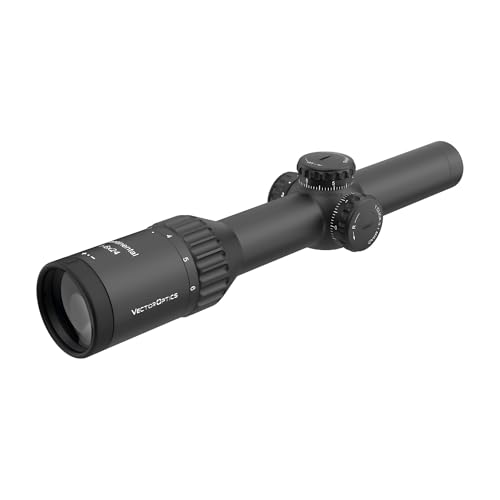
1.Vector Optics Continental 1-6×24 Lpvos
90% light transmission brings clear, bright images in varied lighting

2.Monstrum Beast ED 1-8x FFP MM5 Reticle Lpvos
ED glass reduces color fringing for sharper images and richer contrast

3.Monstrum Spectre 1-10×28 MX1 Reticle Lpvos
1-10x magnification and a throw lever support smooth power changes

4.Monstrum Ladon HD 1-10x BDCA3 Reticle Lpvos
HD glass improves light transmission for clear, bright sight pictures

5.CVLIFE JackalHowl 1-4×20 Rifle Scope Lpvos
Five red and green reticle brightness levels improve target visibility

6.Monstrum Beast SFP 1-10x LPVO Scope Lpvos
ED glass reduces color fringing for sharper images and richer contrast

7.Triton Orion HD 1-6×20 SFP Rifle Scope Lpvos
HD glass boosts clarity, contrast, and light transmission across
1. Vector Optics Continental 1-6×24 Lpvos
Vector Optics Continental 1-6×24 is an LPVO for hunters who want close-range speed with magnification for targets farther out. Its 1x to 6x range and wide field of view support quick target pickup, while the 1x setting allows shooting with both eyes open.
The Fiber G4 reticle has six illumination levels, including settings suited to bright conditions. Its holdover marks account for bullet drop and help estimate distance, giving hunters useful aiming references across different shooting distances.
German glass and fully multi-coated lenses provide more than 90% light transmission. The 30mm tube uses a second focal plane reticle, so its apparent size stays constant as you change magnification; the scope offers up to 6x magnification for close- to mid-range use.
Windage and elevation adjustments move in 1/10 MIL clicks. You pull the turret to adjust and press it down to lock, which helps prevent settings from shifting during use. The matte black scope weighs about 3.1 pounds.
This LPVO suits hunters using an AR platform who want an illuminated reticle, adjustable magnification and locking turrets. Its fixed-size reticle may matter to buyers who prefer reticle markings that scale with magnification.
- Six-level reticle illumination suits bright conditions
- Over 90% light transmission aids low-light views
- 1x-6x range supports close to mid-range use
- Locking turrets help prevent unwanted setting changes
- About 3.1 pounds adds notable scope weight
2. Monstrum Beast ED 1-8x FFP MM5 Reticle Lpvos
For hunting at close range and farther out, the Monstrum Beast ED gives you 1-8x variable magnification with a true 1x view at the low end. Its first focal plane design keeps the reticle’s ranging marks in proportion as you change magnification.
The MM5 reticle includes ranging information for use at both 1x and higher magnifications. Because its first focal plane layout keeps each mark consistent at every power, you can use the same reticle references without recalculating for a different setting.
Extra-low-dispersion glass helps reduce color fringing and improve contrast and image sharpness. Anti-reflective lens coatings also help produce a brighter sight picture, useful when aiming across different distances.
The scope has generous eye relief and a forgiving eye box, giving you more flexibility in how you position your eye behind it. Uncapped windage and elevation adjustments are easy to reach, while locking turrets help keep the settings in place.
Illumination offers several brightness levels, including a highest setting the maker describes as daylight bright. The black LPVO suits hunters who want a variable-power optic with a first focal plane reticle and accessible adjustments.
- True 1x view with variable 1-8x power
- First focal plane keeps ranging marks consistent
- ED glass reduces fringing and sharpens contrast
- Locking turrets help hold adjustment settings
- No major cons
3. Monstrum Spectre 1-10×28 MX1 Reticle Lpvos
1-10x magnification gives the Monstrum Spectre a broad range for hunting, from low-power viewing to more detailed aiming at higher settings. Its 34 mm tube and built-in throw lever let you adjust magnification without taking your hand far from the scope.
The MX1 reticle uses a second focal plane design, so it stays the same size as magnification changes. That keeps the box reticle visually consistent across the scope’s full range, while the BDC B1 option offers 5.56 BDC hashmarks for shooters who prefer that pattern.
Monstrum says the scope’s updated optics assembly gives it a shorter body, longer eye relief and a wider eye box. Those changes can make it easier to position your eye behind the optic, especially when setting up a comfortable shooting stance.
The lenses have anti-reflective coatings intended to pass more light and improve the view. The maker describes these coatings as offering more light transmission than competing scope models, though the listing provides no specific transmission figure.
This Flat Dark Earth scope weighs about 2.6 pounds. It comes with a 34 mm offset cantilever mount and spring-loaded flip-up lens covers, so those included parts are ready for mounting and lens protection.
Hunters choosing between reticles can select the MX1 or BDC B1 design, but the BDC markings are specified for 5.56. This scope suits buyers seeking 1-10x flexibility, a consistent second focal plane reticle and an included mount.
- 1-10x range suits close and distant views
- Second focal plane reticle stays same size
- Longer eye relief and wider eye box
- Includes mount and spring-loaded lens covers
- No major cons
4. Monstrum Ladon HD 1-10x BDCA3 Reticle Lpvos
Hunters who want one optic for close shots and longer views get a 1-10x second focal plane scope with the Monstrum Ladon HD. Its BDCA3 reticle is illuminated, and the scope includes a one-piece mount.
At 1x, it provides a true 1x sight picture, which helps keep close-range viewing natural. The forgiving eye box and comfortable eye relief give you some flexibility in how you position your eye behind the scope.
Monstrum HD glass uses a lens coating designed to improve light transmission over earlier generations. That can help the sight picture look brighter in varied environments, while the second focal plane reticle keeps its apparent size consistent as you change magnification.
The illumination system is brighter and more powerful than the previous mechanism, according to Monstrum, helping the reticle stand out across different settings. Exposed windage and elevation turrets let you adjust the reticle directly.
To change a turret setting, pull it outward to unlock it, make the adjustment, then push it back in to lock it. The included Deadlock offset mount is designed to hold zero under recoil. This scope suits hunters who want broad magnification range, illuminated aiming and an included mount.
- 1-10x magnification spans close and distant views
- HD glass coating improves light transmission
- Illuminated reticle helps visibility in varied settings
- Locking turrets allow direct reticle adjustments
- No major cons
5. CVLIFE JackalHowl 1-4×20 Rifle Scope Lpvos
For short- to mid-range hunting, the CVLIFE JackalHowl gives you a 1-4×20 scope with a cantilever mount. Its magnification range supports closer shots and lets you increase power for targets farther away.
Fully multi-coated lenses reduce glare and transmit more light, while the anti-reflective coating supports edge-to-edge clarity. That can help you see the target and reticle across the view in different lighting conditions.
The second-focal-plane mil-dot reticle has five red and green illumination levels. You can adjust the reticle color and brightness to add contrast against the target, and choose between two colors as visibility changes.
Finger-adjustable turrets move in half-MOA clicks for sighting adjustments. Once you have sighted in the scope, you can reset the turrets to zero, making it easier to return to your starting reference.
The scope uses a single-piece aviation aluminum tube and weighs about 1.1 pounds. Its O-ring seal helps resist fog and water, and the tube is designed to withstand shock during use.
Thread-in magnification throw levers help you change power, while flip-up covers protect the lenses between use. The black scope suits hunters who want a compact 1-4x optic for short- to mid-range use, with illuminated reticle settings and resettable turrets.
- 1-4x magnification suits short- to mid-range use
- Five red and green reticle brightness levels
- Half-MOA turrets reset to zero after sighting
- Multi-coated lenses reduce glare and improve light
- 1-4x magnification limits long-range use
6. Monstrum Beast SFP 1-10x LPVO Scope Lpvos
Extra-low dispersion glass is the main image upgrade on the Monstrum Beast LPVO, helping reduce color fringing and preserve contrast and detail. Its 1-10x variable magnification gives you a true 1x view at the low end and higher magnification for closer inspection.
The scope uses a 24mm objective lens and a second focal plane reticle. That reticle stays the same size as you change magnification, keeping its markings visible throughout the zoom range.
This BDC-C1 version uses a fiber optic tube along the back of the crosshair to guide LED light to the center dot. Monstrum says this produces a daylight-bright dot that is many times brighter than dots in common etched or wire-illuminated reticles.
Generous eye relief and a forgiving eye box give you more room to position your eye behind the optic. Those features can help during quick sight alignment, while the 1x setting keeps the view at true magnification for close-range use.
The black scope combines a wide 1-10x range with ED glass and a daylight-bright center dot. Its second focal plane reticle remains the same size at every magnification, so the reticle presentation does not shrink as you zoom out.
Hunters who want one LPVO for close-range viewing and added magnification may find this model worth considering. The BDC-C1 reticle, bright center dot and generous eye box suit buyers who prioritize quick aiming and a forgiving sight picture.
- 1-10x range covers close and distant views
- ED glass reduces color fringing and sharpens contrast
- Daylight-bright fiber optic center dot aids aiming
- True 1x view supports close-range use
- No major cons
7. Triton Orion HD 1-6×20 SFP Rifle Scope Lpvos
Triton brings together true 1-6x magnification for hunters who need a quick view nearby and more detail at mid-range. At 1x, the wide view supports fast target acquisition; turning up to 6x helps with identification and more precise aiming at distance.
Its HD optical system uses HD glass to improve clarity, contrast and light transmission across the magnification range. That can help you pick out details in changing light, while keeping the view useful at both low and high magnification.
The second focal plane reticle stays the same apparent size as you change magnification. This keeps the sight picture consistent, with less visual clutter as you move between a wide view and a more magnified one.
For hunting that shifts between close and mid-range shots, this LPVO combines both in one variable optic. The title identifies a daylight-bright reticle, a feature aimed at bright conditions, though the supplied details give no brightness settings or adjustment method.
A 20mm objective and 1-inch tube keep the scope in a compact form factor. The black finish gives it a straightforward look, and the compact build may suit hunters who want a variable optic without a bulky profile.
As the final pick, it suits hunters who value quick close-range aiming, magnification for mid-range use and a consistent reticle size. The stated features focus on the core optic; the supplied information does not list weight or mounting details.
- True 1-6x range spans close and mid-range
- HD glass boosts clarity and light transmission
- SFP reticle keeps a consistent apparent size
- Compact 20mm objective and 1-inch tube
- No major cons
How to Choose the Best Hunting Lpvos
Choosing a hunting LPVO affects how quickly you find game, how clearly you see in changing light, and how comfortably you carry your rifle. Match magnification, reticle, fit, weight, and price to your terrain and hunting style.
| If You Need | Look For | Expect |
|---|---|---|
| Fast shots in thick cover | True 1x, clear view | Less reach at maximum power |
| Open-country flexibility | 1-8x or 1-10x range | More weight and bulk |
| Simple close-range use | 1-4x or 1-6x | Less detail at distance |
| Low-light hunting | Larger objective, bright glass | More size and possible glare |
| Holdovers at varied ranges | Useful BDC or mil markings | Learning and ammunition dependence |
| Lightweight rifle setup | Compact scope, lighter mount | Smaller objective or fewer features |
Magnification Range
Choose the top end for the distances you actually expect, because extra magnification helps identify targets but narrows the view and makes steady aiming harder. A 1-4x or 1-6x suits woods and close-to-mid-range hunting.
For mixed terrain, 1-8x or 1-10x gives more detail across open fields, but usually adds weight and demands more careful eye placement at high power. Higher magnification is not a substitute for suitable shooting distance or practice.
At the low end, a true 1x view helps both eyes stay open for quick shots nearby. Confirm the scope’s low setting appears close to unaided vision, since distortion or a restrictive view can slow target finding.
Reticle And Focal Plane
Reticle markings should be easy to see against the backgrounds where you hunt, from dark timber to pale grass. A simple center point suits quick aiming; additional marks help with holdovers but take time to learn.
A first focal plane reticle grows and shrinks with the image, so its holdover marks remain consistent at different magnifications. That flexibility helps hunters who adjust power often, though the reticle may look small at low power.
A second focal plane reticle stays the same apparent size, so it can remain clear at low magnification. Its ranging and holdover marks usually correspond to a specific power, which you must know before relying on them.
Bullet-drop compensation markings estimate where a particular load will land at different distances, but their accuracy depends on ammunition and velocity. Confirm the stated calibration, then verify holds with your rifle rather than assuming the marks fit every cartridge.
Low-Light Clarity
Glass quality and lens coatings affect contrast, glare, and how clearly you can distinguish an animal from its surroundings. Look for clear edge-to-edge views and useful contrast, since advertised light-transmission percentages alone do not tell the full story.
A larger objective lens gathers more light, which can help around dawn and dusk, but it often makes the scope heavier or taller. A 20–24mm objective is common on compact LPVOs; judge it alongside glass quality and your hunting hours.
Eye relief is the distance between your eye and the eyepiece, while the eye box is the area where the view remains clear. More forgiving space makes quick mounting easier, especially in awkward positions or with heavier-recoiling rifles.
Illumination
Illuminated reticles help the aiming point stand out against dark cover or changing backgrounds, but they do not brighten the whole scene. Look for adjustable brightness, and confirm the lowest setting does not wash out the view.
A daylight-bright center dot is useful under strong sun, while dimmer settings suit shaded woods and low light. More brightness levels give finer control, but illumination still depends on a battery and should not replace an etched reticle.
Field Of View
A wide field of view helps you locate moving game and keep it in sight, especially at low magnification. Compare the stated view at 100 yards, then consider whether the scope stays comfortable at the lowest setting.
Higher magnification narrows the view, so distant target detail comes with slower scanning. Hunters in dense brush often benefit more from a broad low-power view than from routinely using the maximum setting.
Turrets And Adjustments
Turrets move the point of impact for windage and elevation, while their click value describes each adjustment. Choose familiar units, such as MOA or MIL, and confirm they match your notes, range tools, and shooting routine.
Capped or locking turrets reduce the chance of accidental movement during travel, while exposed controls are quicker to adjust. For hunting, secure controls suit a set-and-forget zero; frequent dialing favors accessible turrets with dependable locks.
A zero-reset feature lets you return the turret to your established zero after making an adjustment, which helps prevent confusion in the field. Confirm the adjustment range and whether clicks feel distinct enough to count without looking.
Fit And Mounting
Tube diameter must match the rings or mount, and the mount must fit your rifle’s rail. Common tube sizes include 30mm and 34mm, while some compact scopes use a one-inch tube, so verify compatibility before ordering.
An offset cantilever mount moves the scope forward and can help achieve proper eye relief on some rifles. Check whether a mount is included, whether its height suits your cheek weld, and whether it clears nearby hardware.
Before hunting, confirm the scope sits level and that you can see a full image in your normal shooting position. A poor fit can cause a dark, restricted view and slow your first shot.
Weight And Handling
Scope weight changes how a rifle carries, steadies, and swings, especially over a long walk or when tracking moving game. Compare the scope and mount together, since included hardware can add meaningful weight to the setup.
A lighter unit suits mountain hunts and long days on foot, while a heavier setup may feel steadier from a rest. Balance matters too: a bulky objective or forward mount can make a rifle feel nose-heavy.
Durability And Weather
Hunting exposes optics to rain, dust, bumps, and temperature changes, so look for a sealed, shock-resistant construction. Confirm the maker states water and fog resistance, because a rugged-looking exterior alone does not confirm protection.
Lens covers help keep dirt and moisture off the glass between shots, while a solid tube and secure adjustments protect zero during transport. For wet or cold conditions, prioritize stated sealing and straightforward controls.
Price
Lower-priced LPVOs often cover basic magnification, an illuminated reticle, and simple adjustments, which may suit occasional close-range hunting. At higher prices, buyers often pay for clearer glass, more consistent controls, better low-light contrast, or added magnification.
Pay more when the upgrade solves a real need, such as frequent dawn hunts or varied shooting distances. For short-range use in daylight, a simpler scope with suitable eye relief and a reliable zero may be the wiser purchase.
Warranty And Support
Warranty length and coverage provide a safety net if the scope develops a fault, but terms differ on accidental damage and normal wear. Read the written policy before buying, and note whether service requires shipping or proof of purchase.
Accessible support and replacement parts are useful when a hunting season is near, because repairs can take time. Keep your receipt and product details, and ask how warranty service works in your country.
Frequently Asked Questions
Which scope may suit hunting in changing light?
The Vector Optics Continental 1-6×24 is listed with 90% light transmission for clear, bright images in varied lighting.
What do ED and HD glass offer?
The Monstrum Beast ED 1-8x FFP MM5 Reticle and Monstrum Beast SFP 1-10x LPVO Scope use ED glass to reduce color fringing, while the Monstrum Ladon HD 1-10x BDCA3 Reticle and Triton Orion HD 1-6×20 SFP Rifle Scope use HD glass to improve clarity and light transmission.
Which reviewed scope has the widest magnification range?
The Monstrum Spectre 1-10×28 MX1 Reticle and Monstrum Ladon HD 1-10x BDCA3 Reticle both offer 1-10x magnification; the Spectre also includes a throw lever for smooth power changes.
Should I choose the Monstrum Beast ED 1-8x FFP or the Monstrum Beast SFP 1-10x?
Choose the Beast ED if its 1-8x range and FFP reticle suit your needs; choose the Beast SFP if you prefer its 1-10x range. Both are described as using ED glass to reduce color fringing.
What helps make a reticle easier to see?
The CVLIFE JackalHowl 1-4×20 Rifle Scope offers five red and green reticle brightness levels to improve target visibility.
What should I consider when choosing magnification for hunting?
Consider the distances and situations you expect to encounter, then compare the scopes’ ranges: reviewed options span 1-4x to 1-10x.
Which reviewed scope is described as improving contrast?
The Monstrum Beast ED 1-8x FFP MM5 Reticle and Monstrum Beast SFP 1-10x LPVO Scope are described as offering richer contrast, while the Triton Orion HD 1-6×20 SFP Rifle Scope is listed with improved clarity and contrast.
So, What Should You Buy?
For most hunters, the Vector Optics Continental 1-6×24 is the strongest all-around pick, with 90% light transmission for bright images in varied lighting. Choose the CVLIFE JackalHowl for a budget-minded option with adjustable red and green reticle brightness, or the Monstrum Spectre for 1-10x versatility and smooth power changes.
For sharper contrast, consider either Monstrum Beast model with ED glass; the FFP version offers 1-8x, while the SFP reaches 1-10x. The Ladon HD and Triton Orion HD also suit buyers prioritizing bright, clear sight pictures. Pick the LPVO that best matches your hunt.