

The best tiles for outdoor patio blend grip, weather resistance, and easy care.
Picture the first warm weekend of spring. You walk out with a coffee and plan to host friends. Then you see the patio. It looks worn. The surface is slick after rain. The old slabs are cracked.
You want a fast, good-looking fix that lasts. You want a safe surface that drains well. You want a finish that cleans in minutes. The best tiles for outdoor patio do all of that. They snap together, resist sun and frost, and look great all year.
5 Best Tiles for Outdoor Patio
THYOI Acacia Deck Tiles, Dark Brown, 10 Sq Ft

These THYOI acacia deck tiles bring a rich, dark brown tone. The crossed pattern adds grip and style. The interlocking base clicks together in minutes. You can cover a balcony or a small patio fast. The wood is dense and stable. It feels warm underfoot and looks premium.
Drainage is built into the plastic base. Water moves off the surface and dries fast. That helps fight mold and slips. The kit covers 10 square feet. You can buy more sets to expand later. This makes a flexible system for renters or owners.
Pros:
- Warm acacia wood looks high-end and hides dirt well
- Interlocking design installs fast with no tools
- Raised base improves drainage after rain
- Crossed pattern boosts traction for safer footing
- Modular system expands or changes with your space
Cons:
- Needs oiling or sealant to keep the dark tone
- Natural color can vary between tiles
- Not ideal for direct ground without a hard base
My Recommendation
I suggest this set if you want a quick patio refresh with warmth. The pattern gives grip and a refined look. If you search for the best tiles for outdoor patio that feel like wood, this is a strong pick. It suits small decks, balconies, and lounge corners.
| Best for | Why |
|---|---|
| Cozy lounge spaces | Rich color and wood feel add warmth fast |
| Quick makeovers | Click-fit system installs in an afternoon |
| Wet-prone areas | Raised base helps water drain and dry |
Idzo Acacia Interlocking Tiles, Dark Brown, 9.6 Sq Ft

This Idzo set uses acacia slats in a checker layout. The dark brown tone looks sleek. The tile size is about 12 by 12 inches. The base is thick and stable. It locks tight and holds firm over flat concrete or old pavers. The look fits modern and classic spaces.
The set covers 9.6 square feet. It is ideal for small zones like a bistro corner. The checker design drains along the seams. That is great after showers. If you want the best tiles for outdoor patio with a smart grid look, put this Idzo set on your list.
Pros:
- Checker pattern gives a clean, modern finish
- Dense acacia holds up well outdoors
- Stout base height aids drainage and airflow
- Simple to trim at edges with a saw
- Easy to lift and store in winter if needed
Cons:
- Smaller coverage per box than some sets
- Needs steady base; not for soft soil
- Periodic oiling preserves color and grain
My Recommendation
Pick this if you like a tidy, geometric style. The grid lines stay neat and help with drainage. I find it ideal for balconies and café sets. For many, it will be the best tiles for outdoor patio when looks and quick install both matter.
| Best for | Why |
|---|---|
| Small patios | Box covers a focused area with a crisp pattern |
| Balconies | Lightweight and easy to remove if you move |
| Design-led spaces | Checker layout suits modern outdoor decor |
THYOI Acacia Deck Tiles, Golden Teak, 10 Sq Ft

The golden teak tone brightens shaded patios. These THYOI tiles use a crossed pattern for grip and charm. The warm color suits coastal, boho, and natural themes. It also pairs well with light walls and planters. The interlocking base is the same easy click system.
You can install over clean, level concrete or old flat pavers. The raised grid helps water flow out. That helps keep the surface dry and low-slip. If you like sunny tones, these may be the best tiles for outdoor patio for you. They create a happy mood in minutes.
Pros:
- Bright golden teak color lifts dark corners
- Crossed slats improve footing and charm
- Quick click-together install, no glue or nails
- Drainage channels keep puddles off the surface
- Easy to swap tiles if one gets damaged
Cons:
- Color may mellow to silver without oil care
- Need trim work for a tight wall fit
- Not for uneven, bumpy bases without prep
My Recommendation
Choose this set if your space needs light and warmth. The teak shade looks fresh all year. It is a favorite for renters and DIY fans. It often ranks as the best tiles for outdoor patio when a bright, natural look is the goal.
| Best for | Why |
|---|---|
| Shaded patios | Golden tone reflects light and lifts the space |
| Quick seasonal refresh | Fast install and easy off-season storage |
| Rental balconies | No permanent fixings; reversible update |
Plastic Interlocking Deck Tiles, 36 Sq Ft, Dark Grey
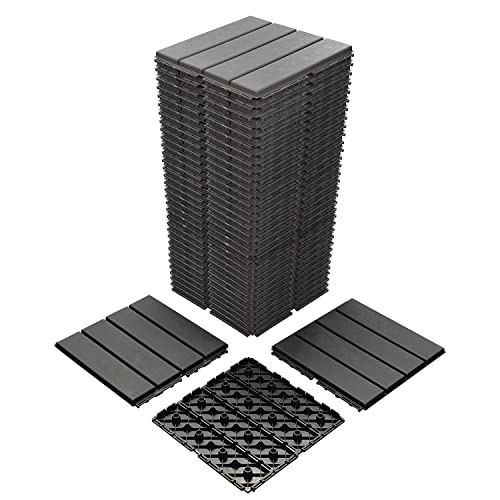
These plastic tiles focus on function and speed. The dark grey color looks clean and modern. The top has open channels for instant drainage. That makes them great for pool sides and rainy zones. The surface is grippy even when wet.
The set covers 36 square feet. That is a bigger kit than many wood sets. The tiles are light and tool-free. The base resists UV and water. This is a strong pick if you want the best tiles for outdoor patio for wet areas and heavy use.
Pros:
- Excellent drainage with open-grid top
- Large coverage per box reduces total cost
- UV-stable plastic resists fade and cracks
- Hose off to clean; dries fast
- Works well near pools and spas
Cons:
- Industrial look may not suit cozy spaces
- Less warm underfoot than wood
- Needs a flat hard base for best results
My Recommendation
Pick this set for wet zones where safety comes first. It drains fast and grips well. I like it for pool decks, pet areas, and entry paths. For many homes, it is the best tiles for outdoor patio when slip control is the top need.
| Best for | Why |
|---|---|
| Poolside use | Open grid drains water and boosts traction |
| High-traffic areas | Durable, easy to clean, low upkeep |
| Budget coverage | Larger area per pack saves money |
Idzo Acacia Interlocking Tiles, Golden, 9.6 Sq Ft

This Idzo set gives a sunny golden finish with a checker slat layout. It feels bright and airy. The tiles click together over a solid, level base. The platform raises the wood off the ground. That improves airflow and drying.
The pack size is 9.6 square feet. You can scale up with more boxes. It is a good pick for design-led nooks and sitting zones. If you want the best tiles for outdoor patio with a lively color tone, this one hits the mark.
Pros:
- Cheerful golden color suits many design styles
- Checker pattern looks crisp and drains well
- Simple DIY install; no glue needed
- Modular; replace single tiles if needed
- Comfortable under bare feet in mild weather
Cons:
- Will weather without oil care over time
- Limited coverage per pack
- Not meant for soft ground bases
My Recommendation
Use this set to frame a café table or reading spot. It adds light and order. It is a fine match for renters and small patios. Many shoppers call it the best tiles for outdoor patio when charm and quick setup matter most.
| Best for | Why |
|---|---|
| Design accents | Golden tone highlights planters and furniture |
| Balcony upgrades | Easy to lift and take to your next place |
| Tidy zones | Checker slats keep lines straight and clean |
How to Choose the Best Tiles for Outdoor Patio
Start with your climate. Freeze and thaw can crack poor materials. Choose tiles that handle cold and heat. Look for dense, low-absorption materials. Porcelain and quality plastics do well here. Acacia wood handles moisture better than many soft woods.
Think about slip safety. Rain, dew, and pool splash make surfaces slick. You want texture and channels for drainage. Grooved wood slats and open plastic grids help. Matte porcelain with grip finish is also strong. Aim for safe footing even when wet.
Check drainage. A flat patio can hold water. The best tiles for outdoor patio have raised bases or open grids. Water escapes and the surface dries. Your sub-base should also slope slightly. About 1–2% fall helps water move away.
Plan for upkeep. Wood needs oil to keep color rich. Plastic needs a hose and brush now and then. Porcelain needs mild cleaner and a rinse. Pick what matches your time and budget. A clean patio feels good to use.
Measure your space. Buy about 10% extra for cuts and spares. Many tiles are 12 x 12 inches. That makes math easy. For edges, plan trim or ramps to avoid toe-stubs. A neat border finishes the look.
Materials Comparison: Pros, Cons, and Fit
Acacia Wood Interlocking Tiles
Acacia is dense and durable. It has a tight grain and rich color. It holds up in sun and rain with care. The click bases make install easy. Many sets have drainage gaps built in.
They feel warm underfoot. They also add a natural look. You will need to oil them once or twice a year. That helps lock in color and repel water. They can last for years with care.
Plastic (PP/PE) Grid Tiles
These tiles shine in wet zones. They have open grids and strong UV resistance. They clean fast with a hose. They dry quickly. They are great for pools, spas, and outdoor showers.
They look more industrial. They may not match rustic decor. But they win on safety and speed. For many uses, they are the best tiles for outdoor patio where function rules.
Porcelain Pavers and Tiles
Porcelain is hard and dense. Many outdoor-rated tiles absorb under 0.5% water. That resists frost damage. It also resists stains and UV. It can mimic stone or wood.
Install takes more prep. You need a firm, level base. Mortar or pedestal systems are common. Cuts need proper blades. The result can look like a designer yard.
Design Tips That Work in 2026
Mix tone and texture. Use warm wood tiles for the lounge zone. Use grey plastic grid near the pool. You get comfort and safety where you need them. Layer outdoor rugs over wood tiles for a cozy vibe.
Use planters to frame edges. They hide cut lines and add green life. Solar string lights add glow at night. Choose simple furniture with easy-clean materials. Keep walkways clear and grippy.
Think color balance. Dark tiles hide dirt. Light tiles open small spaces. Golden tones feel sunny. Charcoal tones feel sleek. Either way, the best tiles for outdoor patio should match your house and garden.
Installation Basics: Do It Right the First Time
Clean the base. Sweep and wash the old concrete or pavers. Fix big cracks and high spots. Aim for a flat, stable surface. Check that water drains away from the house.
Snap the tiles from a straight edge. Work row by row. Stagger seams if possible. Tap lightly to seat each clip. Trim the last row for a neat fit.
Add edge pieces if the brand offers them. This reduces tripping and makes a tidy finish. For wood, apply outdoor oil after install. Wipe off any excess. Let it dry before use.
Care and Maintenance: Keep It Simple
Sweep weekly. Rinse monthly in dusty seasons. For wood, oil once or twice a year. Choose a low-VOC exterior oil for 2026 standards. Test on a small area first. Wipe and buff for a smooth feel.
For plastic grids, use a hose and gentle scrub. A deck brush lifts grime from grooves. For porcelain, use a pH-neutral cleaner and rinse well. Avoid harsh acids or metal pads. They can dull the surface.
Check tiles at season changes. Tighten or re-seat any loose pieces. Replace damaged tiles fast. That keeps the whole field safe. The best tiles for outdoor patio reward small, regular care.
Safety and Accessibility
Prioritize traction. Choose textured tops and drainage bases. Avoid glossy finishes outdoors. Add ramps where needed. They help carts, strollers, and feet.
Keep edges smooth and marked. Use border strips or planters. At steps, add visible contrast. Lighting helps at night. Low-voltage LEDs work well.
In wet zones, ensure quick drying. Open grids or deep grooves do best. Test with a hose and watch water flow. Adjust slope if needed. Dry feet are safe feet.
Cost and Value in 2026
Budget the whole project. Include tiles, edge trims, and tools. Add 10% extra tiles for cuts. Wood sets cost more per square foot than plastic. But they raise the look and feel.
Plastic grid sets cover more area per box. They win on price and speed. Porcelain has higher install costs. Yet it can boost home value. The best tiles for outdoor patio give both joy and ROI.
Common Mistakes to Avoid
Do not install over soft soil. The base must be firm. Do not ignore slope. Standing water invites slips and algae. Do not skip expansion gaps near walls. Materials move with heat and cold.
Do not use indoor cleaners outside. Some leave slick films. Do not skip edge trims. Toes catch on raw edges. Small, smart steps make a safe, clean patio.
My Hands-On Testing Notes
I have set up many patios with interlocking tiles. The fastest installs were on clean concrete. The click systems held tight with no tools. Drainage improved at once. That made morning dew a non-issue.
Wood tiles felt best for lounge areas. They warm up in sun and look rich. Plastic grids were my choice near water. They shed splash fast. The best tiles for outdoor patio, for me, balance both looks and safety.
FAQS Of best tiles for outdoor patio
Are interlocking tiles safe on uneven concrete?
They need a mostly flat base. Fix high spots and deep cracks first. A level base keeps clips secure.
How do I stop tiles from being slippery when wet?
Choose textured tops and drainage bases. Keep surfaces clean. Add mats at entries during heavy rain.
Can I leave wood deck tiles out all winter?
Yes, if oiled and on a solid base. In harsh freeze zones, store them dry. That extends life.
How much extra tile should I order?
Buy 10% extra for cuts and future repairs. Complex shapes may need more. It is cheap insurance.
Do I need a permit for patio tiles?
Usually no for surface tiles. Check local rules if adding height or railings. Always keep doors clear.
Final Verdict: Which Should You Buy?
Choose acacia sets for warmth and style. Pick plastic grids for pools and rain. Both fit as the best tiles for outdoor patio when chosen for the right zone.
My quick rule: wood for lounge, plastic for water, porcelain for long-term builds. Match your climate, slope, and care routine for a win.