

Drop a small jig near cover, work it slow, and watch your line.
Crappie reward a thoughtful, patient angler. In this guide, I break down how to jig for crappie with the same step-by-step system I use on tough lakes and easy farm ponds.
You will learn how to pick the right jig, read sonar and maps, choose smart colors, and control your cadence. If you want a clear, proven plan for how to jig for crappie, you are in the right place.
The crappie mindset: why jigging works
Crappie are sight feeders with a soft mouth and an upturned jaw. They hold near wood, brush, docks, rocks, and edges. They often suspend and feed up, so a jig that hovers just above them is hard to resist.
Light rules the bite. Cloud cover, wind, stain, and sun angles push fish shallower or deeper. In clear water they prefer subtle colors and thin profiles. In stained water they track vibration and contrast.
Water temperature sets their mood. Cold water shrinks the strike zone. Warm water expands it. When you understand how to jig for crappie around these truths, you start to predict where and how they bite.
Essential gear for how to jig for crappie
You do not need fancy gear. You do need balance. Keep it light, simple, and sensitive.
- Rod: 5 to 7 feet, light or ultralight power, fast tip for feel and hook sets.
- Reel: 1000 to 2000 size spinning reel with a smooth drag.
- Line: 4 to 6 lb mono or 6 to 10 lb braid with a short 4 to 6 lb fluorocarbon leader.
- Jig heads: 1/64 to 1/8 oz. Start with 1/32 or 1/16 oz for most lakes.
- Bodies: tubes, paddle tails, curly tails, and marabou or hair jigs.
- Floats: small fixed or slip bobbers for shallow or finicky fish.
- Extras: split shot, bobber stops, scent, polarized glasses, and a small net.
Budget tip from the boat: I often run braid main line for feel and add a 3 to 4 foot fluoro leader. It lasts longer, cuts wind bow, and helps me detect those light “tick” bites when I teach new anglers how to jig for crappie.
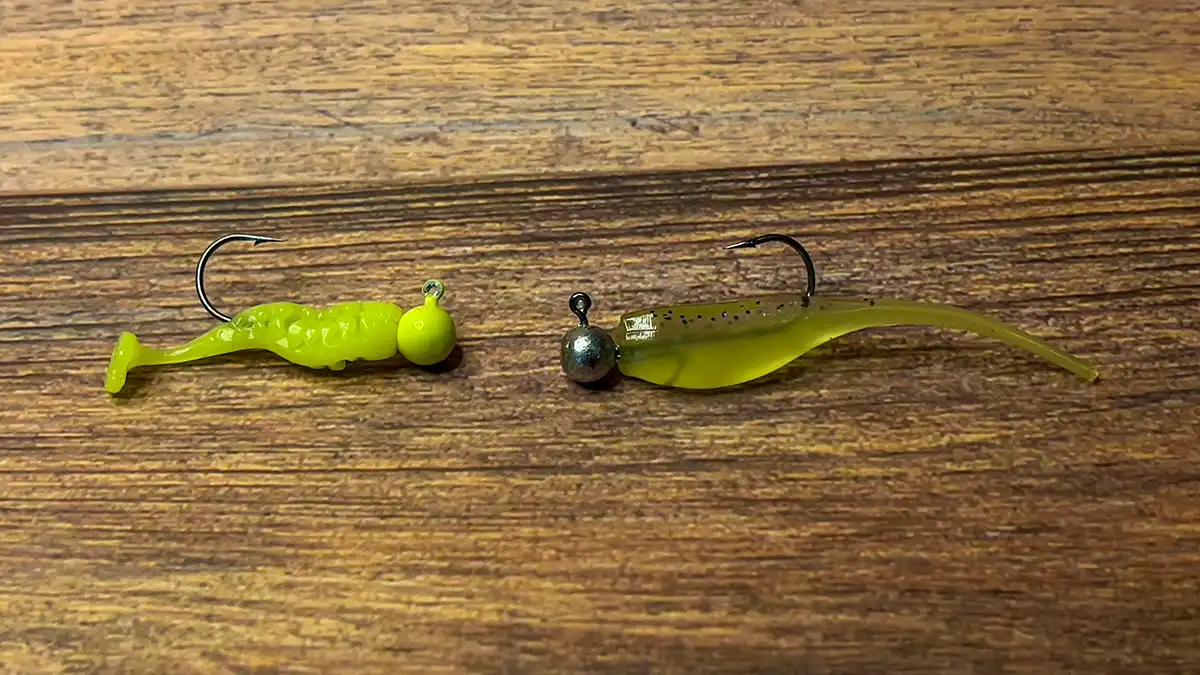
Jig types, colors, and profiles
Jig head shapes matter. Ball heads fall straight and steady. Minnow heads track well when casting. Wedge heads slip brush. Fine-wire hooks penetrate soft crappie mouths with less pressure.
Body choices change profile and action.
- Tube: classic profile, great for vertical work and dock shooting.
- Paddle tail: subtle thump for cold fronts and pressured fish.
- Curly tail: more swim on the drop, good for searching.
- Hair or marabou: breathes on pauses, deadly in cold water.
Color rules I use when teaching how to jig for crappie:
- Clear water: natural shades like shad, smoke, silver, and subtle blue.
- Stained water: chartreuse, white, pink, orange, and black for contrast.
- Low light or deep: darker silhouettes or glow accents.
- Mix and match: chartreuse head with white body is a reliable spring staple.
Scent and softness can seal the deal. A dab of crappie gel or a soft bait that collapses helps fish hold longer for solid hook sets.

Rigging and knots that boost hook-up rate
A loop knot lets the jig swing free. That tiny hinge adds life on slow days.
How to tie a simple loop knot:
- Make a small overhand knot in the leader about 6 inches from the tag end.
- Pass the tag through the jig eye, then back through the overhand knot.
- Wrap the tag around the main line three times.
- Pass the tag back through the overhand knot the same way it came.
- Wet and pull tight, leaving a small loop above the eye.
Other helpful rigs for how to jig for crappie:
- Double jig rig: fish two sizes or colors 12 to 18 inches apart to dial depth.
- Slip float rig: set exact depth with a bobber stop for shallow brush and beds.
- Micro split shot: add one above the jig in wind to keep contact.
I lost many big crappie early on by tying tiny, stiff knots. The loop knot and fine-wire hooks doubled my landing ratio.

Step-by-step: how to jig for crappie from boat, kayak, or bank
Vertical jigging over cover
- Find brush, timber, or bait with sonar or by probing with the jig.
- Drop a 1/16 oz jig to just above fish marks.
- Hold steady. Lift the rod tip 2 to 6 inches, then pause 3 to 10 seconds.
- Watch the line. Set the hook on a tick, slack jump, or weight.
- If no bite, adjust depth up or down by one foot and repeat.
Pendulum cast along edges
- Cast past the target with a 1/32 or 1/16 oz jig.
- Count down the fall, close the bail, and let it swing back in an arc.
- Shake the rod lightly two times, then pause one second.
- Keep contact. Most bites come on the fall.
Under a float for shallow fish
- Set a slip float 1 to 3 feet over a 1/32 oz jig.
- Cast to shade, docks, and laydowns.
- Twitch the float an inch. Pause. Repeat. Move the depth until you get bit.
Dock shooting
- Open bail, hold the jig with your off hand, load the rod like a bow.
- Release and send the jig far under the dock.
- Let it fall on a semi-slack line. Set on any twitch.
From shore, I often follow wind-blown banks with a slow pendulum cast. It is a simple way to learn how to jig for crappie while covering water fast.

Seasonal and daily patterns for how to jig for crappie
Winter
- Fish hold deep on timber, channel swings, and bridges.
- Use 1/32 to 1/16 oz hair or small plastics.
- Long pauses and tiny lifts shine.
Pre-spawn and spawn
- Water climbs toward 55 to 65°F.
- Fish move to staging brush, then to shallow cover.
- Slip floats and 1/32 oz jigs near banks, stumps, and reeds are money.
Post-spawn and summer
- Fish slide to brush in 8 to 20 feet or suspend off points.
- Use electronics to find bait. Speed up the cadence.
- Early and late bite is best. Midday shade matters.
Fall
- Bait piles in creeks and coves. Fish feed hard.
- Cast and swim a 1/16 oz jig with a steady pulse.
Daily notes
- Wind stacks plankton, bait, and crappie on the windward side.
- A cold front calls for downsizing and longer pauses.
- Stable weather means you can move faster and cover more.
Learning how to jig for crappie means tracking temperature, light, and bait first, then choosing speed and size.
Finding crappie: maps, sonar, and visual cues
Start with a map. Mark creek channels, points, bridge pilings, and coves. Look for bends, inside turns, and shelves near deep water.
Use sonar like a flashlight.
- Side imaging: scan for brush piles, docks, and schools in a wide lane.
- Down imaging: confirm fish and see how they sit in the cover.
- Live sonar: show cadence reactions. If fish rise and stop, slow down.
No boat? Watch shade lines, dock corners, riprap, and flooded wood. Many state sites share GPS for public brush piles. That is a fast path to practice how to jig for crappie.
Presentation tweaks that trigger bites
Small changes flip a slow day.
- Cadence: try two short pops, then a long pause.
- Stroke size: cold water likes 1 to 2 inches. Warm water can take 4 to 6.
- Fall rate: change head size or switch to hair for a slower sink.
- Profile: skinny bait on tough days, bulkier bait to call fish.
- Color swap: change head or tail only, not both, to track the key.
- Line angle: hold the rod high to slow the fall, low to speed it up.
A simple test when learning how to jig for crappie: leave the spot after 10 casts without a change. Try a new depth, color, or cadence. Return later with sun or wind shifts.
Common mistakes and how to fix them
- Working the jig too much: crappie often prefer a hover and pause. Slow down.
- Fishing below the fish: they feed up. Keep the jig a foot above their heads.
- Using line that is too heavy: thick line kills action. Go lighter for more bites.
- Ignoring wind bow: switch to braid or a heavier head to keep contact.
- Staying in dead water: move if you do not get bit in 10 minutes. Find bait.
I used to swing big hook sets and tear mouths. Now I reel down and lift smoothly. My landing rate rose fast. That change alone helps most anglers master how to jig for crappie.
A simple game plan for your next trip
Before you go
- Check water temp, clarity, and recent weather.
- Pick three starting areas: a creek bend, a wind-blown point, and a dock line.
- Pre-rig three rods: 1/32 oz under a slip float, 1/16 oz for vertical, 1/16 oz for casting.
On the water
- Scan with side imaging or probe with casts to find life.
- Start high in the column and work down.
- Test two cadences and two colors in the first 15 minutes.
- Mark any bite and build a pattern around that depth and cover.
After the trip
- Note temps, spots, best color, and cadence.
- Save waypoints on brush or docks that produced.
- Use your notes to refine how to jig for crappie on the next outing.
Frequently Asked Questions of how to jig for crappie
What size jig is best for crappie?
A 1/32 to 1/16 oz jig covers most conditions. Go lighter in shallow or cold water and heavier in wind or when fishing deep.
What color jig works best for crappie?
In clear water, natural shad and smoke work well. In stained water, chartreuse, white, pink, and black offer contrast and draw strikes.
Do I need a float when jigging?
Not always. Use a slip float for shallow fish, tight cover, or when you need perfect depth control with long pauses.
How deep should I fish a jig for crappie?
Start above the fish and work down. Many bites happen 1 to 3 feet over their heads because crappie feed up.
Is braid or mono better for crappie jigs?
Braid offers better feel and hook sets, especially in wind. Add a short fluorocarbon leader for stealth and abrasion resistance.
Can I jig for crappie from the bank?
Yes. Target docks, riprap, shade lines, and wood. Use pendulum casts or a slip float to keep the bait at the right depth.
What is the best retrieve for a crappie jig?
Use short lifts and long pauses. Most bites come on the fall or the first shake after a pause.
Conclusion
You now have a complete plan for how to jig for crappie. Keep your gear light, your jig above the fish, and your cadence slow and steady. Track water temp, light, and bait, and make small changes until the puzzle clicks.
Put this guide to work on your next trip. Tie on a 1/16 oz jig, pick three spots, and test depth and cadence with intent. If you found this helpful, subscribe for more step-by-step tactics, share your results, or ask a question so we can refine your plan together.