

Use 6–8 lb for finesse, 12–17 lb for moving baits, 30–65 lb braid in heavy cover.
Choosing what size test line for bass fishing can feel tricky. I have spent years testing lines on lakes, rivers, and grass mats. This guide breaks it down in clear steps. You will learn how to pick line by lure, cover, and water. Stay with me, and you will leave knowing exactly what to spool next time.
The core answer: fast picks by technique
Most bass run 1 to 5 pounds. But cover, lure type, and hooks matter more than pure fish size. So start with the lure and the water. Then pick the test and the line type.
Use this quick list when asking what size test line for bass fishing:
- Finesse plastics on spinning: 10 to 15 lb braid mainline to 6 to 10 lb fluorocarbon leader
- Drop shot, Ned rig: 8 to 10 lb braid to 6 to 8 lb fluoro leader
- Jerkbaits: 10 to 12 lb fluorocarbon
- Crankbaits (shallow to mid): 10 to 12 lb mono or fluoro
- Deep cranks: 8 to 10 lb fluorocarbon
- Spinnerbaits, chatterbaits: 12 to 17 lb fluorocarbon
- Texas rigs, jigs around light cover: 12 to 15 lb fluorocarbon
- Jigs, Texas rigs in wood/rock: 15 to 20 lb fluorocarbon
- Frogs over mats: 50 to 65 lb braid
- Swim jigs, heavy grass: 30 to 50 lb braid
- Topwater walking baits and poppers: 12 to 15 lb monofilament or 30 lb braid with mono leader
- Small swimbaits (1 to 2 oz): 15 to 20 lb fluorocarbon
- Big swimbaits (2 to 6 oz): 20 to 25 lb mono or fluoro
If you still wonder what size test line for bass fishing fits your lake, look at cover first. Thick grass or wood means more test. Clear, open water means less test.

Understanding line types and test strength
Line test is the force a line can take before it breaks. But real strength also depends on knots, nicks, and drag. Stretch, diameter, and visibility also play a big role.
- Monofilament: Floats, has stretch, and is more visible. Great for topwater and moving baits that need give.
- Fluorocarbon: Sinks, low stretch, and less visible underwater. Better abrasion resistance on rock and wood.
- Braid: Very strong for its size and low stretch. High visibility. Needs a leader in clear water.
A 30 lb braid is thin, like 8 lb mono. That is why braid slices grass and casts far. A 12 lb fluorocarbon is thicker, but it is tough and sinks. This is why picking what size test line for bass fishing is not just a number. You must match test and type to the job.

Match the line test to your lure and technique
Bait size, hook style, and the way you set the hook matter. Single hooks like Texas rigs need more power. Treble hooks need some give so fish stay pinned.
- Finesse plastics
- 10 to 15 lb braid to a 6 to 10 lb fluoro leader
- Use 7 to 9 foot leaders in clear water
- Drop shot and Ned rig
- 8 to 10 lb braid to 6 to 8 lb fluoro leader
- Lighter test gives more bites in pressured lakes
- Jerkbaits
- 10 to 12 lb fluorocarbon controls depth and keeps action tight
- Use lighter test to dive a bit deeper
- Crankbaits
- 8 to 12 lb fluorocarbon or thin mono
- Lower test dives deeper and increases wobble
- Spinnerbaits and chatterbaits
- 12 to 17 lb fluorocarbon for balance of feel and shock
- Go 15 to 17 lb near wood
- Texas rigs and jigs
- Light cover: 12 to 15 lb fluorocarbon
- Heavy cover: 15 to 20 lb fluorocarbon or 30 to 50 lb braid
- Topwater
- 12 to 15 lb mono for float and stretch
- Braid (30 lb) to a short mono leader also works
- Frogs and punching
- 50 to 65 lb braid for mats and pads
- Short casts, hard pulls, no give
- Swimbaits
- 15 to 20 lb fluoro for small to mid baits
- 20 to 25 lb mono or fluoro for big baits with heavy hooks
When people ask what size test line for bass fishing gets more bites, the answer is simple. Use the lightest line you can land fish on, given the cover and hooks.
Conditions that change your choice
The same lure may need a very different line on a new lake. Read the water and adjust. Small changes in test size can double your bite rate.
- Water clarity
- Clear water: drop one size
- Stained water: size up for control
- Cover and abrasion
- Wood, rock, dock posts: add 2 to 5 lb of test
- Grass mats: switch to braid
- Wind and current
- Windy days: a bit heavier line for casting control
- River current: stronger line to steer fish
- Temperature and stretch
- Cold water: fish nip. Use thinner diameter for better feel
- Hot water: thick grass grows. Use braid
- Bigger fish lakes
- Known giants: size up your line by one step
This is the heart of what size test line for bass fishing really means. Read the scene. Then pick the right tool.
Rod, reel, and drag balance
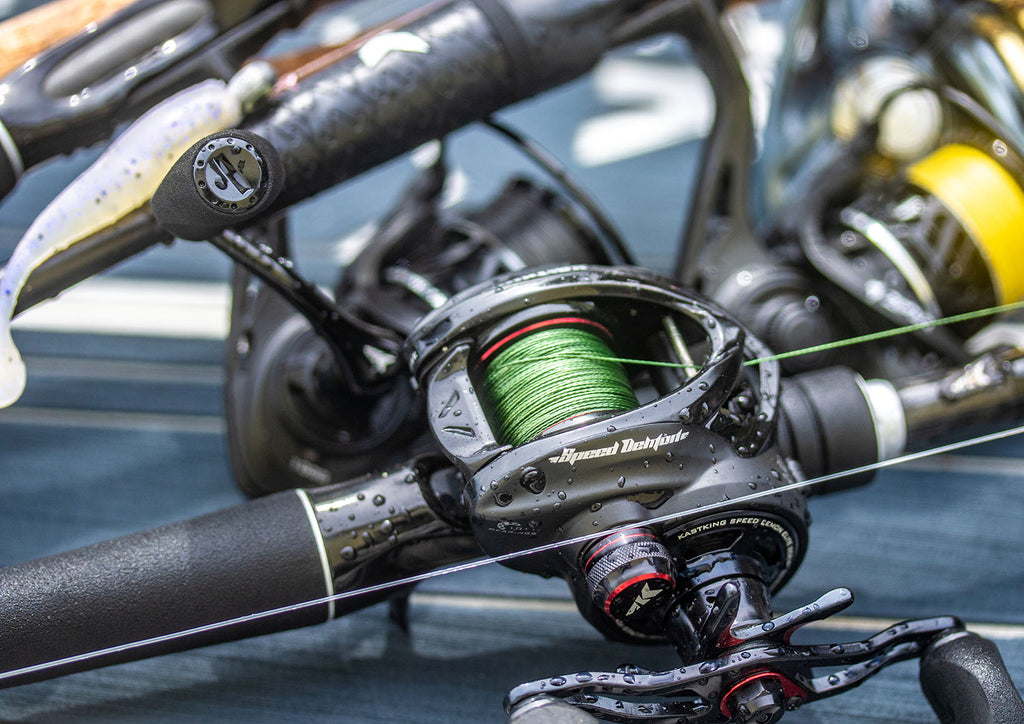
Line must match your rod power and reel. A mismatch costs fish. Balance is key.
- Rod power and action
- Moderate or moderate-fast helps treble hook baits
- Fast or extra-fast helps single hook rigs
- Reel and spool
- Use the right spool size for the line diameter
- Spool to within 1/8 inch of the rim for best casts
- Drag settings
- Set drag to 20 to 30% of line test
- 10 lb line = 2 to 3 lb drag; 50 lb braid = 10 to 15 lb drag
- Leaders and visibility
- Braid with fluoro leader blends stealth and power
- Leader length: 2 to 8 feet based on cover
If you ask what size test line for bass fishing on a medium spinning rod, here is a safe start. Use 10 lb braid to an 8 lb fluoro leader. That combo casts light baits and still lands big fish.
Knots, leaders, and terminal tackle
Right knots keep your true line strength. The wrong knot can cost 30% or more. Take time to tie clean knots.
- Braid
- Palomar for lures; FG or Alberto for leaders
- Fluorocarbon
- San Diego Jam, Palomar, or improved clinch tied slow and wet
- Monofilament
- Palomar or improved clinch
- Leaders
- Fluoro leaders for clear water
- Mono leaders for topwater float and some stretch
- Hardware
- Use quality snaps for crankbaits if you like faster lure swap
- Check split rings on big swimbaits
What size test line for bass fishing works with leaders? Use 10 to 15 lb braid mainline and adjust the leader to water and cover. That gives you the best of both worlds.
Common mistakes and how to avoid them
Small errors add up. Here are the big ones I see often.
- Using too heavy a line in clear water
- Fish see it. Bites drop
- Using too light a line in wood and rock
- Abrasion wins and fish break off
- Bad knots
- Tie slow. Wet the knot. Test with a hard pull
- Wrong line for the lure
- Topwater with fluoro sinks the bait. Use mono or braid to mono leader
- Ignoring drag
- A smooth drag saves light line and small hooks
If you keep asking what size test line for bass fishing on your home lake, start a log. Note cover, clarity, and test sizes. You will see patterns fast.

Real-world setups that work
These are the rigs I use when clients ask for simple picks. They are safe, proven, and easy to manage.
- Clear reservoir finesse
- 2500 spinning reel, medium-light rod
- 10 lb braid to 8 lb fluoro leader
- Ned rigs, drop shots, small swimbaits
- Grass lakes with frogs and swim jigs
- 7’3″ heavy rod, high-speed reel
- 50 to 65 lb braid for frogs; 30 to 40 lb braid for swim jigs
- Wood and docks
- 7’2″ medium-heavy rod
- 15 to 17 lb fluorocarbon
- Skip jigs and Texas rigs
- Cranking and moving baits
- 7′ medium or moderate rod
- 10 to 12 lb fluoro or mono based on depth
- Big bait days
- 8′ heavy swimbait rod
- 20 to 25 lb mono or fluoro
These cover most lakes. If you wonder what size test line for bass fishing on a new body of water, pick the closest match here. Then adjust one size up or down.
Care, testing, and when to change line
Line gets weak over time. Heat, sun, and nicks break it down. Check often.
- Run your fingers over the first 10 feet
- Cut and retie if you feel rough spots
- Change mono more often
- UV light hurts mono the most
- Fluoro lasts longer
- But still change it when memory gets bad
- Braid can last a season or more
- Flip it on the spool mid-season to use the fresh side
- Test your drag each trip
- A smooth drag protects your chosen test size
When people search what size test line for bass fishing, they often need more than a number. Good care and smart checks make any test size work better.
Frequently Asked Questions of what size test line for bass fishing
What size test line for bass fishing is best for beginners?
Start with 12 lb fluorocarbon on a medium baitcaster. For spinning, use 10 lb braid to an 8 lb fluoro leader.
What size test line for bass fishing in clear water?
Go lighter. Use 6 to 8 lb fluorocarbon leaders with 10 lb braid on spinning gear.
Should I use braid or fluorocarbon for jigs?
Use 15 to 20 lb fluorocarbon in wood and rock. Use 40 to 50 lb braid in grass.
What size test line for bass fishing when throwing frogs?
Use 50 to 65 lb braid. It cuts grass and keeps hooks pinned.
Do I need mono for topwater baits?
Mono helps because it floats and has stretch. Use 12 to 15 lb mono or braid with a short mono leader.
What size test line for bass fishing with crankbaits?
Use 8 to 12 lb fluorocarbon or mono. Lighter line lets the bait dive deeper.
How tight should my drag be on light line?
Set drag to 20 to 30% of line test. On 8 lb line, that is about 2 pounds.
Conclusion
Line choice shapes every cast, hookset, and fight. Start with the lure and cover. Then dial in test size and line type. Keep notes and adjust one step at a time.
Use this guide on your next trip. Spool with care, tie clean knots, and set your drag. If this helped, subscribe for more tips or leave a comment with your go-to line for your lake.