

A 7-foot medium-heavy rod fits most bass fishing needs across many techniques.
If you want to master what length rod for bass fishing, this guide is for you. I have fished lakes, rivers, and grass-choked ponds for years.
I will help you match rod length to lures, cover, and your style. You will learn clear rules, smart exceptions, and field-tested tips that land more bass.
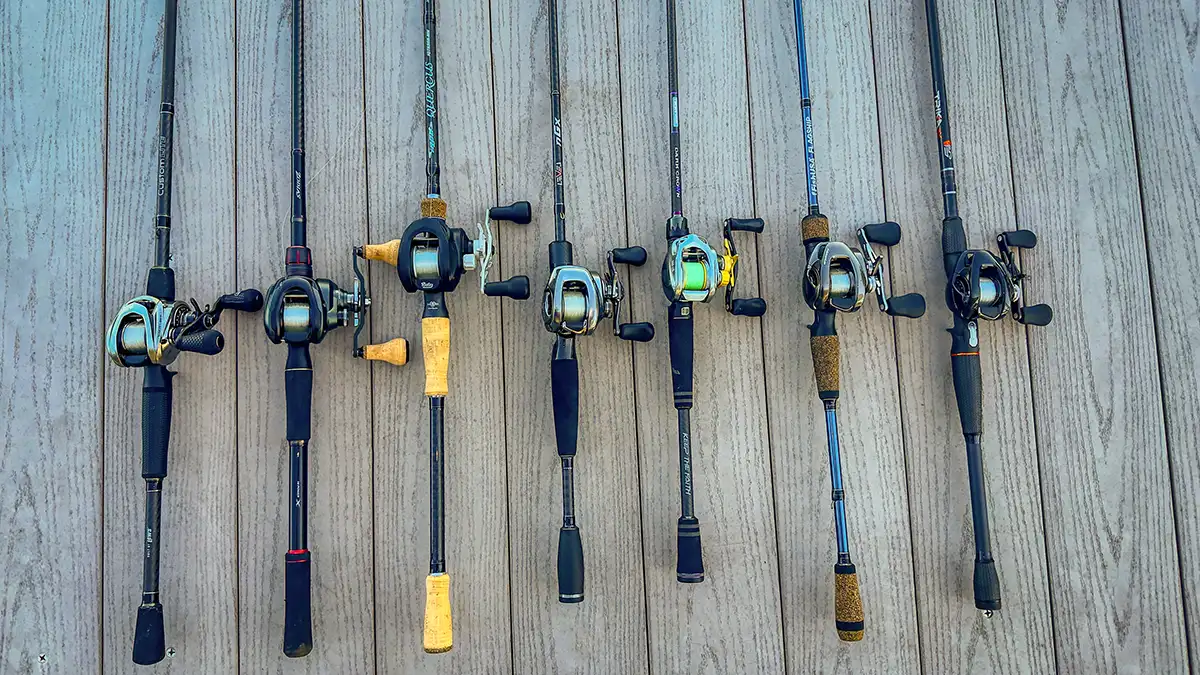
Why Rod Length Matters For Bass?
Rod length shapes how you fish. It affects casting distance, accuracy, hookset power, line control, and lure action. Choosing the right length can turn short strikes into solid pins.
Here is how length changes the game:
- Casting distance improves with longer rods. You gain leverage for heavier lures and windy days.
- Accuracy improves with shorter rods. You thread docks, laydowns, and tight windows with ease.
- Hooksets get stronger with longer rods. You move more line, which helps with stretchy mono or deep water.
- Lure control depends on length. Jerkbaits and topwaters work best when the rod does not slap the water.
- Line management improves with length. You steer fish around cover and keep pressure during the fight.
In short, length is not a guess. It is a tool that must match your lures, water, and needs. When anglers ask what length rod for bass fishing, I start with technique, then cover, then the angler.
Standard Rod Lengths By Technique
Use these proven ranges as a starting point. Adjust for your height, boat space, and cover density. This is where most anglers answer what length rod for bass fishing in a precise way.
Topwater Walking, Poppers, Trebles
- Best length: 6 foot 6 to 7 foot medium or medium heavy
- Why: Shorter rods avoid slapping water on downward twitches. Great control with trebles.
Jerkbaits
- Best length: 6 foot 6 to 6 foot 10 medium
- Why: Crisp downward twitches. Short length keeps the tip clear of the water.
Spinnerbaits and Chatterbaits
- Best length: 7 foot to 7 foot 3 medium heavy
- Why: Long casts along grass lines. Strong hooksets with single hooks.
Squarebills and Shallow Cranks
- Best length: 6 foot 10 to 7 foot medium or moderate
- Why: Better accuracy near wood and docks. Softer action keeps treble hooks pinned.
Deep Cranks
- Best length: 7 foot 4 to 7 foot 10 medium moderate
- Why: Longer casts to reach depth. Parabolic bend reduces pull-outs.
Texas Rigs and Jigs
- Best length: 7 foot to 7 foot 5 medium heavy to heavy
- Why: Strong hooksets in cover. Good line pick-up for quick pressure.
Frogs
- Best length: 7 foot to 7 foot 4 heavy
- Why: Drive hooks through thick plastic. Horse fish out of mats.
Flipping and Pitching
- Best length: 7 foot 4 to 7 foot 6 heavy
- Why: Reach targets quietly. Lift big fish from heavy cover.
Finesse, Ned, Dropshot
- Best length: 6 foot 10 to 7 foot 2 medium light to medium spinning
- Why: Better line control with light line. Sensitivity and subtle rod tip work.
When someone asks what length rod for bass fishing, these technique windows cover 90 percent of days on the water. They are also the same ranges used by many tournament anglers.

Key Factors That Decide What Length Rod For Bass Fishing For You
The best answer to what length rod for bass fishing depends on your situation. Use these factors to dial it in.
- Your height and arm length. Taller anglers can work longer rods without tip drag. Shorter anglers often prefer 6 foot 6 to 7 foot for jerkbaits and topwater.
- Fishing platform. Kayak anglers love 6 foot 10 to 7 foot 1 for easy handling. Bank anglers may want 7 foot 3 for extra reach and better line control over grass.
- Cover and structure. Heavy grass and wood push you to 7 foot 3 to 7 foot 6. Open water or small ponds allow 6 foot 6 to 7 foot.
- Lure weight and hook type. Trebles like moderate actions and mid lengths. Single hooks like longer rods for strong hooksets.
- Line choice. Fluorocarbon has some stretch and benefits from longer rods. Braid has low stretch and pairs well with shorter rods for target work.
- Fatigue and feel. If your wrist aches while walking a topwater, go shorter. If your hooksets feel weak on a Texas rig, go longer.
With these points, you can answer what length rod for bass fishing with confidence, not guesswork.

Casting Rods vs Spinning Rods: Length Choices
Casting rods dominate power techniques. Spinning rods shine for finesse. The right length keeps both in sync with their jobs.
- Casting rod lengths. Most bass work lands between 7 foot and 7 foot 4. That range balances distance, power, and control with single hooks.
- Spinning rod lengths. The sweet spot is 6 foot 10 to 7 foot 2. You get reach for line control with light line and small hooks.
- Where each shines. Use casting rods for jigs, Texas rigs, frogs, and big moving baits. Use spinning rods for dropshot, Ned rigs, small swimbaits, and shaky heads.
If you wonder what length rod for bass fishing on spinning gear, start with a 7 foot medium. On casting, a 7 foot 3 medium heavy covers many needs.

Real-World Setups I Trust
These are rods that stay on my deck. They are simple, proven, and easy to learn. They also answer what length rod for bass fishing without overthinking.
- 7 foot 3 medium heavy casting with 15 to 17 pound fluoro. My do-it-all for jigs, Texas rigs, and bladed jigs. It handles docks and sparse grass well.
- 7 foot medium moderate casting with 12 pound fluoro. My squarebill and mid crank rod. It pins trebles yet casts a mile.
- 6 foot 10 medium casting with 12 pound mono. My jerkbait and small topwater rod. The length keeps the tip clear and the bait lively.
- 7 foot 2 medium spinning with 10 pound braid to 8 pound fluoro leader. My dropshot and Ned setup. It keeps pressure without breaking light hooks.
- 7 foot 4 heavy casting with 50 to 65 pound braid. My frog and light punching rod. It pulls fish free from nasty stuff.
When friends ask what length rod for bass fishing for a first combo, I recommend the 7 foot 3 medium heavy casting. It is the best starter.

Common Mistakes When Picking Rod Length
You can avoid many headaches by dodging these traps. These are common errors I see on the water.
- Using a rod that is too long for jerkbaits. Your tip hits the water. Your cadence suffers.
- Going too short for flipping. You lose reach, leverage, and stealth in heavy cover.
- Ignoring boat or kayak space. Long rods feel great until they jam in tight quarters.
- Chasing only distance. Accuracy and control catch bass. Not just long casts.
- Overlooking lure hook type. Trebles need a more forgiving rod and often shorter lengths.
Learn from these and you will answer what length rod for bass fishing the right way, every time.

How to Test The Right Length Before You Buy?
You can test rod length without a lake. A quick check tells you if it fits.
- Simulate lure work. Point the tip down and twitch like a jerkbait. If the tip hits the floor, go shorter.
- Check hookset feel. Pull line from the reel and sweep the rod. You should feel firm load, not wobble.
- Aim at small targets. Practice short flips at a cup. If you miss often, try a shorter length for accuracy.
- Mind transport. Try stowing the rod in your car or kayak. If it is a struggle, pick a shorter or two-piece rod.
These simple tests make what length rod for bass fishing an easy choice.
Maintenance And Transport Considerations
Rod length is not only about fishing. It is also about storage and care.
- One-piece vs two-piece. One-piece is a touch more sensitive. Two-piece travels easier and fits small cars.
- Rod socks and tubes. Protect guides and tips. This matters more as length goes up.
- Telescopic options. Some flipping rods collapse. They save space without losing power.
- Guide checks. Longer rods have more guides. Inspect them for nicks that fray line.
Smart care keeps your answer to what length rod for bass fishing working for years.
))/2939063.json)
Frequently Asked Questions of what length rod for bass fishing
What length rod for bass fishing is best for beginners?
A 7 foot medium heavy casting rod is the most versatile choice. It handles jigs, Texas rigs, and many moving baits.
What length rod for bass fishing should I use for jerkbaits?
Pick 6 foot 6 to 6 foot 10 in medium power. It prevents the tip from hitting the water during sharp twitches.
What length rod for bass fishing works for kayaks?
Look at 6 foot 10 to 7 foot 1. These lengths are easy to swing and manage in tight seating.
What length rod for bass fishing is best for frogs?
Choose 7 foot to 7 foot 4 heavy power with braid. You need leverage to pull fish from grass.
What length rod for bass fishing gives longer casts?
Longer rods like 7 foot 3 to 7 foot 6 yield longer casts. They move more line and load deeper.
What length rod for bass fishing suits finesse techniques?
A 7 foot medium spinning rod is a great start. It manages light line and small hooks with control.
What length rod for bass fishing should I use from the bank?
A 7 foot 3 rod helps with reach and line control over weeds. It also aids long casts across ponds.
Conclusion
Rod length is a lever. It shapes distance, accuracy, hooksets, and lure action. For most anglers, a 7 foot 3 medium heavy casting rod is the top all-round pick. Then add a 6 foot 10 to 7 foot medium setup for treble baits, and a 7 foot 2 medium spinning rod for finesse.
Pick the right tool for your water and style. Test it, trust it, and let your results guide fine tuning. Ready to dial in your next setup? Share your water type and favorite lures in the comments, and I will help you select the perfect length.